
Learning Objectives
- Define the musical concept of harmony.
- Explain the difference between consonance and dissonance.
- Compare and contrast the different functions of melody and harmony in music.
Harmony
Introduction
Melody represents the horizontal aspect of music; it consists of tones that are sounded one after another in a linear fashion. Harmony, on the other hand, involves the vertical aspect of music; that is, tones of different pitch that are sounded together. Technically, harmony is defined as the simultaneous combination of two or more sounds.
The first movement of the Violin Concerto No. 1 by Max Bruch contains many examples of melody and harmony used in different ways. Listen to the first exchange between the orchestral harmonic progression, which establishes the tonality of the piece, and the entrance of the soloist's melody. Although the violin is usually referred to as a melodic (one note at a time) instrument, it is also capable of playing more than one sound at a time. Listen to this magnificently performed passage, in which the violinist combines single notes and chords—a technique called double stops in string performance—to play the main theme of this movement.
Violin Concerto No. 1, mvt. 1
Composer: Max Bruch
-
"Violin Concerto No. 1 in G Minor, Op. 26: I. Prelude: Allegro moderato"
Orchestral harmonic progression
Composer: Max Bruch
-
"Violin Concerto No. 1 in G Minor, Op. 26: I. Prelude: Allegro moderato" [ 00:06-00:16 ]00:10
Entrance of the soloist's melody
Composer: Max Bruch
-
"Violin Concerto No. 1 in G Minor, Op. 26: I. Prelude: Allegro moderato" [ 00:16-00:39 ]00:23
Combination of single notes and chords
Composer: Max Bruch
-
"Violin Concerto No. 1 in G Minor, Op. 26: I. Prelude: Allegro moderato" [ 01:17-01:33 ]00:16
The smallest harmonic unit is made up of two pitches with different letter names sounding together. A harmony of three or more pitches is called a chord.
Composer: Ludwig van Beethoven
-
"Symphony No. 5 in C Minor, Op. 67: I. Allegro con brio" [ 06:41-06:48 ]00:07
If the notes of a chord are played one after another rather than simultaneously, the result is called an arpeggio.
Composer: Joaquín Turina
-
"Soleares"
When two simultaneous pitches of the same letter name are sounded together, the result is not a harmony, but a unison. For example, two simultaneous Ds of the same pitch do not create a harmony.
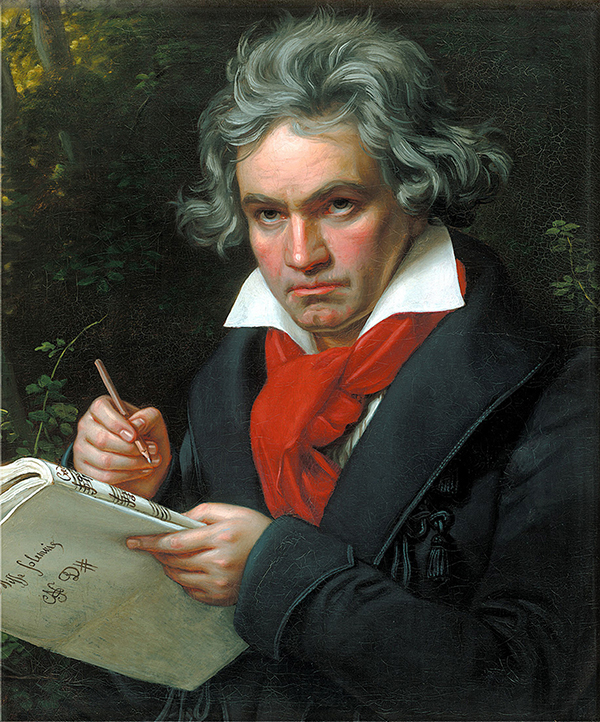
With harmonic background
Composer: Ludwig van Beethoven
-
"Symphony No. 5 in C Minor, Op. 67: I. Allegro con brio" [ 01:16-01:19 ]00:03
Without harmonic background
Composer: Ludwig van Beethoven
-
"Symphony No. 5 in C Minor, Op. 67: I. Allegro con brio" [ 01:19-01:25 ]00:06