Learning Objectives
- List the characteristics of the Baroque era (1600-1750) in context of social change including religious wars (Protestants vs. Catholics), the exploration and colonization of the New World, and the rise of middle-class culture.
- Identify a new style—monody—that featured solo song with instrumental accompaniment in the Baroque period through listening examples.
- Define figured bass, a shorthand that allowed the performer to supply chords through improvisation.
- Compare and contrast the major-minor tonality system and the equal temperament tuning system.
- Explain the significance of the union of text and music as expressed in the Baroque Doctrine of the Affections and reflected in genres such as opera, oratorio, and cantata.
- Define and compare the genres of opera, oratorio, and cantata.
- Compare and contrast the development of two types of concertos: the solo concerto and the concerto grosso.
- Correctly identify visually and aurally the main keyboard instruments of the Baroque era: organ, harpsichord, and clavichord.
- Describe the main characteristics of J. S. Bach's keyboard music, in particular his Well-Tempered Clavier.
Baroque Period (1600–1750)
General Background
The years between 1600 and 1750 were full of contradiction, change, and conflict in Europe. The future would be shaped by the far-reaching consequences of war. These conflicts mainly pitted the northern countries (Belgium, Germany, England, and Sweden) against the Catholic kingdoms of the south (France, Spain, and Austria), and they served to further accentuate the pre-existing cultural differences between northern and southern Europe. However, tremendous scientific, philosophical, and artistic accomplishments, constituting the practical foundation of modern civilization, flourished side by side with continual warfare, political instability, and a religious fervor that bordered on fanaticism. Some of the most significant events of this period include the following:
- The Scientific Revolution: The separation of science and philosophy from religious dogma led to the establishment of a scientific method of inquiry. Science and mathematics influenced nearly every aspect of life.
- The Catholic Counter-Reformation: In response to the Protestant Reformation, there was an outpouring of exuberant sculpture, architecture, painting, and music to promulgate and support the power and doctrine of the Papacy in Rome and the Catholic Church. The Jesuit order led the Counter-Reformation campaign.
- The Thirty Years' War (1618-1648): The Holy Roman Empire, headed spiritually by the Pope (and temporarily by the Emperor), was dissolved, essentially establishing modern Europe as a community of sovereign states.
- Colonization: Large areas of the Americas and Africa were colonized by European powers. The English and the Dutch succeeded the Spanish and the Portuguese as the main empire builders.
- Absolutism and Patronage: Absolutism in government and the patronage system created an environment that fostered enormous growth in the arts.
- The Rise of the Bourgeoisie: The new merchant class became a supporter of the arts, creating the climate for the development of a Baroque style in northern Europe, particularly in Holland.
The essential philosophical outlook of the period was characterized by:
- the emphasis on the individual, the personal character of religious experience, and the use of artistic expression to convey such experiences;
- the rise of capitalism and mercantilism as tools of empire building and the financial basis for the rise of the bourgeois class; and
- the creation of the Baroque style—an art style full of emotion, flamboyance, symbolism, vigor, and ornamentation—largely as a product of the Catholic Church's patronage of the arts.
The Scientific Revolution
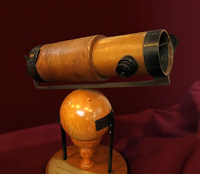
Aided by philosophy, mathematics, and newly developed instruments and experimental methods, Baroque astronomers, mathematicians, philosophers, and writers fueled the scientific revolution of the 17th century by proposing worldviews that challenged conventional assumptions and questioned established Church dogmas. The scientific advances of this period had a profound impact on all spheres of human activity, including the arts and music.
The scientific revolution is traditionally considered to have taken place between 1543 (the publication year of On the Revolutions of the Heavenly Spheres by Nicolaus Copernicus) and 1687 (the year Isaac Newton wrote Mathematical Principles of Natural Philosophy).
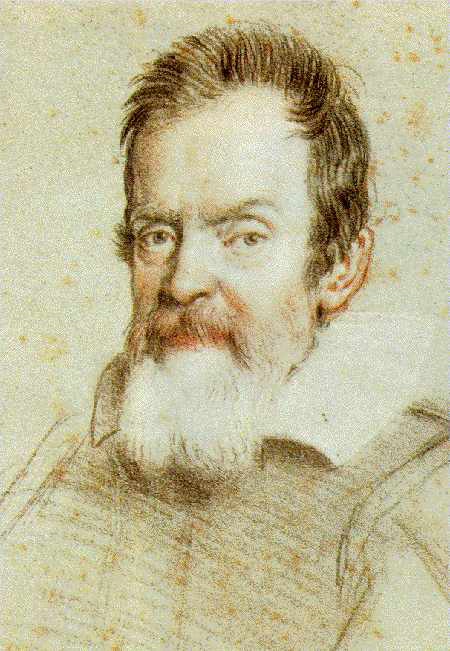
At the dawn of the Baroque period, the Italian philosopher, priest, and cosmologist Giordano Bruno was tried, condemned, and publicly executed by the Catholic Inquisition for embracing the Copernican heliocentric (sun-centered) theory of the universe and suggesting that the universe itself was infinite and without center. A little over 50 years later, the Italian Galileo Galilei, in his Dialogue on the Two Main World Systems (1632), and the German Johannes Kepler corroborated that the sun, not the earth, was the center of the universe, and they also pioneered the use of experimentation to validate physical theories—the cornerstone of the scientific method.
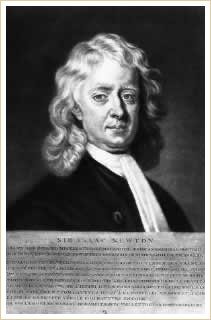
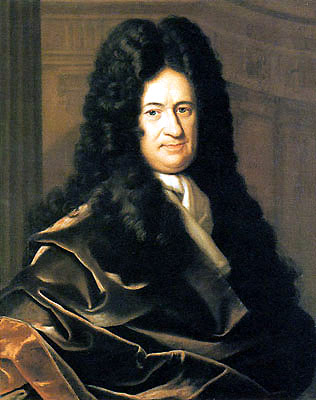
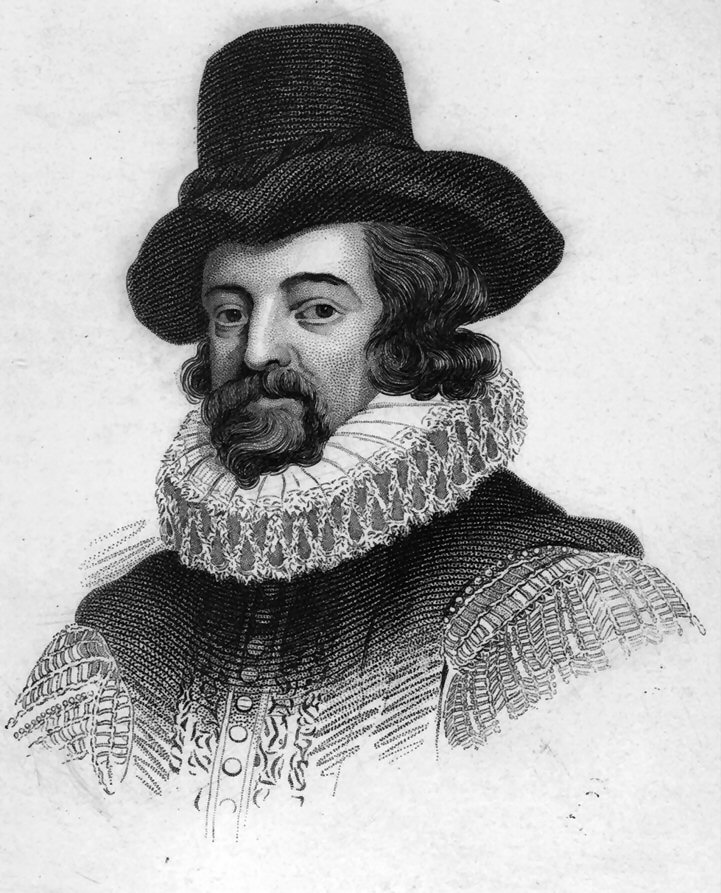
By the late 1600s, Sir Isaac Newton had studied the work of Copernicus, Galileo, Kepler, and many other giants of science and laid the groundwork for classical mechanics—the laws of gravitation and motion—in his Mathematical Principles of Natural Philosophy (1687). René Descartes, Blaise Pascal, Gottfried Leibniz, and Baruch de Spinoza advocated the separation of philosophy and science from religious dogma; Francis Bacon, John Locke and David Hume established the foundation of the scientific system of observation, experimentation, and testing of hypotheses. Montesquieu proposed the theory of the separation of powers of government, while Voltaire—pen name of Francoise-Marie Arouet and a great admirer of Newton—criticized Church dogma and championed civil liberties, including freedom of religion, through his satirical writings and plays.