
Learning Objectives
- List the characteristics of the Baroque era (1600-1750) in context of social change including religious wars (Protestants vs. Catholics), the exploration and colonization of the New World, and the rise of middle-class culture.
- Identify a new style—monody—that featured solo song with instrumental accompaniment in the Baroque period through listening examples.
- Define figured bass, a shorthand that allowed the performer to supply chords through improvisation.
- Compare and contrast the major-minor tonality system and the equal temperament tuning system.
- Explain the significance of the union of text and music as expressed in the Baroque Doctrine of the Affections and reflected in genres such as opera, oratorio, and cantata.
- Define and compare the genres of opera, oratorio, and cantata.
- Compare and contrast the development of two types of concertos: the solo concerto and the concerto grosso.
- Correctly identify visually and aurally the main keyboard instruments of the Baroque era: organ, harpsichord, and clavichord.
- Describe the main characteristics of J. S. Bach's keyboard music, in particular his Well-Tempered Clavier.
Baroque Period (1600–1750)
Johann Sebastian Bach
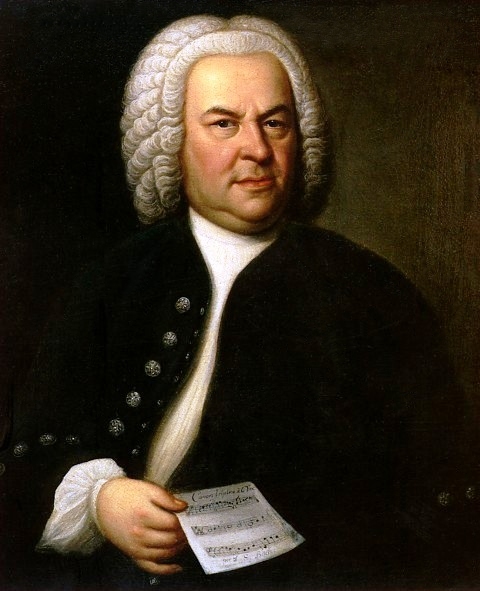
One of the most important composers in the history of music, and certainly the preeminent composer of the Baroque period, Johann Sebastian Bach produced what many regard as the finest pieces of music ever written. Although well respected during his lifetime, Bach was generally considered more of a loyal and industrious church musician than a genius, a point of view that has since dramatically changed. His work was not revolutionary in itself; rather, he brought such an elevated level of mastery and sophistication to the prevailing musical trends of the time (use of counterpoint, harmonic organization, variation of rhythms, forms, and textures, etc.) that the entire period is said to have reached maturity with Bach.
Bach descended from a long line of distinguished musicians, and he received his first musical training from members of his family. He learned a great deal by studying the scores of other composers, through which he assimilated the best musical practices of Germany, Italy, Austria, and France. Early on, he exhibited the work ethic that made him an extremely prolific composer. One story illustrates the extent of his devotion to his craft: at the age of 20, he walked a distance of 200 miles to hear Dietrich Buxtehude, northern Europe's most renowned organist at the time, play the organ in Lübeck.
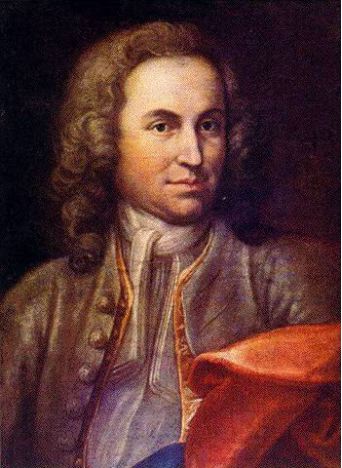
Throughout his career, Bach relied on the established system of patronage for employment, holding posts as member of the Chamber Orchestra and court organist to the Duke of Weimar (1703-1706 and again from 1708-1717), court composer to the Prince of Cöthen (1717-1723), and cantor of St. Thomas's Church in Leipzig (1723-1750). The type of music that Bach wrote was mostly determined by the position he held. While at Weimar, he wrote mostly keyboard and orchestral works. At Cöthen, he wrote a great deal of instrumental music, which was what Prince Leopold required. It was there that he wrote, among other works, his six Brandenburg Concertos, the suites for solo cello, and the sonatas and partitas for solo violin. In Leipzig, he was appointed to the prestigious post of Cantor of the St. Thomas Church, so his duties required producing music for church services in the main churches of Leipzig, and therefore he wrote most of his over 200 cantatas during his 27-year tenure in that city.
Bach's Musical Style
Because polyphony permeates much of his work during an era when most other composers were moving toward a more homophonic style, Bach's musical style may be viewed either as centuries ahead of its time or, as many did after his death, as a relic of the polyphonic music of an earlier period. Even works that are not strictly polyphonic, such as the famous Prelude in C major, have a thickness of texture not found in the music of most of his contemporaries.
Composer: Johann Sebastian Bach
-
"Well-Tempered Clavier Book 1: Prelude and Fugue No.1 in C major, BWV 846"
Bach's choral music is, arguably, the finest example of vocal polyphony in musical literature. He treats the voices of the chorus like instruments, emphasizing music over text. Though the emotional needs of the text are always considered, his choral works lack the theatrical vocals of opera or the madrigal. The word that perhaps best describes all of Bach's music is reverent. His profound sense of duty to his church and his God is apparent in his respectful approach to composition.
Bach's Church Music
Most of Bach's choral compositions took the form of the Lutheran cantata, which appeared earlier in Italy but reached its full potential in Germany. The cantata was a relatively new form that combined biblical text and contemporary poetry. Composers set the text to the chorale melodies of early Lutheran tunes.
The chorale melody might be sung by the soprano voice in a hymn-like section of the cantata, also called the chorale. In other movements, the chorale tune might appear as a sort of cantus firmus, a melodic fragment woven into the tapestry of multiple polyphonic lines. These movements would take the form of choral fugues, duets, or arias.
Composer: Johann Sebastian Bach
-
"Ein feste Burg ist unser Gott, BWV 80: VIII. Chorale: Das Wort sie sollen lassen stahn"
Composer: Johann Sebastian Bach
-
"Ein feste Burg ist unser Gott, BWV 80: I. Chorus"
Composer: Johann Sebastian Bach
-
"Ein feste Burg ist unser Gott, BMV 80: II. Aria"
The content of the Sunday Mass influenced the composition of the cantata during Bach's tenure in Leipzig, where a cantata was required for the church services every Sunday and for the church holidays during the liturgical year. His cantatas vary from single movement works to pieces with multiple movements divided into choruses, instrumental passages, arias, and recitatives. Let's look at the Cantata No. 80 Ein' feste Burg ist unser Gott, for an example of such a multi-movement work. This particular cantata has eight movements:
Cantata No. 80 Movements
- Chorus (Fugue)
- Aria
- Recitative
- Aria
- Chorus
- Recitative
- Duet
- Chorale (Chorus)
Composer: Johann Sebastian Bach
-
"Ein feste Burg ist unser Gott, BWV 80: IV. Aria: Komm In Mein Herzenshaus"
Bach also perfected the passion, a form new to Lutheran music. Passions are large-scale works based on accounts of the life of Jesus found in the Bible in Matthew, Mark, Luke, or John. Bach's two passions are the St. John Passion, BWV 245 (1724) and the St. Matthew Passion, BWV 244 (c. 1729), which contains the moving aria for alto "Erbarme dich".
Composer: Johann Sebastian Bach
-
"St. Matthew Passion, BWV 244: Erbarme dich, mein Gott"
The last great choral work of Bach's life was the monumental Mass in B Minor, BWV 232, a combination of separate mass sections that Bach had written at different periods of his life. A demanding work, it is rivaled only by Palestrina's Pope Marcellus Mass and Beethoven's Missa Solemnis as the most important setting of the Latin Mass text. Bach's ability to express the emotion of the text while simultaneously subjecting it to a disciplined musical form is most clearly heard in the Crucifixus, the section of the mass dealing with the crucifixion of Jesus. The movement—written for two flutes strings, and continuo, with a poignant use of four-part chorus—is in the form of a passacaglia over a repeated chromatically descending bass figure that Bach had already used in an earlier cantata.
Composer: Johann Sebastian Bach
-
"Mass in B minor, BWV 232: Symbolum Niceum: Crucifixus"
Some of Bach's keyboard works survived after his death in 1750, but much of his music, including the cantatas and the passions, disappeared from public consciousness. It wasn't until well into the 19th century that his music began to emerge again, thanks largely to the Romantic composer Felix Mendelssohn (1809-1847), who in 1829 conducted the first performance of the St. Matthew Passion in almost 80 years. Today, Bach is universally recognized as one of the greatest composers of all time.
As we will see in his instrumental music, Bach was adept at imposing his own complex musical style on any form of composition.