Learning Objectives
- Explain how the Classical period (1750-1825) characteristics of order, objectivity, and harmonious proportion relate to the music characteristics of the period.
- Summarize how the American Revolution (1775-83) and the French Revolution (1789-99) profoundly changed political systems and social order.
- Classify the large-scale musical forms in which the Classical masters composed.
- Explain music making in the context of the royal court and the patronage system.
- Define form and absolute music, and relate these concepts to one another.
- Differentiate between the main musical forms of the Clasical-era by summarizing the development of the symphony, sonata, string quartet, and the concerto.
- Define and analyze the symphony, sonata, string quartet, and concerto forms in the context of the Classical period.
- Describe the impact of the major Classical composers Haydn, Mozart, and Beethoven.
- Discuss the impact of Beethoven's thirty-two piano sonatas.
- Compare and contrast the two types of Italian opera: opera buffa and opera seria.
Classical Period (1750-1825)
Social, Cultural, and Political Background
European intellectuals of the eighteenth century were the first to consider themselves fully free from the restrictions of the Middle Ages. They spoke of themselves as living in an Age of Enlightenment—an Age of Reason. The first encyclopedia was published during this time. Although a strong belief in God remained, people increasingly believed in human control over a reasonable world, in the marvelous machine of a universe they understood. God was no longer conceptualized as the awesome Father and Judge but rather as the cosmic keeper of the seasons and rhythms of nature.
During the 18th century, towns grew, interregional trade flourished, fortunes were made, and the bourgeoisie (the middle class) enjoyed more economic power than ever before. This was also a period of vigorous intellectual activity in which scientific advancement continued with great speed.
Political Upheaval
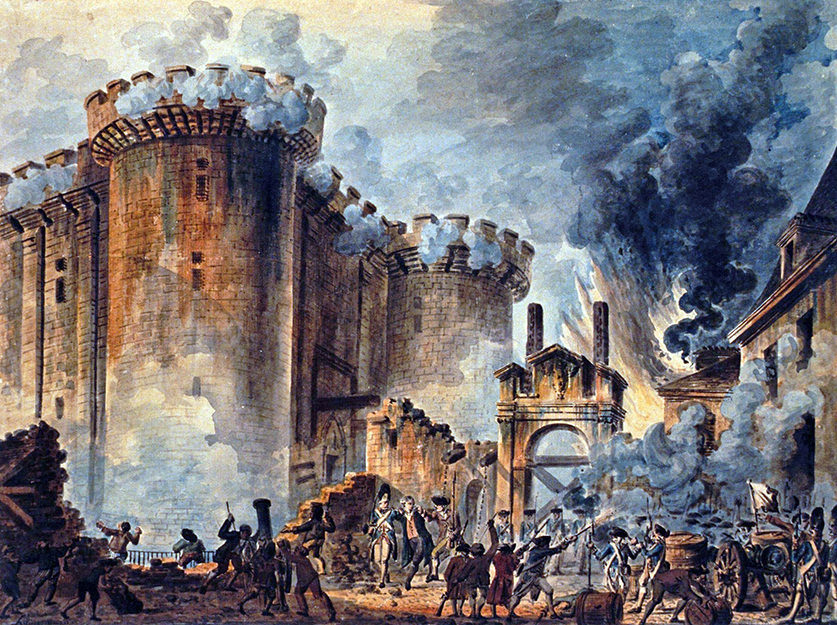
Arguably, the most significant political event in Europe during the Classical period was the French Revolution (1789-1794) and the subsequent beheading of King Louis XVI and Marie Antoinette. Decades of political instability would result from the vacuum left by the destruction of the monarchy, an institution that had been in place in France for over 1,400 years.
The full impact of the revolution would not be felt in the artistic community until the next generation, but the era in which composers could rely solely on aristocratic patronage was nearing its end.
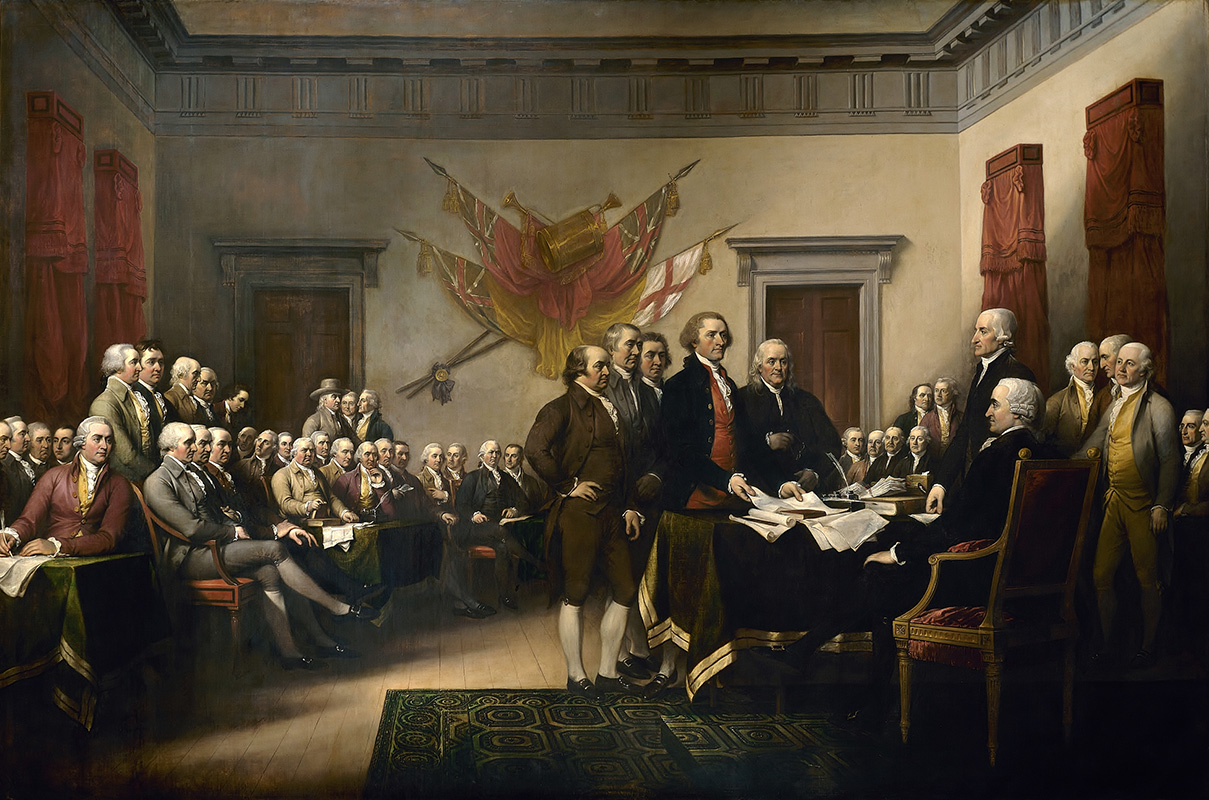
Across the Atlantic, America declared independence from England as part of the American Revolution (1775-1783), which signaled the beginning of the end of the British Empire.
Philosophy and Science
The realm of science witnessed some tremendous advances during the Classical period. Far-reaching science discoveries included, among others, oxygen (1778—variously ascribed to Antoine Lavoisier, Joseph Priestley, and Carl Wilhelm Scheele); hydrogen (1766) by Henry Cavendish; the law of conservation of mass by Lavoisier, which paved the way for modern chemistry; and the law of electromagnetic induction (1831), which allowed the development of transformers, electrical motors, and generators. Benjamin Franklin published his first writings on electricity and confirmed Huygens 1690 wave theory of light. The steam engine, the modern factory, the electric battery, the steamboat, and the cotton gin all came into being.
Starting sometime between 1650 and 1700, great intellectual and philosophical minds created the cultural movement known as the Age of Enlightenment, which originated in Europe and later spread to the American colonies where it influenced figures such as Benjamin Franklin and Thomas Jefferson among many others. Among them were the French philosophers Jean-Jacques Rousseau—who also happened to be a self-taught composer and professional copyist—Pierre Bayle, and Voltaire (1694-1778)—whose writings helped establish the French rococo. Other important philosophers and writers of the time include Baruch Spinoza, David Hume (1711-1776), Isaac Newton, and Immanuel Kant, who famously said "There are two things that don't have to mean anything; one is music, the other is laughter."
Deadly diseases, including smallpox, diphtheria, and yellow fever posed critical challenges to science. The most feared of them, smallpox, killed an estimated 400,000 Europeans annually during the closing years of the century. In America, after having already decimated millions during the Conquest, the virus continued to spread rapidly during Colonial times. The survival rate was particularly low for children. One case is specially fortuitous for the history of music: After falling ill in 1767, the 11-year old Wolfgang Amadeus Mozart—and later his sister Nannerl—both survived the disease despite their father's refusal to inoculate them. Inoculation, which originated in Asia and had reached Europe around this time, is not the same as vaccination. It wasn't until several years later, in 1796, that Edward Jenner, a British country doctor often called "the father of immunology," developed the vaccine that eventually helped eradicate this terrible disease. In fact, Jenner's work during the 18th century represents the first scientific attempt to control an infectious disease by the deliberate use of vaccination.