
Learning Objectives
- Explain how the Classical period (1750-1825) characteristics of order, objectivity, and harmonious proportion relate to the music characteristics of the period.
- Summarize how the American Revolution (1775-83) and the French Revolution (1789-99) profoundly changed political systems and social order.
- Classify the large-scale musical forms in which the Classical masters composed.
- Explain music making in the context of the royal court and the patronage system.
- Define form and absolute music, and relate these concepts to one another.
- Differentiate between the main musical forms of the Clasical-era by summarizing the development of the symphony, sonata, string quartet, and the concerto.
- Define and analyze the symphony, sonata, string quartet, and concerto forms in the context of the Classical period.
- Describe the impact of the major Classical composers Haydn, Mozart, and Beethoven.
- Discuss the impact of Beethoven's thirty-two piano sonatas.
- Compare and contrast the two types of Italian opera: opera buffa and opera seria.
Classical Period (1750-1825)
Vocal Music
The Classical era was primarily a period of instrumental music. The major composers of the time focused on new instrumental styles and forms. Vocal music wasn't nearly as important as it had been in the past. The lieder (songs) written by Haydn, Mozart, and Beethoven are not considered to be as important as their instrumental work. The operas composed by Haydn to entertain the guests at Esterháza have vanished into history, and Beethoven wrote only one opera, Fidelio. Still, the age saw significant achievements in the area of vocal music. Specifically, some of the large choral works of Mozart, Haydn, and Beethoven, including many of Mozart's operas, made lasting contributions to the body of vocal literature.
Composer: Wolfgang Amadeus Mozart
-
"Requiem in D minor, K. 626: Lacrimosa dies illa"
Opera
Opera had been filling theaters in Europe during most of the 17th century and the early years of the 18th century. However, for all of its popularity, it still wasn't an art form that appealed to the masses. The librettos were usually ancient Greek or Roman in origin or based on some sort of obscure, heroic tale. Although the opera buffa, a genre that originated during the mid-Baroque period, had some success in bringing opera to every social class, it remained primarily an aristocratic form of entertainment. In the years leading into the Classical period, all of this changed.
Several factors led to this adjustment. First, growing numbers of the middle class had enough disposable income to attend opera, but they were bored with the haughty stories of the Greeks and Romans. Second, a few composers found ways to bridge the gap between the classic Italian form from which opera originated and the more popular folk-based form of opera that the public was demanding to see.
Comic opera also became very popular with general audiences of the period due to its ordinary, unpretentious quality and stories with amusing plots. The audience could easily understand and identify with the characters, and the music was much more approachable. Comic opera was known as opera buffa in Italy, opéra comique in France, and singspiel in Germany.
There were many opera composers during this time. Mozart and Gioacchino Rossini were the two most famous opera composers of the period. Their works are still performed for modern audiences all over the world. Mozart's best known operas include:
- Don Giovanni (1787),
- The Marriage of Figaro (1786), and
- The Magic Flute (1791).
Rossini's most popular works include:
- Tancredi (1813),
- The Barber of Seville (1816),
- La Cenerentola (Cinderella - 1817), and
- William Tell (1829).
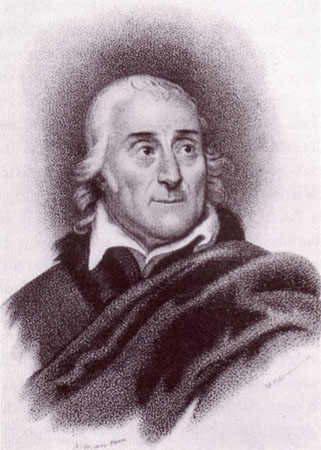
Lorenzo da Ponte, a collaborator of Mozart's, was another colorful figure in the history of comic opera. Born Emmanuele Conegliano, da Ponte was a poet, priest, and notorious womanizer who wrote the librettos for The Marriage of Figaro, Don Giovanni, and Cosi Fan Tutte. Born in the Jewish ghetto of Venice, he converted to Catholicism, became a priest as a youth, and went into a string of seductions that even his friend Casanova couldn't match. After a somewhat checkered career that took him to Vienna, Paris, and London, he left for New York City, fleeing his creditors. He ended his days as the first teacher of Italian at Columbia University in New York.
Opera came of age with the work of Mozart and da Ponte. Their collaboration transformed opera into an accessible, realistic art with approachable characters for contemporary audiences.
Christoph Willibald Gluck
The composer who first bridged the cosmopolitan gap between French and Italian styles of opera was Christoph Willibald Gluck (1714-1787). Born in Germany and educated in Italy, he became famous in France. In the 1750s, a reform movement began in Italian opera. The primary aims of this movement were to find ways to speed up the action by smoothing the distinction between aria and recitative and to add depth to the orchestral color.
In Alceste (1767) and his other mature operas, Gluck successfully combined the choral scenes and dances of French opera, the ensemble writing of comic opera, and the new instrumental styles of Germany and Italy. His works changed the direction of opera for centuries to come, particularly in France and Italy.
Composer: Christoph Willibald Gluck
-
"Orfeo ed Euridice *: Dance Of The Blessed Spirits from Orfeo ed Euridice"
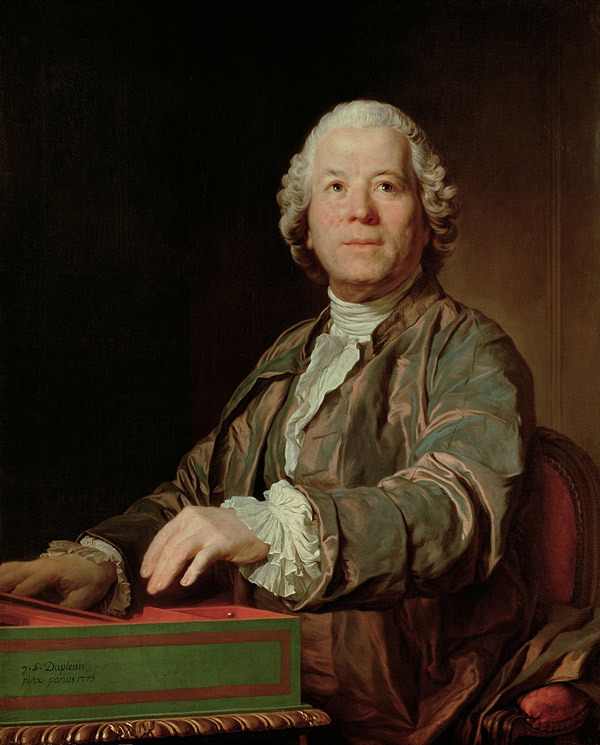
Composer: Christoph Willibald Gluck
-
"Alceste: Ombre larve"