Generating page narration, please wait...

Learning Objectives
Be ready to...
- Relate how Romantic poets and artists abandoned traditional subjects, turning instead to the passionate and the fanciful.
- Relate how the Industrial Revolution impacted the technological development and affordability of musical instruments.
- Analyze how the orchestra grew in size and sound as new instruments were introduced and composers demanded greater levels of expression.
- Illustrate how Romantic composers explored nationalistic folklore and exotic subjects.
- Identify the form of romantic period songs, including strophic, through-composed, and the modified strophic forms.
- Examine the German art song (or Lied) as a favored romantic period genre.
- Discuss how the music of Franz Schubert impacted romantic period music.
- Discuss how the music of Frédéric Chopin impacted romantic period music.
- Trace the ascendance of program music in relation to absolute music.
- Summarize how political unrest throughout Europe stimulated the formation of schools of musical nationalism in Russia, Scandinavia, Spain, England, and Bohemia among other countries.
- Differentiate between the distinct national styles of romantic opera in France, Germany, and Italy.
- Discuss how the Italian nationalist composer Giuseppe Verdi impacted romantic period music.
- Trace how choral music became a popular artistic outlet for the middle classes.
- Discuss how the Russian composer Pyotr Ilyich Tchaikovsky impacted romantic period music.
Romantic Period (1820–1910)
Listening Bridge
Listen to the following excerpts, and compare them, using the following questions as a guide:
- Which piece features more variation in tempo?
- Which piece features variation in dynamics?
- Which piece features simple rhythm patterns?
- What is the meter in each piece?
- Which piece features a more flowing melody?
Composer: Wolfgang Amadeus Mozart
-
"Piano Sonata in A major, K.331: III. Rondo alla turca"
Wolfgang Amadeus Mozart
Born: January 27, 1756
Died: December 5, 1791
Period: Classical
Country: Austria
Composer: Frédéric Chopin
-
"Waltz in C sharp minor, Op. 64, No. 2"
Frédéric Chopin
Born: March 1, 1810
Died: October 17, 1849
Period: Romantic
Country: Poland/France
Listening Prelude
Listen to the music below and consider the following questions:
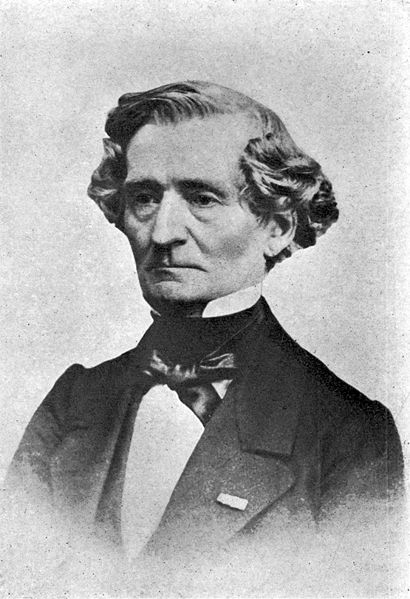
Composer: Hector Berlioz
-
"Symphonie Fantastique, Op. 14: IV. March To The Scaffold"
- Does the texture sound thick, thin, or in between?
- Is this a work that strives for moderation in expression?
- How would you describe the dynamics?
- Do you hear primarily regular scale tones, or do you hear notes that sound like they are outside the scale?
- Does the music stay predictably in the same key?
- What role do the percussion instruments play?
- Does the music sound like it might be telling a story of some kind?