
Learning Objectives
- Relate how Romantic poets and artists abandoned traditional subjects, turning instead to the passionate and the fanciful.
- Relate how the Industrial Revolution impacted the technological development and affordability of musical instruments.
- Analyze how the orchestra grew in size and sound as new instruments were introduced and composers demanded greater levels of expression.
- Illustrate how Romantic composers explored nationalistic folklore and exotic subjects.
- Identify the form of romantic period songs, including strophic, through-composed, and the modified strophic forms.
- Examine the German art song (or Lied) as a favored romantic period genre.
- Discuss how the music of Franz Schubert impacted romantic period music.
- Discuss how the music of Frédéric Chopin impacted romantic period music.
- Trace the ascendance of program music in relation to absolute music.
- Summarize how political unrest throughout Europe stimulated the formation of schools of musical nationalism in Russia, Scandinavia, Spain, England, and Bohemia among other countries.
- Differentiate between the distinct national styles of romantic opera in France, Germany, and Italy.
- Discuss how the Italian nationalist composer Giuseppe Verdi impacted romantic period music.
- Trace how choral music became a popular artistic outlet for the middle classes.
- Discuss how the Russian composer Pyotr Ilyich Tchaikovsky impacted romantic period music.
Romantic Period (1820–1910)
Post-Romanticism in the Twentieth Century
Romanticism did not completely disappear in the early decades of the 20th century. However, the tide had definitely turned as modernizing trends, chiefly atonality, but also increased use of dissonance and non-traditional scales, led music in a new direction. Post-Romanticism refers to the latter part of the Romantic period, but also to those composers who continued to write in the expressive, harmonic, and tonal style of Romanticism after 1910.
Sergei Rachmaninoff
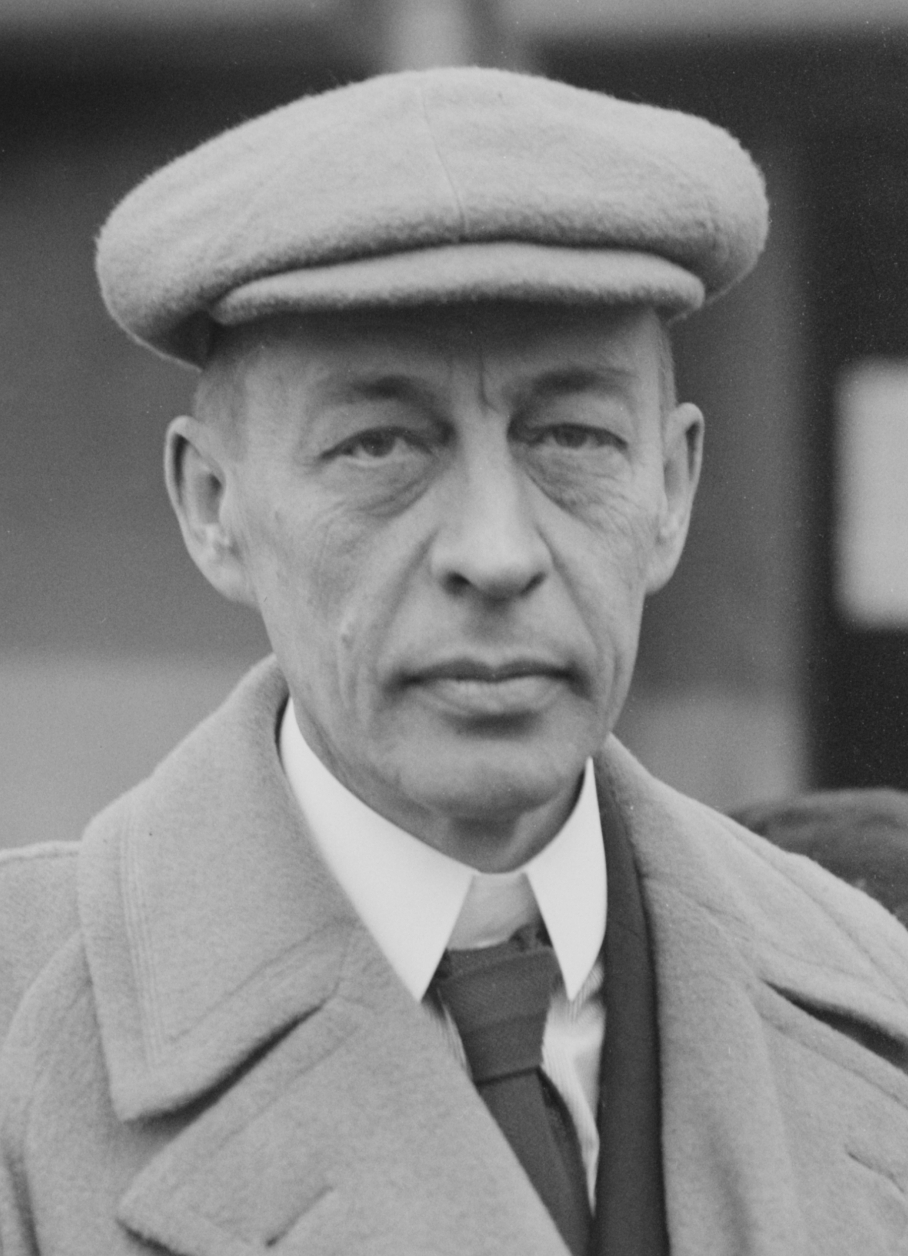
Rachmaninoff was a Russian composer and pianist who, at the turn of the century, conquered the musical world as a piano virtuoso. His compositions employed a personal brand of Romanticism that, like Tchaikovsky's, contained elements of Russian nationalism. His four piano concertos are among the most demanding in the repertoire, as evidenced by the first movement from his Piano Concerto No. 2 in C minor.
Composer: Sergei Rachmaninoff
-
"Piano Concerto No. 2 in C minor, Op. 18: I. Moderato"
Jean Sibelius
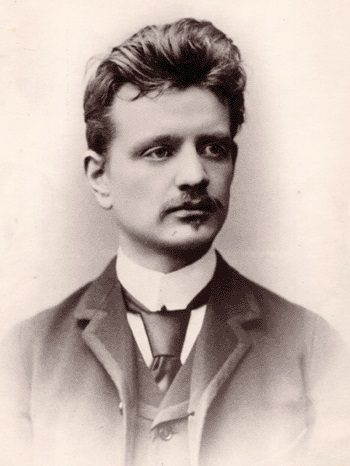
Finland’s greatest composer was Jean Sibelius, who worked in the Romantic and Neoclassical idioms well into the 20th century. A national Finnish hero, Sibelius was born in Tavastehus, Finland, the son of an army doctor. As intensely nationalistic and patriotic as Smetana, Borodin, and Rimsky-Korsakov before him, his music played a crucial role in the creation of a Finnish national musical identity. In fact, the main theme from the tone poem Finlandia (1899) became the de facto Finnish national anthem.
Although he lived into the late 1950s, some argue that because of his traditional treatment of melody and harmony, Sibelius's music belongs more in the late 19th than the 20th century. While certainly more conservative than his peers—he was strongly influenced by Wagner, Bruckner, and Tchaikovsky—his music did possess a number of modern tendencies. His best known pieces include his seven symphonies, the Violin Concerto in D minor, and Finlandia, which evokes the Finnish struggle for independence from the Russian Empire.
Composer: Jean Sibelius
-
"Finlandia, Op. 26"
Gustav Holst
Gustav Holst was an English composer whose music lay between Romanticism and Impressionism. From the orchestral suite The Planets, the movement entitled "Jupiter" is at times reminiscent of compatriot Edward Elgar’s work in its nobility, yet the size of the orchestra owes more to the influence of Mahler.
Composer: Gustav Holst
-
"The Planets, Op. 32: IV. Jupiter, the Bringer of Jollity"
Alexander Scriabin and Charles Ives
Scriabin and Ives were two more composers who defied easy classification. The Russian Alexander Scriabin (1872-1915) experimented with tonality and the relationship of music to the arts in a way that anticipated 20th-century techniques.
Charles Ives (1874-1954) was arguably the first great original American composer. In an effort to re-create a memory from his youth in which several marching bands came into town from separate directions, his music juxtaposed two halves of the orchestra playing different tunes in various keys and rhythms, thus anticipating Stravinsky’s polytonality.
Composer: Charles Ives
-
"Country Band March"