
Learning Objectives
Be ready to...
- Describe the different uses and functions of music as presented in the text.
- Define and explain the differences between the terms utility music and musical connotation.
Can Music Have A Specific Purpose?
Since time immemorial, music has played—and continues to play—an integral part in the day-to-day events, ceremonial functions, and private lives of individuals, communities, and cultures across the world. Consider, for example, the stately majesty of a march on graduation day at a university in the United States, the music to accompany a dance performed by a spiritual healer in Korea, or a lullaby sung by a Persian mother to soothe her anxious baby.
Although music cannot be separated from its environment—it is practically omnipresent in almost every human activity—there is one common element in the music of all cultures: People have a strong urge to make music meaningful and useful in their lives. Practically every culture uses it for a wide variety of purposes: religious, ceremonial, entertainment, health, and economic reasons, and in the case of college hymns or national anthems, to establish personal or national identity.
Let's take one of the oldest traditions in Korean culture: the p'ungmul, or farmer's music, a dynamic outdoor ensemble of drums and gongs that parades through villages and marketplace alleyways inviting good spirits and scaring bad ones, while gathering a delighted audience of young and old, men and women alike. Colors circle, feathers fly, ribbons twirl, and the audience stirs in excitement as actors, impersonators, musicians, and acrobats make their dramatic entrance to the circle!
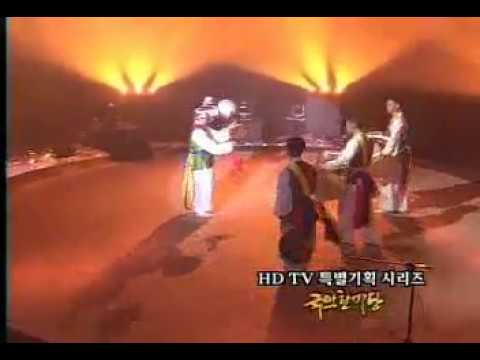
Contemporary Korean P'ungmul (Farmer's Music)
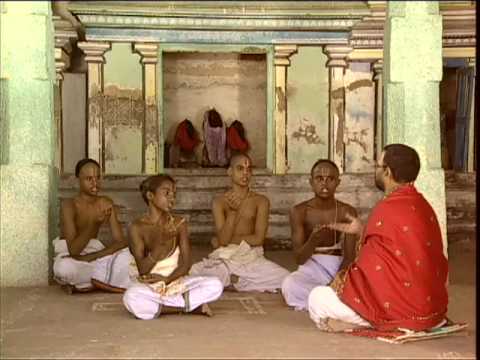
The Tradition of Vedic Chanting
In modern times, Korean p'ungmul has, however, moved into contemporary performing arts complexes while maintaining its outdoor functions for national holiday celebrations and sports events. Nonetheless, regardless of where and when p'ungmul occurs, the purpose of p'umgmul remains the same, as listeners cannot help being caught up in the rhythm and the excitement of the music. The performance climaxes with the sangmo—the hatter—jumping into the middle of the circle comically turning and flicking a gigantic paper flower attached to a pole sticking from the middle of his hat.
Music is also used to express a communion with the divine. As such, it is regarded as intrinsically sacred in many cultures including the Hindu tradition where sound is seen as a mystical force controlling the universe (nāda-brahma), and is manifested in the ritual recitation of sacred chant (veda) by Brahman priests. Musical sound, and especially the sound of the human voice, is considered an extension of this sacred manifestation. Performance or practice of music is considered by some Hindus to be a form of ritual meditation (sādhanā), regardless of whether the lyrics are secular or sacred.
By contrast, in orthodox Islam, music is considered profane—a sensual distraction from moral behaviour and devotion to God. However, in the Sufi traditions of Islam, which have been influential in India, listening to music (samā’) is considered a path to communion with the divine. Some consider singing or playing music to be a form of zikr, the ecstatic chanting of God’s name in Sufi ritual.

Mexican Corrido
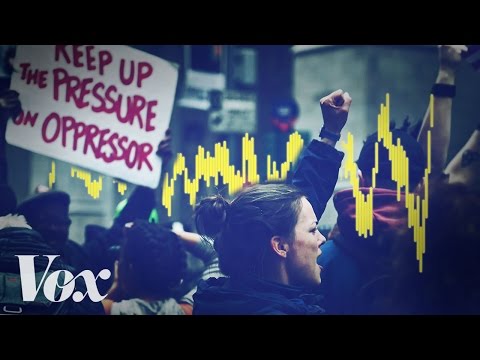
The evolution of American protest music
Music is also often used for sociopolitical purposes ranging from protest to solidarity, usually involving a specific narrative. As one of many possible examples, consider the Mexican corrido, a narrative form that tells a story, verse by verse. The corrido is a sort of musical newspaper with stories that usually center around some political event. In the 19th century, the verses of the corridos came from large fliers, or broadsheets, which circulated around towns and villages to transmit the news of the day. A favorite topic was the Mexican Revolution. Many corridos, however, cannot really be said to have any fixed text, since there are so many variants between written versions; in addition, a good number of them are improvised spontaneously. Usually all the verses are set with the same music, a format that is called strophic.
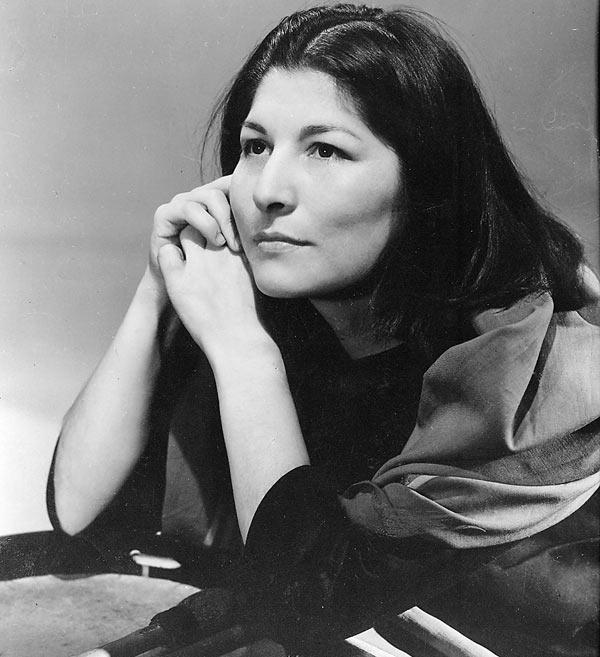
Protest songs are a longstanding vernacular tradition in Latin America. The patriarch of Latin American protest singers was the Argentine singer and songwriter Héctor Roberto Chavero Haram (1908–1992), better known by his artistic name Atahualpa Yupanqui, which he chose to honor two legendary Incan chieftains: Atahualpa and Pachacuti Yupanqui. As a communist, he was censored in the 1950s by the government of Juan Perón, husband of Eva Perón ("Evita"), so he lived in exile for a time. Other artists, chief among them Mercedes Sosa, popularized his songs.
The tradition of protest songs in the United States is a long one that dates back to the 18th century and colonial period, the American Revolutionary War and its aftermath. In the 19th century, topical subjects for protest in song included abolition, slavery, poverty, and the Civil War among other subjects. In the 20th century civil liberties, civil rights, women's rights, economic injustice, politics and war were among the popular subjects for protest in song. In the 21st century the long tradition continues.
During the 1960s, many Latin American countries were suffering military coups and oppressive dictatorships. In Chile, Argentina, and Paraguay opponents to such regimes were eliminated in mass killings, or "disappearances," as some of these governments euphemistically called them. Others who questioned military authority were forced to live abroad. Protests were stirring elsewhere in the world, too. In the final years of the Franco dictatorship, Spain was restless for civil liberties, and the United States was convulsed over the struggle for racial equality and conflict over the Vietnam war. In each of these scenarios, music played a key role in making people aware of prevailing circumstances.
One case in point is Argentina, a country that endured a military dictatorship from 1966 to 1973 only to undergo another coup in 1976, resulting in a regime even more brutal than the previous one, during which systematic "disappearing" of around 30,000 political opponents was undertaken. Mercedes Sosa, a folk singer of mestizo background and a supporter of left-wing causes, was arrested on stage during a concert in 1979. Forced to move to Europe, first to Paris and then Madrid, she returned to Argentina only when the dictatorship was in its final throes. Her powerful role as an artist who fought for freedom was summed up after her death in 2009, when Helen Popper of Reuters wrote "she fought South America's dictators with her voice and became a giant of contemporary Latin American music".
Composer: Leon Gieco
-
"Solo le pido a Dios"
Through song texts, music allows musicians to say things that wouldn't otherwise be permitted in ordinary language. A great deal of covert and overt political protest has been delivered in song. Furthermore, music can derive very strong meaning not necessarily from words, but from the situation in which it was created or first heard. In such cases, the music itself acquires meaning independent of words. Songs can assume new meanings, functions, or different identities. "We Shall Overcome" was originally a Christian church hymn. In most people's minds, however, the melody alone became firmly associated with demonstrations when it was adopted as the African American civil rights movement's anthem in the 1960s.
![Joan Baez - We Shall Overcome - [1969 Woodstock - The Lost Performances]](https://i.ytimg.com/vi/yD6iJawoJB0/default.jpg)
Joan Baez - We Shall Overcome - [1969 Woodstock - The Lost Performances]
Music and Language
Although the relationship of music and language is still a hotly debated topic, the fact remains that many cultures use music as a language. For them, music is a language. If it is true that "music is the universal language of mankind," as Henry Wadsworth Longfellow poetically wrote, then what does music exactly communicate, and is communication music's main function? What purpose is served by the experience of music and music-like communication?
It is widely acknowledged that music has the undeniable power to communicate emotions, but there are differing views as to how it does it. Some authors, most notably the British musicologist Deryck Cooke (1919–1976), argue that music functions as a strictly codified language of the emotions, and that composers throughout history have tended to choose the same musical phrases to express similar feelings or dramatic situations. Others subscribe to the the contrasting point of view famously stated by the 20th Century Russian composer Igor Stravinsky (1882–1971) when he wrote: "Music is, by its very nature, essentially powerless to express anything at all, whether a feeling, an attitude of mind, a psychological mood, a phenomenon of nature, etc." Referring specifically to the purpose of music, he continued: "Expression has never been an inherent property of music. That is by no means the purpose of its existence." The truth probably lies in Aaron Copland's intermediary view, which he lucidly explained thus: "My own belief is that all music has an expressive power, some more and some less, but that all music has a certain meaning behind the notes and that that meaning behind the notes constitutes, after all, what the piece is saying, what the piece is about. This whole problem can be stated quite simply by asking, "Is there a meaning to music?" My answer to that would be, "Yes." And "Can you state in so many words what the meaning is?" My answer to that would be, "No." Therein lies the difficulty."
Spoken language is our most fully shared basis of communication. Linguistic semantics is the study of meaning that is used for understanding human expression through language. Music semantics asks whether music shares with language the ability to convey semantic meaning. Musical practices of several cultures around the world suggest that music can, indeed, convey semantic meaning. Let's look at one particular example: The Talking Drums of the Yoruba people of Africa.
Talking Drums
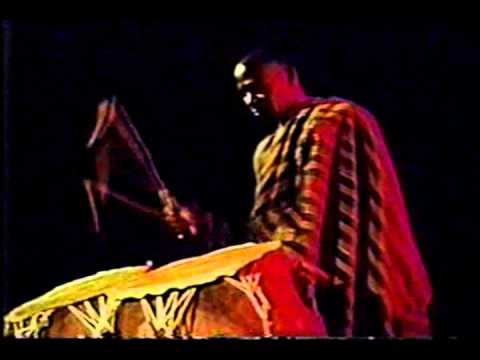
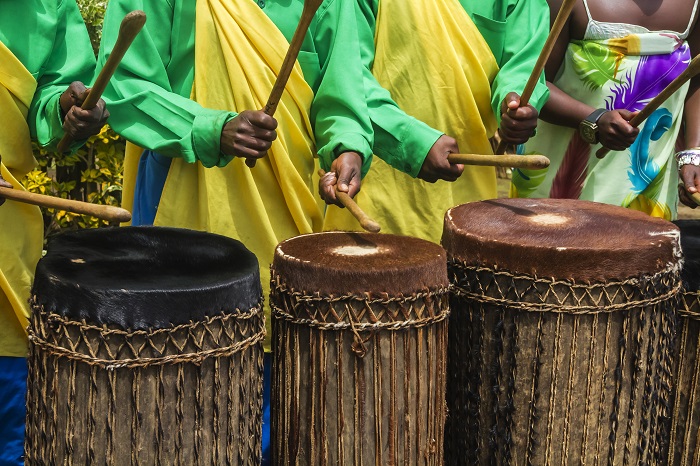
Africa is renowned for the pulsating rhythms of its drums. The membrane drum most significantly illustrates this power. Although membrane drums come in different sizes and shapes, they all have one thing in common: they talk. The concept of a talking drum is widely embraced in African communities and provides perhaps the most important illustration of the way in which musical communication takes place in Africa. But how does an African drum talk? This is a question that many Westerners often ask. Simply put, African drums talk by imitating speech patterns. Most African languages are tonal languages, in the sense that the meaning of a word often depends on how the word is said. For example, the Yoruba word "e-wa" could mean "beauty," "beans," or "please come," depending on how the word is intoned.
African drummers talk through their drums when they make their drum patterns imitate the speech contours of words. A musical performance on a drum is therefore significant not only for its musical features but also for what the drum is "saying." An ability to comprehend the linguistic as well as the musical aspects of a drum performance is an important prerequisite for an effective understanding of African drum music. To illustrate the musical and linguistic features of African drumming, we will focus on dundun music of the Yoruba people of Nigeria and Benin in West Africa.
Yoruba Dundun Music
The dundun drum, which has an hourglass shape, consists of a hollowed out wooden resonator with two round heads, each of which is covered with animal skin. Leather strings run from one drum head to the other; the drummer presses the strings to obtain different pitches on the drum head. The capability of the hourglass drum to generate an extensive range of pitches makes it the most talkative of all West African skin drums. Only one drum head is played, usually with a curved wooden beater, but sometimes with both hand and a wooden beater. Dundun drums are used in both sacred and secular contexts such as annual yam-eating festivals, marriage ceremonies, and funerals.
The Yoruba people, whose population is about 30 million, live in South Western Nigeria and parts of Benin Republic. Yoruba populations are also found in Brazil, Cuba, The Caribbean, and the United States. Yoruba music is noted for its varieties of drums, many of which are regarded as “talking” instruments. The dundun drum ensemble epitomizes Yoruba drum music.
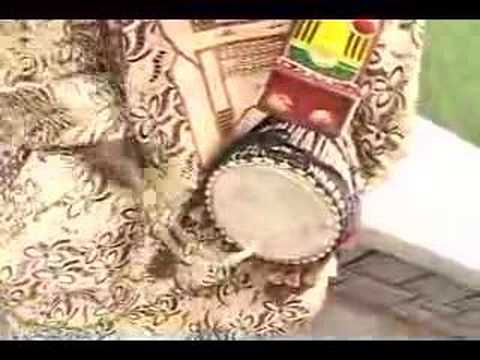
Ayan Bisi Adeleke - Master talking drummer - drum talks
Composer: Anonymous
-
"Dundun Ensemble"
A
The pattern of the isaaju, the first secondary instrument. Note that this pattern is repetitive and that it makes use of a single pitch area. This pitch area is relatively high when compared with the part of the iyaalu.
Composer: Anonymous
-
"Dundun Ensemble" [ 00:00-00:06 ]00:06
B
Now listen to the pattern of the atele, which is also repetitive. The pitch area utilized in this pattern is also relatively high when compared with the part of the iyaalu.
Composer: Anonymous
-
"Dundun Ensemble" [ 00:14-00:20 ]00:06
C
The atele pattern is followed by that of the gudugudu, which is also repetitive.
Composer: Anonymous
-
"Dundun Ensemble" [ 00:28-00:46 ]00:18
D
The iyaalu (the leading instrument) finally joins the performance. Unlike the other three instruments, the part of the iyaalu is an improvised part, which is constantly changing and a lot more complicated.
Composer: Anonymous
-
"Dundun Ensemble" [ 00:50-01:00 ]00:10
E
Now listen to the combination of these secondary instruments. Try to identify each of the patterns of the secondary drums that you had earlier listened to individually. Experiment with tapping each of the rhythmic patterns of the secondary instruments on the table.
Composer: Anonymous
-
"Dundun Ensemble" [ 01:40-03:09 ]01:29
Music and Health
Music's therapeutic power to heal, reduce stress, relax, enhance mood, or benefit the brain has been well studied and documented. The first large-scale review of 400 research papers in the neurochemistry of music found that playing and listening to music benefits both mental and physical health. Research suggests that listening to and playing music can lower levels of cortisol—the stress hormone. There is compelling evidence that musical interventions can play a health care role in settings ranging from operating rooms to family clinics. Even more importantly, researchers have been able to document the neurochemical mechanisms by which music has an effect in four domains: management of mood, stress, immunity, and as an aid to social bonding. Music has been found to ease pain, increase workout endurance and motivation in athletes, speed up post-workout recovery, improve sleep quality, enhance blood vessel function, induce meditative states, relieve symptoms of depression, elevate mood, improve cognitive performance, relax patients before surgery, and elevate mood while driving.
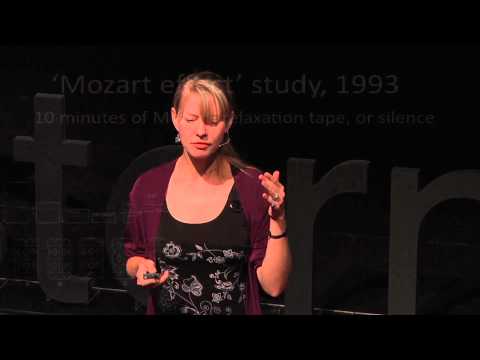
Music and the Brain: Jessica Grahn at TEDxWesternU
How playing an instrument benefits your brain - Anita Collins
In modern industrial societies, music is everywhere and embedded in everything. In urban environments, many commercial establishments around the world—shopping malls or restaurants among many others—take advantage of music's power to influence listeners, and often use it to change consumers' mood and lend the right
type of ambiance—a romantic, classy, or exciting atmosphere, for instance—to physical spaces.
Music was first clinically approved as a medical treatment in 1924. Currently, several universities now offer degrees in music therapy, placing interns and graduates in hospitals, prisons, schools, and community centers across the world.
Music is one of the few activities that involves the use of the whole brain, particularly for those who play an instrument or sing, as opposed to those who just listen. Using both sides of the brain maximizes learning and retention of information.
Music that is used for a specific utilitarian purpose, as in all the examples above, is known as utility music.
Music is also used to complement other artistic media, such as TV, film, and theater. The absence of a soundtrack would considerably diminish the emotional impact of images on TV and movies. Imagine a scary movie without the suspenseful music, an outnumbered band of soldiers charging the enemy without the heroic background theme, or a love scene without the lush strings musical accompaniment. Not only are soundtracks necessary for artistic purposes, their immense commercial value must not be overlooked. Soundtrack recordings of hit movies are often produced and marketed in the hope of selling millions of copies worldwide. Through repeated listening and savvy marketing, the themes and title songs sometimes come to symbolize an era of society or culture, as is the case with the soundtracks to the films Jaws or Titanic, to name just a couple.
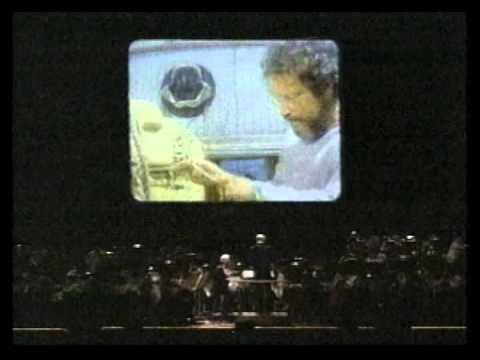
JAWS; Without Music and With Music
How is music able to evoke such a wide range of emotions? A large body of evidence accumulated from early times to present-day neuroscience suggests that music influences our feelings, thoughts, and actions. Recent experimental studies propose that different types of music can alter an individual's physical and psychological states. In fact, the mythology of many cultures, including Native American, Chinese, Greek, and ancient Egyptian peoples, includes references to the healing power of music. This is music's main power: its subtle and sometimes not-so-subtle ability to evoke conscious or subconscious feelings, mental images, and physical states in the listener.
Musical Connotation
For music to be effectively used for a specific purpose, participating individuals must share a common set of expectations and associations regarding the function or intent of the music. In his book Emotion and Meaning in Music (1961), Leonard B. Meyer refers to the connection between music and its function as a musical connotation. This connection applies when, over time, a piece of music becomes associated with certain events or experiences, such as the fanfare and stately march for a bride’s wedding entrance. The connection continues to take place to the point that when a person hears the music, a mental reference to the event is automatically triggered. However, for the musical connotation to be effective, everyone in the social group must share that connection.
Listen to the following four pieces of music. Which ones, if any, evoke a musical connotation?
A
Composer: Felix Mendelssohn
-
"A Midsummer Night's Dream, Op. 61, MWV M 13: Wedding March, Op. 61, No. 4"
B
Composer: Richard Wagner
-
"Lohengrin, Act III: Wedding March (arr. for organ)"
C
Composer: Edward Elgar
-
"Pomp and Circumstance, Op. 39: Military March No. 1 in D Major, Op. 39, "
D
Composer: Anonymous
-
"A la nana"
Pieces A and B might sound very familiar; they are both commonly played at weddings. Piece C is usually played at graduation ceremonies. However, piece D may not evoke any particular musical connotation for you, although to a particular social group, it is a well-known lullaby.
Musical connotation is reinforced by the use of certain instruments. The organ, for instance, is commonly associated with religious occasions. However, since culture is continuously changing with time, some musical associations stay while others change or are forgotten. In the Middle Ages, for instance, it was the harp, not the organ, that had religious connotations. Remnants of that connotation have been handed down over the centuries and continue to have an effect as visual symbols. It isn't rare to see images of chubby little angels playing the harp in certain art works and cartoons.
In summary, utility music is music that is used for a specific functional purpose, such as a wedding or religious ceremony, and a musical connotation is the association that people make between music and cultural events or personal experiences.
Aside from the physical or emotional effect that music may have on the listener, there is pleasure associated with listening to music for its own sake. Independent of extra-musical connotations, deep satisfaction may be derived from listening to the way different elements of music relate to each other in a composition. Those who endorse this point of view have sometimes been called absolutists. Absolutists believe that to understand a piece of music, one must focus solely on the nature and interplay between the sounds that make up a piece of music. For this group, the purpose of music lies in the interactions of the musical elements themselves, apart from any extra-musical context, including utilitarian purposes and musical connotations.