
Learning Objectives
- Explain how the Classical period (1750-1825) characteristics of order, objectivity, and harmonious proportion relate to the music characteristics of the period.
- Summarize how the American Revolution (1775-83) and the French Revolution (1789-99) profoundly changed political systems and social order.
- Classify the large-scale musical forms in which the Classical masters composed.
- Explain music making in the context of the royal court and the patronage system.
- Define form and absolute music, and relate these concepts to one another.
- Differentiate between the main musical forms of the Clasical-era by summarizing the development of the symphony, sonata, string quartet, and the concerto.
- Define and analyze the symphony, sonata, string quartet, and concerto forms in the context of the Classical period.
- Describe the impact of the major Classical composers Haydn, Mozart, and Beethoven.
- Discuss the impact of Beethoven's thirty-two piano sonatas.
- Compare and contrast the two types of Italian opera: opera buffa and opera seria.
Classical Period (1750-1825)
Mozart's Works
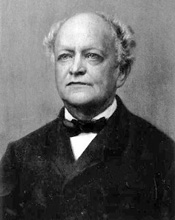
Unlike the very organized Haydn, who kept a chronological list of all his compositions, Mozart never bothered to organize his musical papers in any consistent fashion. In 1851, Dr. Ludwig von Köchel (1800-1877), botanist, musicologist, writer, composer, and publisher, began compiling a roughly chronological listing of Mozart's music that was published in 1862. This catalog initially numbered up to 626 pieces. Along with substantial revisions and additions by later musicologists, it remains in use today. The number of each work is preceded by the initial K (for Köchel). For example, the Piano Concerto No. 23 in A major is catalogued as K.488. Knowing the Köchel number of a composition helps one recognize whether a piece belongs among Mozart's earlier, middle, or later works.
Religious Music
Mozart composed almost all of his church music at the beginning of his career when he was working in Salzburg. Unfortunately, his two greatest choral works were left incomplete. The first of these was the gigantic Mass in C minor (1782), intended as an offering of thanks for his marriage to Constanze Weber. The second, also his last work, was the Requiem Mass in D minor.
Composer: Wolfgang Amadeus Mozart
-
"Requiem in D minor, K. 626: Lacrimosa dies illa"
Opera
Mozart's operas are the only ones from the 18th century that continue to be widely performed. For the most part, they fall into one of three categories: (1) Italian opera seria, based on serious plots, including Idomeneo (1780) and La Clemenza di Tito; (2) comic Italian opera, including The Marriage of Figaro (1786) and Così fan tutte (1790); and (3) German singspiel, including The Abduction from the Seraglio (1782).
Composer: Wolfgang Amadeus Mozart
-
"Le Nozze di Figaro K492: Crudel! Perché finora"
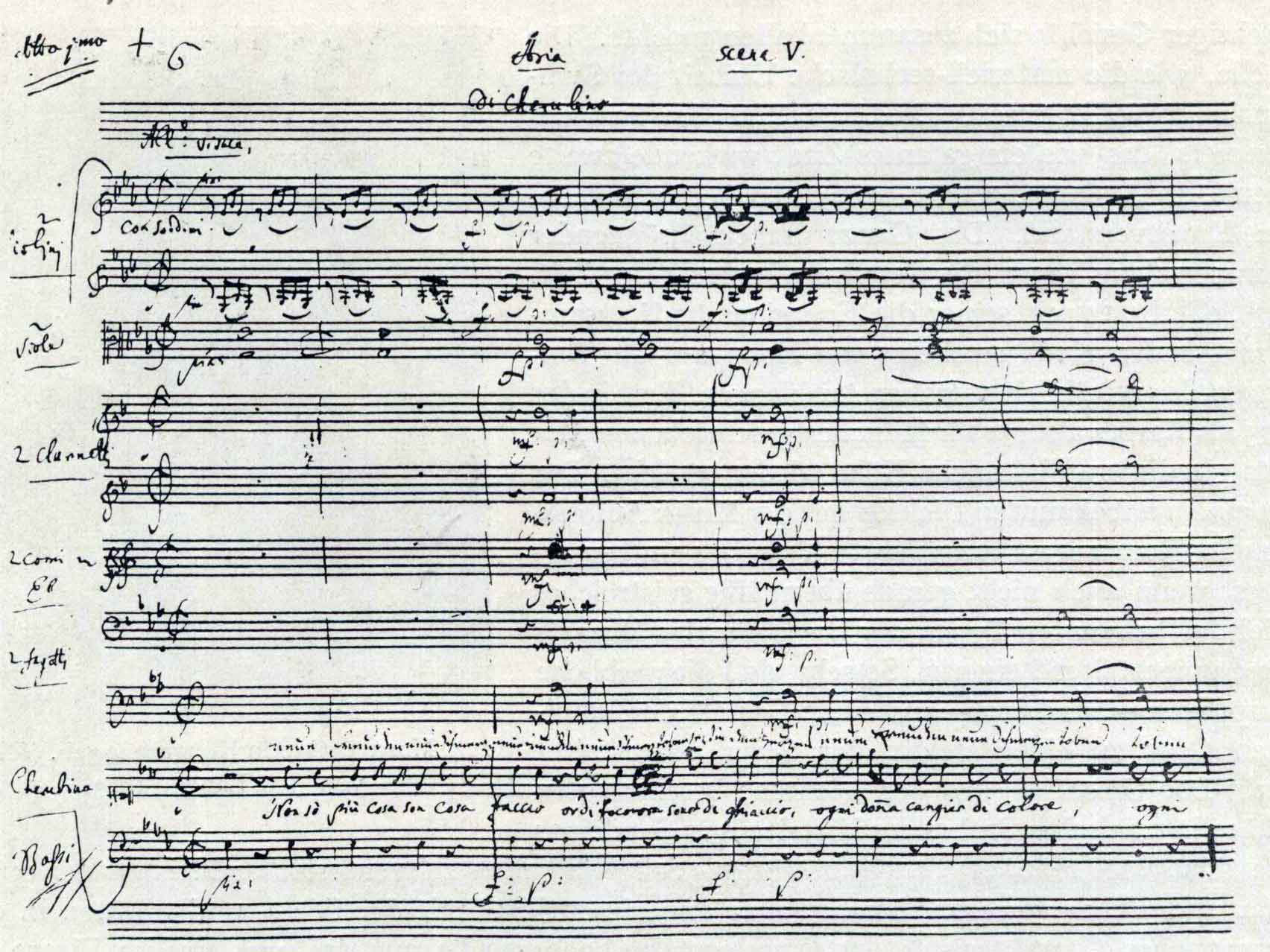
Mozart was essentially an operatic composer, although Salzburg offered him no real opportunity to exercise his talents in that direction. He wrote his greater stage works in the last decade of his life, starting with Idomeneo. In Vienna, where he subsequently settled, his first success came with the German Singspiel Die Entführung aus dem Serail (The Abduction from the Seraglio), a Turkish-themed work staged at the Burgtheater in 1782. Then followed a string of productions that cemented his reputation as a master of opera: Le nozze di Figaro (The Marriage of Figaro), an Italian comic opera with a libretto by Lorenzo da Ponte and based on the controversial play by Beaumarchais in 1786, and Don Giovanni, again with a libretto by da Ponte, in Prague in 1787. The opera buffa Così fan tutte (All Women Behave Alike) was staged briefly in Vienna in 1790, its run curtailed by the death of the Emperor. La Clemenza di Tito (The Clemency of Titus) was written for the coronation of the new Emperor in Prague in 1791, no such commission having been granted Mozart in Vienna. His last stage work, Die Zauberflöte (The Magic Flute), was mounted at the end of September at the Theater auf der Wieden. This fanciful opera was a huge success and had a long-running series of performances, although Mozart did not live long enough to reap the fame and financial rewards—he died in late 1791.
Composer: Wolfgang Amadeus Mozart
-
"The Magic Flute: O Isis und Osiris"
Composer: Wolfgang Amadeus Mozart
-
"The Magic Flute: Der Hölle Rache kocht in meinem Herzen (Hell's vengeance boils in my heart)"
Don Giovanni (1787), subtitled Humorous Drama, moves back and forth between high comedy and genuine tragedy in a plot that follows the career of the legendary Don Juan. In many ways, this work may be regarded as the greatest of the 18th-century Italian operas. One of the most famous arias from this opera is the Catalog aria (Scene 5, Act 1), in which Leporello, Don Giovanni's servant, lists his master's amorous conquests as recorded in the notebook he carries.
Composer: Wolfgang Amadeus Mozart
-
"Don Giovanni: Madamina! (Catalogue Aria)"
Delle belle che amò il padron mio;
un catalogo egli è che ho fatt'io;
Osservate, leggete con me.
Of the beauties my master has loved.
A list which I have compiled.
Observe, read along with me.
In Almagna duecento e trentuna;
Cento in Francia, in Turchia novantuna;
Ma in Ispagna son già mille e tre.
In Germany, two hundred and thirty-one;
A hundred in France; in Turkey ninety-one.
But in Spain already one thousand and three!
Cameriere, cittadine,
V'han contesse, baronesse,
Marchesine, principesse.
E v'han donne d'ogni grado,
D'ogni forma, d'ogni età.
Maidservants, city girls,
Countesses, baronesses,
Marchionesses, princesses,
Women of every rank,
Every shape, every age.
In Almagna duecento e trentuna;
Cento in Francia, in Turchia novantuna;
Ma in Ispagna son già mille e tre.
V'han fra queste contadine,
Cameriere, cittadine,
V'han contesse, baronesse,
Marchesine, principesse.
E v'han donne d'ogni grado,
D'ogni forma, d'ogni età.
In Germany, two hundred and thirty-one;
A hundred in France; in Turkey ninety-one.
But in Spain already one thousand and three!
Among these are peasant girls
Maidservants, city girls,
Countesses, baronesses,
Marchionesses, princesses,
Women of every rank,
Every shape, every age.
Di lodar la gentilezza,
Nella bruna la costanza,
Nella bianca la dolcezza.
Vuol d'inverno la grassotta,
Vuol d'estate la magrotta;
È la grande maestosa,
La piccina e ognor vezzosa.
To praise their kindness;
In brunettes, their faithfulness
In the very blonde, their sweetness.
In winter he likes the fat ones,
In summer he likes the thin ones.
He calls the tall ones majestic.
The little ones are always charming.
Pel piacer di porle in lista;
Sua passion predominante
È la giovin principiante.
Non si picca - se sia ricca,
Se sia brutta, se sia bella;
Purché porti la gonnella,
Voi sapete quel che fa
For the pleasure of adding to the list.
His greatest favorite
Is the young beginner.
It doesn't matter if she's rich,
Ugly, or beautiful;
If she is rich, ugly or beautiful.
If she wears a petticoat,
You know what he does.
Instrumental Music
The incomparable craft with which Mozart composed his operas is also evident in his instrumental music. He was able to write and remember finished compositions in his head. Stop and think about what that means—every note, every rest, every dynamic marking was fully composed in his mind before being set to paper. Mozart once said, “The committing to paper is done quickly enough. For everything is already finished, and it rarely differs on paper from what it was in my imagination.” His instrumental music includes 41 symphonies, 12 violin concertos, over 25 piano concertos, some 14 concertos for other instruments, 26 string quartets, 17 piano sonatas, over 40 violin sonatas, and many other chamber music works. Many of the piano concertos were composed for his own use in his public performances. These concertos demonstrate some of Mozart's most progressive ideas. His string quartets also attest to his mastery of musical form.
Composer: Wolfgang Amadeus Mozart
-
"Piano Sonata in A major, K.331: III. Rondo alla turca"
Composer: Wolfgang Amadeus Mozart
-
"Oboe Quartet in F Major, K. 370: II. Adagio"
Composer: Wolfgang Amadeus Mozart
-
"Piano Concerto in A major, K.488: I. Allegro"
Composer: Wolfgang Amadeus Mozart
-
"Piano Concerto No. 21 in C major, K. 467: II. Andante"
His final three symphonies, Nos. 39, 40, and 41 (Jupiter Symphony), were composed during the summer of 1788, three years before his death. They stand among Mozart's finest contributions to instrumental music.
Composer: Wolfgang Amadeus Mozart
-
"Symphony No. 41 in C major, K. 551, Jupiter: III. Menuetto: Allegretto"