
Learning Objectives
- Outline the social, cultural, and political impact of WWI and WWII.
- Discuss the growth of the United States as a world power.
- Describe the impact of technological advancements on the development of music in the twentieth century.
- Describe, compare and contrast the main stylistic differences of Contemporary music styles including impressionism, post-Romanticism, serialism, and expressionism.
- Summarize the changing nature and application of the concept of tonality throughout the century.
- Discuss the impact of Claude Debussy's "Prelude to the Afternoon of a Faun" in light of the Symbolist movement in literature.
- Illustrate how the Russian composer Igor Stravinsky experimented with rhythm, new instrumental combinations, and the percussive use of dissonance, and discuss the impactof these techniques on contemporary music.
- Describe the impact of Arnold Schoenberg and the Second Viennese School on 20th-century music.
- Distinguish the main stylistic differences of nineteenth- and twentieth-century composers and styles.
- Describe the musical and political impact of “national schools” of composition that developed across Europe during the 20th century.
- Explain the impact of composer Aaron Copland on American contemporary music.
- Describe the impact of Latin American composers on the larger "art music" scene and repertoire.
- Define and analyze the main differences between jazz, ragtime, and blues.
Latin American Music
Before 1492, music was created in the New World exclusively by Native American peoples including the North American tribes; the Incas, Mayans, and Aztecs of Central and South America; and the far-flung tribes of the Amazon rainforest. Within 100 years, the Aztecs had been wiped out, the English and French had established colonies alongside the Spanish and Portuguese, disease brought by the settlers had decimated the native populations, and Africans had been brought in as slave labor, particularly along the eastern seaboard of the continent. As a result, the music of the Native American people was replaced in many areas by European or African music. Native American music still exists in its original form only in places European settlers could not reach, such as the heights of the Andes mountains along the western seaboard and deep in the Amazon rainforest.
Thus Latin American music, particularly in the areas where the European population absorbed indigenous populations, became a mixture of three cultures: Native American, European, and African. Where slave trade ships first landed, places such as Brazil (samba) or Cuba (mambo, son), the African influence predominates. In Perú (huayno) and Bolivia, more of the Native American sound may be heard. In Argentina (tango) and Mexico (mariachi, norteño), the influence of European music is more evident.
During the 20th century, Latin American composers, like their peers in the United States, began to find their own voices. While many of the finest musicians such as Antonio Carlos Jobim (1925-1994) or Gilberto Gil (b. 1942) pursued careers in a popular music form, many others chose to compose art music with a strong nationalistic flavor.
Heitor Villa-Lobos
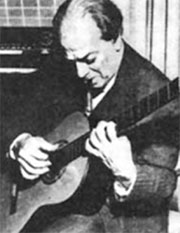
Starting as a samba guitar player in street-music bands in Rio de Janeiro, Villa-Lobos went on to become Brazil’s greatest and most prolific composer. His series of works entitled Bachianas Brasilieras combined the rhythms and dances of Brazilian music with forms found in the music of J. S. Bach. In "El Trenecito", the second movement from the Bachianas Brasilieras No. 2, he tries to reproduce the sounds of a train ride into the Amazon rainforest. His guitar works, such as the mysterious Étude No. 11, are among the greatest in the guitar repertoire.
Carlos Chávez (1899-1978) of Mexico and Alberto Ginastera (1916-1983) of Argentina also introduced classical works with a Latin American flair (such as Malambo) to the world listening public. Today, Latin American composers are counted among the world's great living composers.
Composer: Heitor Villa-Lobos
-
"Bachianas Brasileiras, No. 2: El Trenecito"
Composer: Heitor Villa-Lobos
-
"Étude No. 11"
Composer: Alberto Ginastera
-
"Malambo"
Daniel Catán
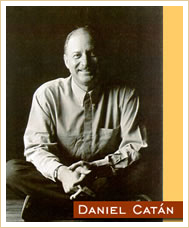
Daniel Catán used modern techniques freely and fluidly to create music of matchless beauty. Primarily a composer of operas, his subject matter is frequently derived from works that belong to the South American literary movement known as magical realism. His sources have included Nathaniel Hawthorne, Octavio Paz, and Gabriel García Márquez.
Born in Mexico City in 1949 of Russian Sephardic Jewish descent, he spent his first 14 years in Mexico. Later, he studied philosophy and music in England. After several years at Sussex and Southampton, Catán moved to the United States where he earned his Ph.D. at Princeton under the tutelage of Milton Babbitt (1916-2011). Having spent just as many years outside of Mexico as he had growing up there, he returned to Mexico City in 1977 to rediscover his Spanish-speaking roots, serving a term as Music Administrator at the Palace of Fine Arts. In 1994, San Diego Opera premiered his opera Rappaccini's Daughter, launching a career in the United States that was further buttressed by the Houston premieres of Florencia en el Amazonas and the comic opera Salsipuedes. With Rappaccini's Daughter, Catán became the first Mexican composer to have an opera produced in the United States.
Composer: Daniel Catán
-
"Rappaccini's Daughter: Beatriz's final Aria"