Learning Objectives
- Explain how the Classical period (1750-1825) characteristics of order, objectivity, and harmonious proportion relate to the music characteristics of the period.
- Summarize how the American Revolution (1775-83) and the French Revolution (1789-99) profoundly changed political systems and social order.
- Classify the large-scale musical forms in which the Classical masters composed.
- Explain music making in the context of the royal court and the patronage system.
- Define form and absolute music, and relate these concepts to one another.
- Differentiate between the main musical forms of the Clasical-era by summarizing the development of the symphony, sonata, string quartet, and the concerto.
- Define and analyze the symphony, sonata, string quartet, and concerto forms in the context of the Classical period.
- Describe the impact of the major Classical composers Haydn, Mozart, and Beethoven.
- Discuss the impact of Beethoven's thirty-two piano sonatas.
- Compare and contrast the two types of Italian opera: opera buffa and opera seria.
Classical Period (1750–1825)
Vienna: Classical Music Capital
At the end of the 18th century, Vienna flourished under the Hapsburg emperor Joseph II, who fulfilled Enlightenment ideals via progressive policies such as a free press, improved education, reduction in the power of the clergy, and emancipation of the peasantry. He also generously supported the arts. Haydn achieved renown in Vienna as Europe’s greatest symphony composer, and Mozart was drawn to the lively cosmopolitan capital to make his mark on the musical world. In the process, he became good friends with Haydn; the two even played in an amateur string quartet together. The young Beethoven also traveled to Vienna, first to play the piano for Mozart and later to study with Haydn, and remained there for the rest of his life.
Haydn and Mozart had much in common. Both lived in Vienna, excelled at instrumental performance (Mozart on piano and Haydn on violin), composed in all of the major genres, and expressed an indefinable element of charm or even whimsy in their works. Yet in other respects they could not have been more different. One was a venerated gentleman, the other an impudent young man. One held a long, prosperous position with a respected music–loving aristocratic family, the other suffered through tremendous financial ups and downs, partly incurred by his own mismanagement. One was a self–made musician who lived to the ripe age of 77, the other a child prodigy who died at 35.
In his own words...
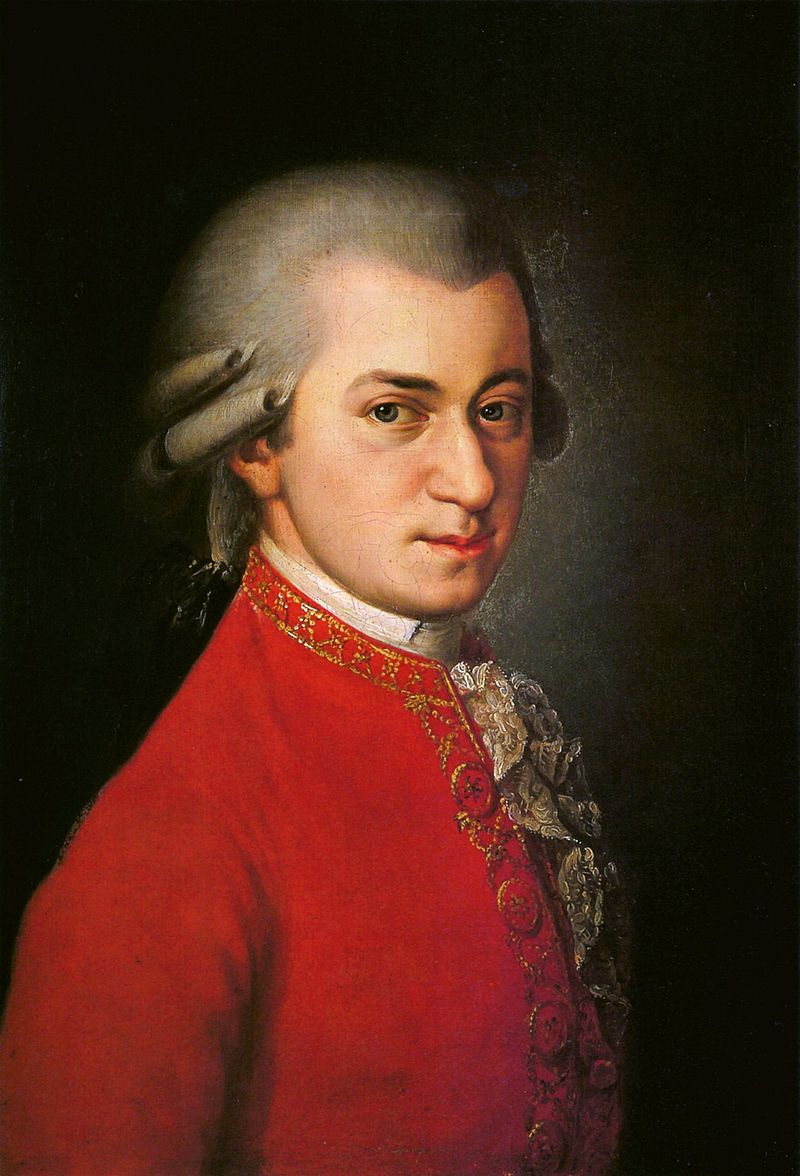
“He alone has the secret of making me smile and touching me to the bottom of my soul.”
“There is no one who can do it all—to joke and to terrify, to evoke laughter and profound sentiment—all equally well, except Joseph Haydn.”
Mozart on Haydn
Franz Joseph Haydn
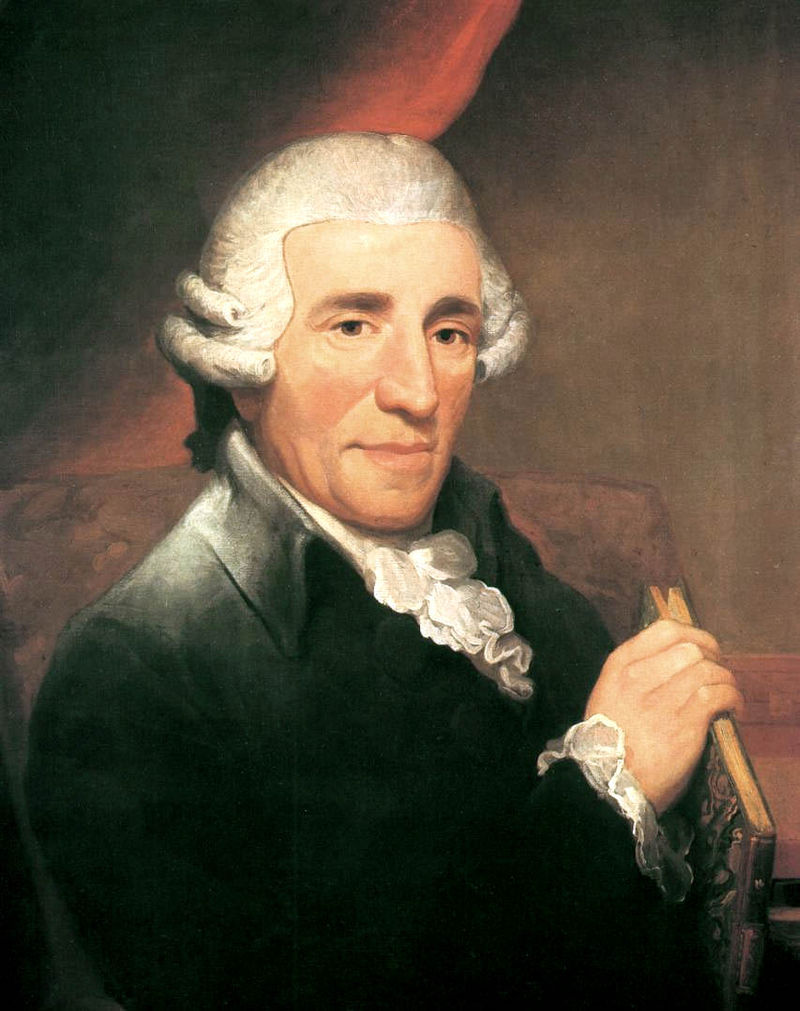
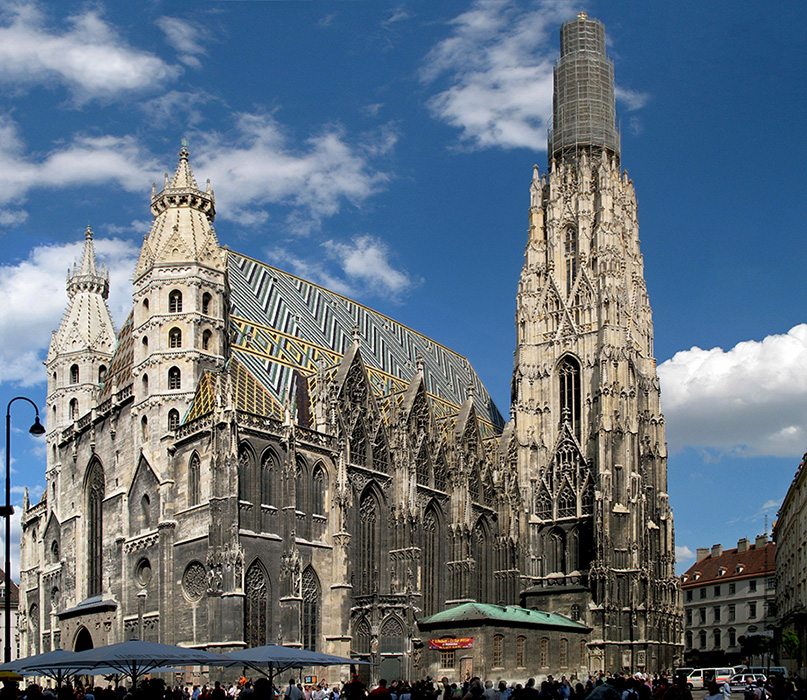
Haydn was born in the small Austrian village of Rohrau in 1732, the year of George Washington's birth. His father, Mathias Haydn, was a wagon-wheel maker and amateur musician. In this small rural setting, Haydn grew up surrounded by folk music and dance. Throughout his life, he retained a fondness for the melodies, and rhythms of this down-to-earth music, so it’s not surprising to see that they found their way into his works. Mathias Haydn was an avid singer and had learned to accompany himself on the harp, so music was an important part of the household; his younger brother Michael (1737–1806) became quite a famous composer in his own right. Joseph (he never went by the name “Franz”) had a beautiful singing voice, and at the age of eight, he became a choirboy at St. Stephen's Cathedral in Vienna. By 1749, when his voice changed, he was out of luck and, in his own words, essentially thrown out into the street. He scraped by as a freelance violinist, street serenader, and music teacher, and eventually, in 1752, as valet-accompanist for the Italian composer Nicola Porpora—who also taught the famous castrato Farinelli—and from whom Haydn later declared that he had learnt "the true fundamentals of composition".
In 1761, after several years under the patronage of nobility, notably Baron Carl Josef Fürnberg—under whose employment he wrote his first string quartets—and as Kapellmeister to Count Morzin—for whom he wrote his first symphonies—Haydn became Vicekapellmeister in the Court of Prince Paul Anton Esterházy, head of an extremely wealthy Hungarian royal family.
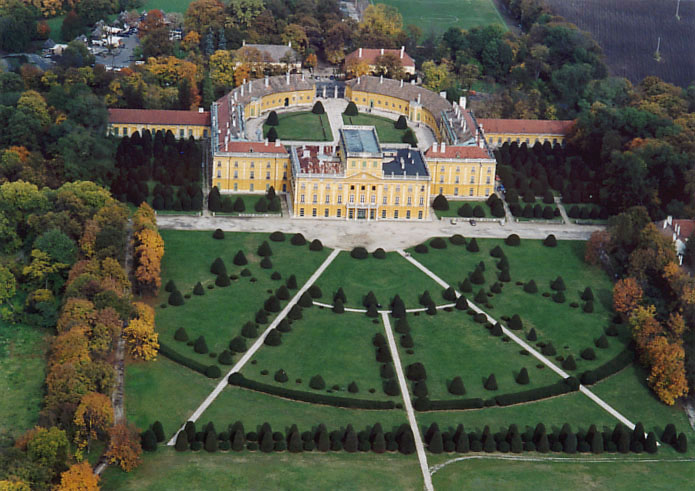
Prince Paul Anton had high hopes for assembling the best orchestra in Europe for the family palace at Eisenstadt, about 40 miles from Vienna. Unfortunately, the prince died the following year. As it turned out, a man who had even larger dreams, and who would furnish Haydn with tremendous musical resources for the next 30 years succeeded him: Paul Anton’s brother Prince Nikolaus Esterházy. Inspired by the magnificence of the French palace at Versailles and the Hapsburg’s Schönbrunn in Vienna, Nikolaus set about building the palace known as Esterháza, which would become Hungary’s grandest Rococo structure. Haydn's life and daily activity revolved primarily around this magnificent estate.
The premises contained an opera house, two concert halls, and a marionette theater, all of which required a constant stream of musical productions. Haydn had a daunting workload: in addition to conducting two concerts and two opera performances a week, he was responsible for daily chamber music, rehearsing the orchestra, training the singers, and even looking after the upkeep of the instruments and the music library.
Haydn composed on demand; that is, he composed whatever the prince wished for. An intensely musical man, Prince Nikolaus played the cello, the viola da gamba, and the nowadays almost-forgotten baryton, a cello-like instrument with added strings that could be plucked (see Discover Video for examples.) The prince expressed great appreciation for everything Haydn produced—including, of course, an astounding 126 trios for baryton, viola, and cello (or viola da gamba)—and rewarded him with the means and freedom to experiment and develop his musical ideas. The relative isolation of Esterháza also helped in that respect. Though Haydn kept up with musical developments through trips to Vienna and visits by other musicians to Esterháza, he later noted that he was, in a sense, shielded from external criticism and influence and thus forced to rely on his own musical instincts.
Haydn’s original contract with Prince Paul Anton Esterházy stipulated that Haydn’s compositions could not be sold or given away, but this requirement gradually relaxed under Prince Nikolaus, and Haydn was able to take commissions from across Europe. His fame spread accordingly. When Nikolaus died in 1790 and his son and successor Anton all but eliminated music from the Esterházy court, Haydn was thus poised to step into the musical scene as a well-respected free agent. He moved to Vienna, supported by a pension from the Esterházys, but left almost immediately for London, where he spent two extended visits (1790–92 and 1794–95) giving highly successful concert series organized by the German impresario Johann Peter Salomon. His twelve “London” symphonies (nos. 93–104), which include the “Surprise,” “Military,” “Drumroll,” and “London” symphonies, are among his most popular works today. London embraced Haydn: he was hosted by royalty and awarded an honorary doctorate from Oxford University. It was while travelling to London for the first visit that Haydn met the young Ludwig van Beethoven in Bonn, and upon his return to Vienna, agreed to take him on as his student. Unfortunately, during the course of the year, the relationship between the two men soured.
Haydn returned to Vienna from his second London trip in 1795 to serve Nicholas II, the newest Esterházy prince, as Kapellmeister on a part-time basis. Because of the relative lightness of his duties, he was able to spend most of his time in his own home, a large house near the center of Vienna, and concentrate on compositions of his own choice. He became a public figure, venerated by most of his musical contemporaries, who gave him the nickname “Papa Haydn,” referring to the man’s approachability and sense of humor. He died on May 31, 1809, following the surrender of the city to the troops of Napoleon, who just a few days before had ordered a guard of honor in front of the composer’s house.