
Learning Objectives
- Outline the social, cultural, and political impact of WWI and WWII.
- Discuss the growth of the United States as a world power.
- Describe the impact of technological advancements on the development of music in the twentieth century.
- Describe, compare and contrast the main stylistic differences of Contemporary music styles including impressionism, post-Romanticism, serialism, and expressionism.
- Summarize the changing nature and application of the concept of tonality throughout the century.
- Discuss the impact of Claude Debussy's "Prelude to the Afternoon of a Faun" in light of the Symbolist movement in literature.
- Illustrate how the Russian composer Igor Stravinsky experimented with rhythm, new instrumental combinations, and the percussive use of dissonance, and discuss the impactof these techniques on contemporary music.
- Describe the impact of Arnold Schoenberg and the Second Viennese School on 20th-century music.
- Distinguish the main stylistic differences of nineteenth- and twentieth-century composers and styles.
- Describe the musical and political impact of “national schools” of composition that developed across Europe during the 20th century.
- Explain the impact of composer Aaron Copland on American contemporary music.
- Describe the impact of Latin American composers on the larger "art music" scene and repertoire.
- Define and analyze the main differences between jazz, ragtime, and blues.
Music of the 20th and 21st Centuries (1900-Present)
Anton Webern
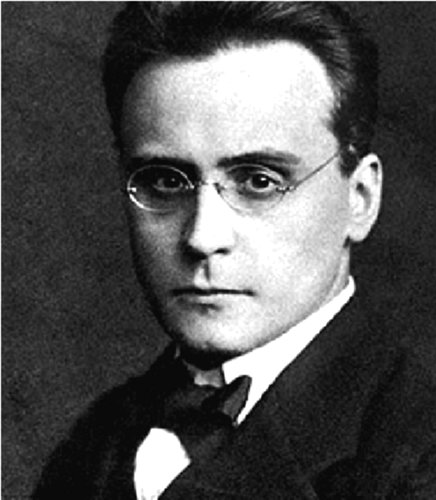
Anton Webern was born on December 3, 1883, into a well-to-do Austrian aristocratic family, the son of Carl von Webern, a mining engineer who worked as a civil servant of the government of the Hapsburg Empire, and Amalie von Webern an amateur pianist and mezzo-soprano singer from whom he received his first musical instruction. It was most probably her influence that led him to become above all a vocal composer—more than half of his output is for the voice. An enthusiastic cellist from an early age, Webern also played chamber music with his sisters Maria and Rosa, and participated in his local orchestra.
In 1902, Webern enrolled in the University of Vienna to study history of art, music, and musicology with the Bohemian-Austrian musicologist Guido Adler (1855-1941)—founder of modern musicology. Adler introduced him to the Renaissance Netherlandish composers Josquin des Prez, Johannes Ockeghem, and Heinrich Isaac, whose musical intricacy and purity of expression would have such a decisive influence on his compositional approach. Adler was also a close friend of Gustav Mahler—at the time the director of the Vienna Court Opera—and an admirer of Arnold Schoenberg, who was to become Webern’s private composition teacher two years later, in 1904.
By 1906, when he graduated with a doctorate in musicology for his work on the Choralis Constantinus—a collection of over 375 Gregorian chant-based polyphonic motets for the proper of the mass by Heinrich Isaac (c.1450-1517)—Webern had already composed two pieces for cello and piano, one piece for large orchestra, influenced by Liszt and Wagner, and a dozen short songs for voice and piano.
Three of these early works are particularly interesting not only because they show his early inclination towards detail, carefully crafted music phrases, precise instrumentation, and subtlety of expression, but also because they give us a glimpse of the musical tradition that he was leaving behind as he started working with Schoenberg in 1904.
The first, Nachgebet der Braut (The Bride's Night Prayer) (1903), is the third song from his Three Poems for Voice and Piano. It is based on a poem by Richard Dehmel (1863-1920), the German writer whose controversial work had also inspired the 24-year old Schoenberg’s Verklarte Nacht (Transfigured Night) in 1899—a piece that had a profound impact on Webern when he heard it in 1903.
Composer: Anton Webern
-
"Nachgebet der Braut (The Bride's Night Prayer)"
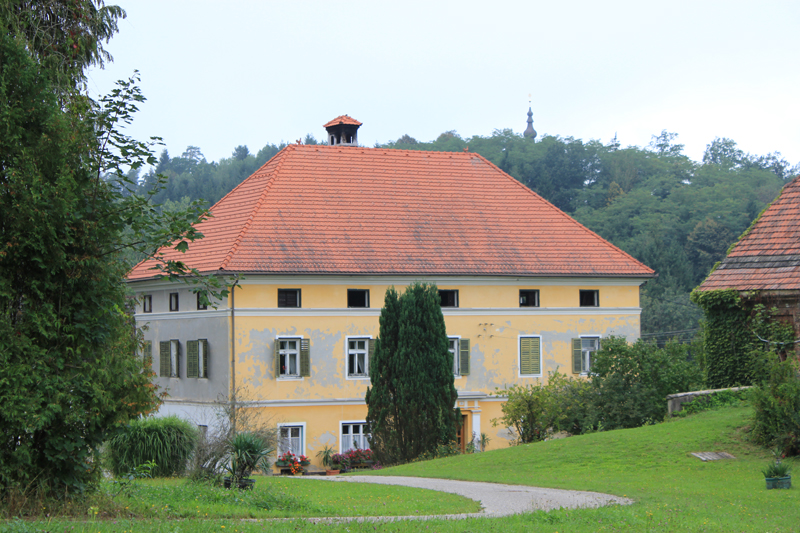
In die Kissen bet ich nach dir,
Ins Firmanent!
O könnt ich sagen,
Dürft er wissen,
Wie meine Einsamkeit
Mich brennt!
O Welt, wann darf ich ihn umschlingen!
O, lass ihn mir im Traume nahn,
Mich wie die Erde um ihn schwingen
Und seinen Sonnenkuss empfahn,
Und seine Flammenkräfte trinken,
Ihm Flammen wiedersprühn,
O Welt, bis wir zusammensinken
In überirdischem Erglühn!
O Welt des Lichtes, Welt der Wonne!
O Nacht der Sehnsucht, Welt der Qual!
O Traum der Erde: Sonne, Sonne!
O mein Geliebter – mein Gemahl!
Into the pillows I repeat your name,
Into the firmament!
O that I could say,
That he might know,
How my loneliness
burns me!
O world, when may I embrace him!
O let him come to me in my dream,
Swing me like the earth about him
And receive his sun-kiss
And drink his strong flames,
Send flames back to him,
O world, till we sink together
Into the over-earthly glow!
O world of light, world of delight!
O night of longing, world of torment!
O dream of the earth: sun, sun!
O my beloved - my husband!
The second work, composed in 1904, at the age twenty, a few months before starting his four-year study period with Schoenberg, is a twelve-minute tone poem titled Im Sommerwind, (In The Summer Wind), which he subtitled “Idyll for Large Orchestra.” Written in late-Romantic vein for a—large indeed—orchestra of 13 woodwind players, six horns, a pair of trumpets, percussion, two harps, and, of course, strings, it was his most ambitious project up to that point and reflects the influence of Richard Strauss and Gustav Mahler, whose music Webern was consuming as an avid concert-goer in Vienna during those student days.
Listen for the hushed introduction by the strings, marked Ruhig bewegt (Quietly agitated), which are soon joined by the lush sounds of the rest of the orchestra. A solo oboe introduces a lighthearted motif that plays a significant role throughout the work followed by contrasting episodes characterized by quick changes of mood and color. When the atmosphere calms down again, the ethereal quality of the opening measures returns to end the piece.
Composer: Anton Webern
-
"Im Sommerwind (In The Summer Wind)"
The third early work, the Langsamer Satz (Slow Movement) for string quartet, composed in June 1905— “love music” in Webern’s own words—is his longest original composition with a little over thirteen minutes in duration. Written in traditional sonata-form in the key of C minor, it was originally intended as the slow movement of a string quartet. Its inspiration came from a trip to the valleys of lower Austria with his first cousin, Wilhelmine Mörtl, who became his wife in 1911. Webern wrote in his diary: "To walk forever like this among the flowers, with my dearest one beside me, to feel oneself so entirely at one with the Universe, without care, free as the lark in the sky above—oh what splendor...when night fell (after the rain) the sky shed bitter tears but I wandered with her along a road."
Composer: Anton Webern
-
"Langsamer Satz (Slow Movement)"
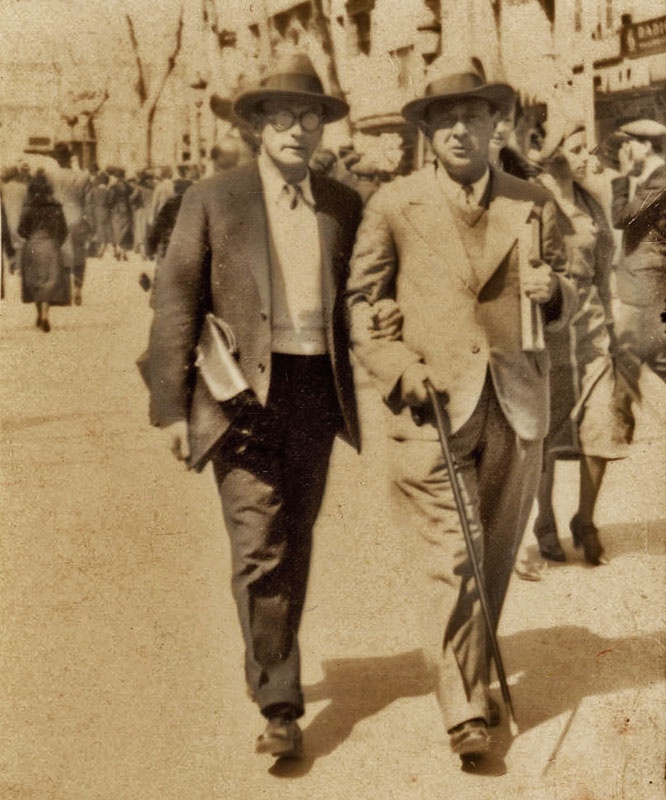
Neither of those three early pieces was performed during Webern’s lifetime, not for lack of opportunity, but because he didn’t consider worthy of publication anything he wrote before his Passacaglia Op. 1 (1908), which followed them. In fact, Im Sommerwind was discovered by the noted Webern scholar Hans Moldenhauer in 1961—sixteen years after Webern’s death—and given its first performance on May 25, 1962 to open the First International Webern Festival at the University of Washington in Seattle, with Eugene Ormandy conducting the Philadelphia Orchestra. Webern often reviewed the score with his students as a demonstration of how originality could be achieved even within the conservative framework of his early compositions.
Webern’s mother Amelie died of diabetes in 1906, a deeply traumatic event that eventually compelled him to seek psychiatric help from Dr. Alfred Adler who, together with Sigmund Freud, was an important member of the Vienna Psychoanalytic Society. Apparently, Webern was never able to fully recover from her loss, as is quite obvious from the the following passage in a letter to his friend and colleague Alban Berg: “Except for the violin pieces and a few of my orchestra pieces, all of my works from the Passacaglia on relate to the death of my mother.”
Webern’s studies with Schoenberg ended in 1908. By then, he had written several chamber and keyboard pieces, vocal music including the Five Songs after Poems by Richard Dehmel (1906)—which mark the end of his tonal works—and the orchestral Passacaglia Op. 1, the last work he wrote under Schoenberg’s guidance.
Composer: Anton Webern
-
"Passacaglia, Op. 1"
The Passacaglia Op. 1, written in one single movement, a structure that Schoenberg strongly favored, foreshadows some of the hallmarks of Webern’s later compositional style:
- Obsession with counterpoint as a likely consequence of his love of the Netherlandish composers Josquin des Prez, Pierre de la Rue, Johannes Ockeghem, Jacob Obrecht, and above all Heinrich Isaac, who had such a strong influence on him during his formative years as a composer.
- Interest in music of earlier time. The passacaglia is a form commonly used in the Baroque period, that consists of a repeated theme in the bass and a series of variations on that theme. Webern would continue to use traditional compositional techniques, especially canons, and other forms—symphony, concerto, string trio, string quartet, and variations—clothed in a modern musical language.
- Predominantly soft dynamics (pianissimo) where clarity of sound is, however, still maintained, even over-emphasized. Also notice how instruments often play in hushed dynamics to create a sometimes disquieting atmosphere augmented by the use of low registers. Nonetheless, there are also sudden outbursts of intense louder passages.
- Very discrete presentation of the main theme—in this case string pizzicatos interrupted by rests.
- Despite lush tones and textures, a mostly subtle treatment of orchestral timbres.
The overall chromatic feeling of the Passacaglia reveals the influence of Schoenberg’s 1906 Chamber Symphony No. 1, Op. 9, with its shifting, extended, and often ambiguous tonalities. Webern later transcribed it for flute, clarinet, violin, cello, and piano in 1922.
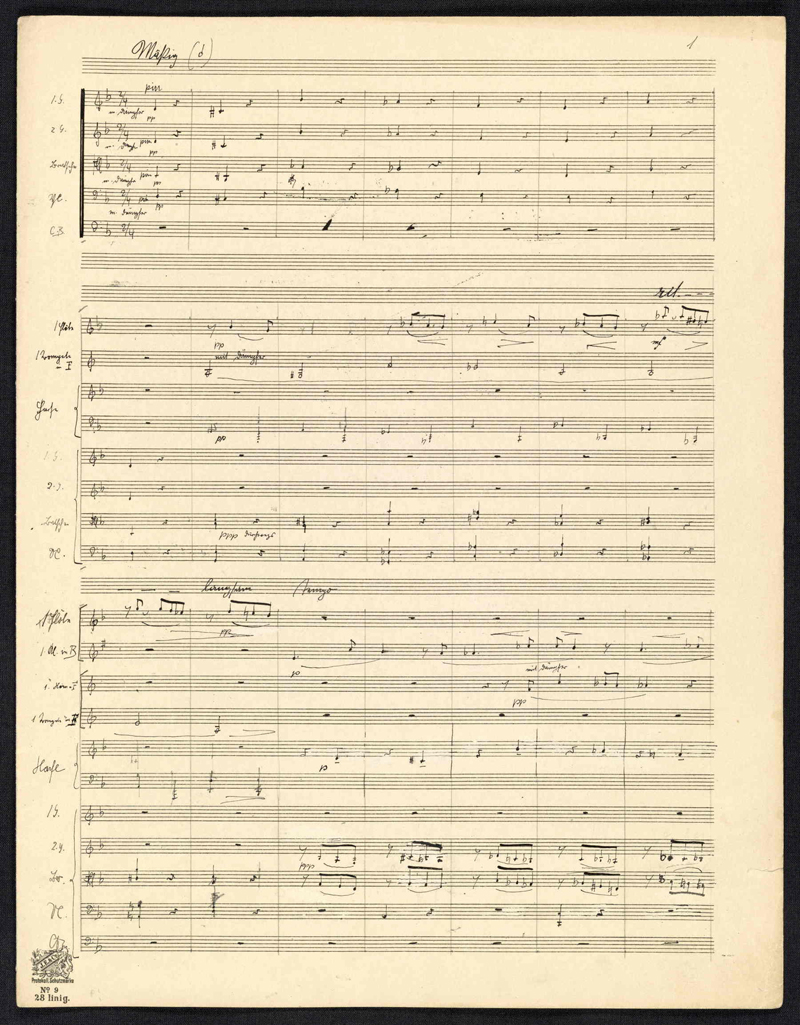
Composer: Arnold Schoenberg
-
"Symphony No. 1, Op. 9"
Composer: Anton Webern
-
"Schoenberg Symphony No. 1, Op. 9 - Transcribed by Anton Webern"
With his Passacaglia Op. 1, Webern takes us fully into the vague musical landscape of atonality. Although some of the expressivity of late Romanticism is still there, the music is no longer built around a fixed tonal center. Critics obviously hated it.
Free Atonality
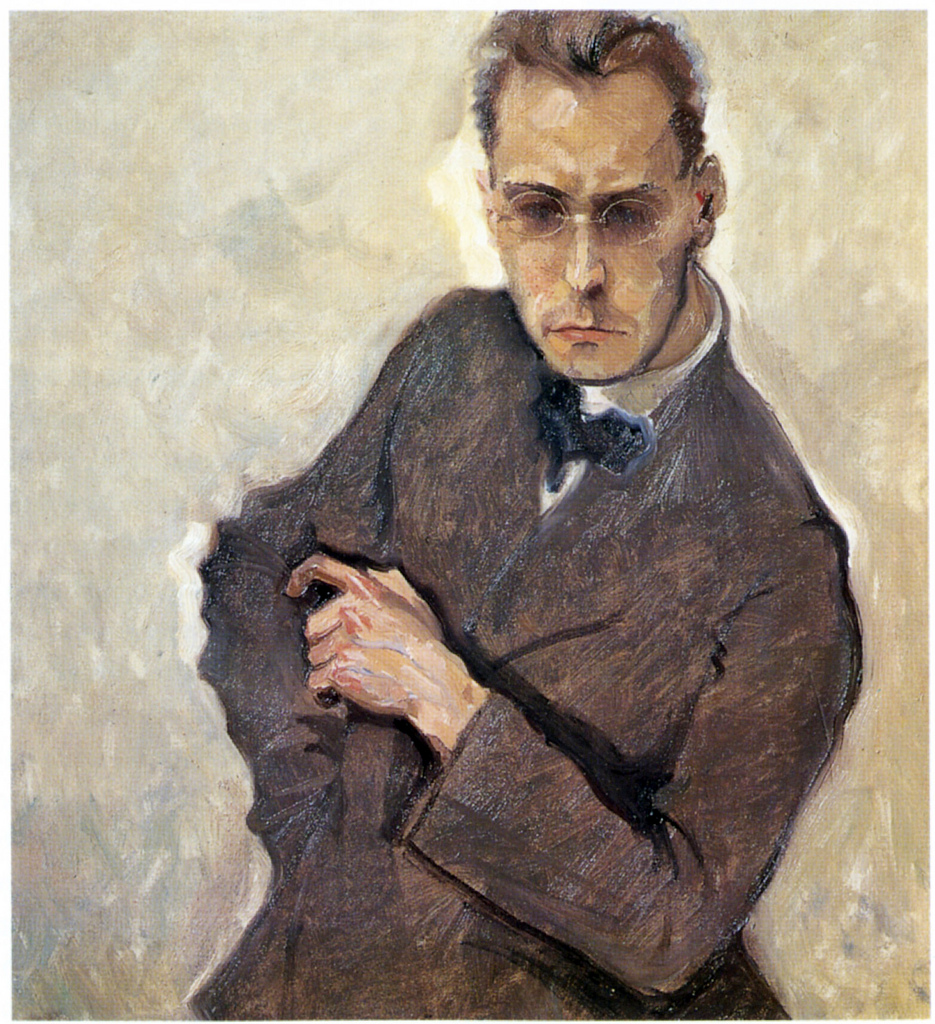
Despite its modernity, Webern’s Passacaglia still sounds somewhat familiar to our ears, which is probably the main reason for its continued popularity. That is not the case, however, with his next two published works, the Six Pieces for Large Orchestra Op. 6 (1909, revised in 1928) and Five Pieces for Orchestra, Op. 10 (1913), where he ventures fully into atonality—a musical idiom that audiences still find unfamiliar more than a century later.
Notwithstanding their obvious strangeness, the Op. 6 pieces are a good window into the new and peculiar world that Webern was starting to explore. In the intense brevity that prompted Stravinsky to describe them as "dazzling diamonds," they still retain some ties to traditional composition methods and encompass a wide, though often subtle, range of moods from the tension of the second piece, to the gentle vagueness of the third. The fourth and longest, titled “Marcia funebre” in the original version, can be described as an enigmatic, mostly hushed reverberation of cymbals, gongs, and low brass, that in the end explodes into a deafining crescendo—remember the sudden outbursts of intense loud passages in the Passacaglia—where the percussion plays alone, perhaps for the first time in European music. Part of the allure of the orchestration lies in the use of solo instruments in unusual registers: the flute at the beginning of the first piece; the piccolo, the high muted horn, the low muted trumpet in the fourth; and in the sixth, the handful of muted tuba notes floating up like bubbles from the bottom of a tank. The dynamic level is almost always soft, and the brass and strings, solo and tutti, are generally muted.
Composer: Anton Webern
-
"Six Pieces for Orchestra, Op. 6: I. Langsam (Slow)"
Composer: Anton Webern
-
"Six Pieces for Orchestra, Op. 6: II. Bewegt (Very moderate)"
Composer: Anton Webern
-
"Six Pieces for Orchestra, Op. 6: III. Massig (Moderate)"
Composer: Anton Webern
-
"Six Pieces for Orchestra, Op. 6: IV. Sehr massig (very moderate)"
Composer: Anton Webern
-
"Six Pieces for Orchestra, Op. 6: V. Sehr langsam (Very slow)"
Composer: Anton Webern
-
"Six Pieces for Orchestra, Op. 6: VI. Langsam (Slow)"
Webern's Six Pieces for Orchestra further showcase musical characteristics that will be present in his future works in one way or another:
- Extreme brevity. Webern's complete published works last about 3 hours.
- Short passages with repeated pitches. Longer passages change direction constantly.
- Mainly narrow intervals (major and minor seconds and thirds) in early works. Wider sevenths and ninths later on.
- Clarity of texture and orchestration. The different instruments stand out clearly to the listener even in dense passages. Strong differentiation between melody and accompaniment.
- Use of short ostinato patterns, and exact or varied repetition of melodic and rhythmic patterns.
- Mainly soft dynamics with outbursts of louder passages.
- Rhythmic simplicity.
The 5 Pieces for Orchestra Op. 10, first conducted by Webern himself in June 1924, during the Fourth Festival of the International Society of Contemporary Music (ISCM) in Zurich—almost ten years after being composed—represent a radical change in style from Op. 6. Time is even more compressed—the whole set lasts less than five minutes; only the third piece lasts longer than a minute—and melodies frequently feature big, angular leaps. The movements do not have a theme in common. The music appears to be made up exclusively of raw musical elements—notes, intervals, rhythms, volume, and tone color—condensed into extremely intense utterances. The instrumentation for 18 soloists, follows established practices by including the expected strings (harp, violin, viola, cello, double bass), woodwinds (flute, oboe, E-flat clarinet, bass clarinet, horn, trumpet, trombone), and percussion, but at the same time breaks traditional molds by including other unconventional instruments such as mandolin, guitar, celesta, cowbells, and harmonium.
Composer: Anton Webern
-
"5 Pieces Op. 10, No. 1"
Composer: Anton Webern
-
"5 Pieces Op. 10, No. 2"
Composer: Anton Webern
-
"5 Pieces Op. 10, No. 3"
Composer: Anton Webern
-
"5 Pieces Op. 10, No. 4"
Composer: Anton Webern
-
"5 Pieces Op. 10, No. 5"
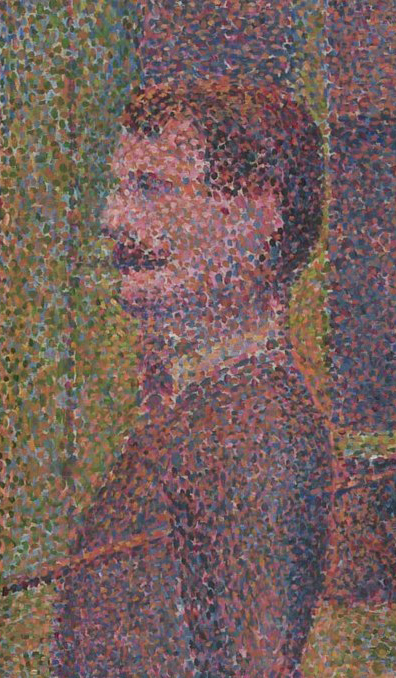
In the third piece of the set, marked very slow and extremely delicate, different instruments split one melodic line between them. This is one of the most brilliant examples of a technique called klangfarbenmelodie (tone-color melody), first suggested by Schoenberg in his Harmonielehre (Study of Harmony) (1911)—the textbook he "learned from [his] pupils." Klangfarbenmelodie breaks up the melodic line by distributing different parts of it between different instruments, so each performer gets to play just a few consecutive notes of the musical idea at any given time. The effect, as you can hear, is comparable to pointillism in art, a technique developed in 1886 by the French painters Georges Seurat and Paul Signac, that uses small dots, typically of pure color, to create images that don’t make a lot of sense when viewed up close—all you see are small dots—but become blended in the observer's eye when viewed from a distance. In art, as in music, the artist's aim is to produce greater degrees of luminosity and tone color. The equivalent musical effect are subtle gradations and blending of timbres (tone color). Klangfarbenmelodie points to the possibility of using timbre as a structural element in music equal in importance to pitch, duration, and rhythm, an idea that Webern would later implement in his serial compositions.
Critics attending the Zurich 1924 ISCM Festival hailed Webern as a "true musical poet." This performance, and the premiere of his choral work Das Augenlicht (Through Our Open Eyes Light Flows Into the Heart) Op. 26 at a later 1938 ISCM Festival in London, might have been the only two successful evenings in Webern's career from the music critic's point of view. For the most part, his compositions would otherwise elicit ridicule from audiences and the press' invective. A humble, gentle, and kind man, Webern was, however, intransigent in musical matters. He temperament wasn’t well suited to follow Mahler’s maxim: "I run with my head against the wall, but it is the wall which will crack". On the contrary, as time went by, Webern became increasingly reclusive and compulsive. His sketchbooks are full of corrections, reworked beginnings, and revisions upon revisions.
Other works written in this new atonal style are the Four Pieces for Violin and Piano, Op. 7 (1910), the Six Bagatelles for String Quartet, Op. 9 (1913), and the Three Little Pieces for Cello and Piano, Op. 11 (1914). Composed two weeks before the beginning of World War I, the Three Pieces for Violoncello and Piano, Op. 11—prime examples of the brevity and contrasting sound effects in Webern’s “ aphoristic” style—had to wait ten years for its first public performance, in Mainz, 2nd December, 1924. The conciseness and concentration of expression are unprecedented; together, they last only one minute and 23 seconds. These are the last orchestral works that Webern would publish before his adoption of the twelve-tone composition method.
Composer: Anton Webern
-
"Three Little Pieces for Cello and Piano, Op. 26: I. Slow"
Composer: Anton Webern
-
"Three Little Pieces for Cello and Piano, Op. 26: II. Very animated"
Composer: Anton Webern
-
"Three Little Pieces for Cello and Piano, Op. 26: III. Very calm"
The years after 1908 were not particularly happy ones for Webern. To make ends meet, he took a series of minor positions conducting in second-rate theaters of provincial cities in what are nowadays the Czech Republic and Poland before moving back to Vienna. The mounting frustration of having to deal with theatrical life and low performance standards was made somewhat more bearable only by his marriage in 1911. Four years later, in 1915, he joined the Austrian army as a volunteer, but was dismissed after a year because of poor eyesight.
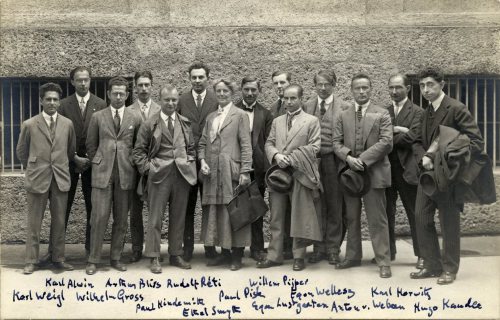
After WWI and the 1917-18 theatre season in Prague, Webern settled in Mödling, an Austrian district located approximately 14 km south of Vienna. Between 1918 and 1922, he acted as supervisor and rehearsal coach in Schoenberg's Society for Private Performances, an organization created to promote the performance of modern works, including those of Max Reger, Igor Stravinsky, Béla Bartó k, Claude Debussy, Maurice Ravel, Erik Satie, and of course compositions by Schoenberg, Berg, and Webern. During this time he also taught private piano students, and together with other notable avant-garde composers, was present at the 1922 creation of the International Society for Contemporary Music (ISCM) in Salzburg, which has since grown into an international network of members from around fifty countries devoted to the promotion and presentation of contemporary music.
When the Society for Private Performances was dissolved due to rising costs in 1922—after 353 performances of 154 works in a total of 117 concerts—Webern took on minor posts as director of a choral society, conductor of the Worker’s Symphony Orchestra and Chorus—sponsored by the Austrian government—and choirmaster at the Vienna Israelite Institution for the Blind. In the meantime, he also managed to secure regular conducting appearances on Austrian Radio, which started to transmit classical music in 1924.
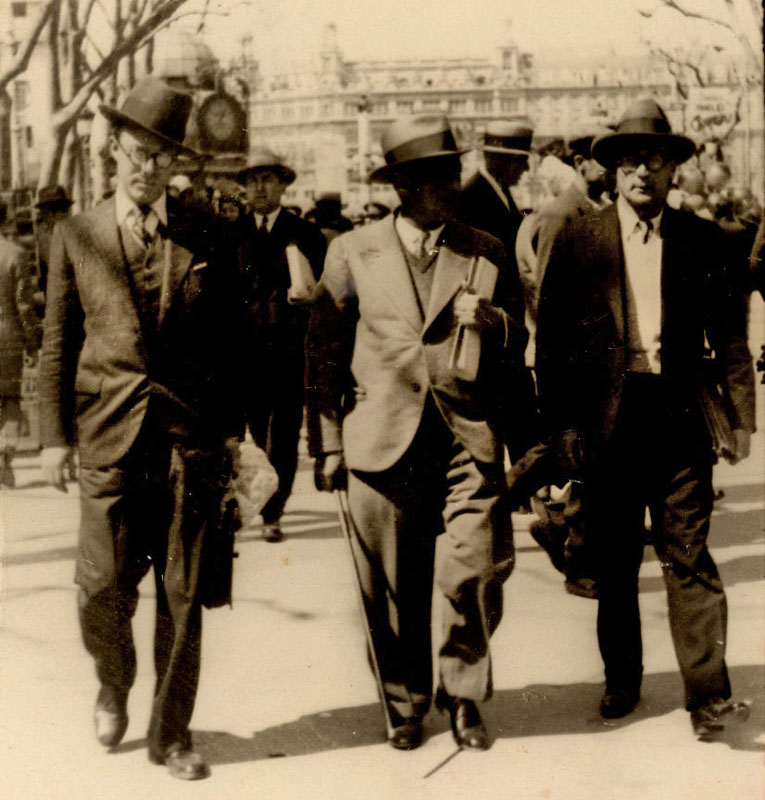
Long before the Anschluss—the annexation of Austria by Germany in 1938—Webern had already been dismissed from his teaching position at the Vienna Israelite Institution for the Blind. His conducting activities had also ceased after the “July Putsch” of July 25 to 30, 1934, when Austrian Nazi partisans tried to force the Austrian government to resign and install a regime favorable to Hitler’s Germany. Thereafter, he derived his income from private teaching, a few random conducting engagements—in London (the BBC), Zurich, Berlin, and Barcelona—and from arranging, proof-reading, and evaluating new music submitted for approval to his publisher, Universal Edition in Vienna.
Dodecaphonism and Serialism After WWI
Webern first adopted dodecaphonism—the "Method of Composing with Twelve Notes related only to one another"—in 1924, the same year Schoenberg formulated it. The method is based on using the twelve pitches of the chromatic scale within a certain fixed sequence called a twelve-tone row or series—hence the word serialism. By this point, however, Webern had already built his own brand of atonality upon the rigorous contrapuntal discipline he had absorbed from the Renaissance Netherlandish composers—his “forebears” as he lovingly referred to them—so the apparent inflexibility of dodecaphonism didn’t have a notable impact on his overall approach to composition.
The Drei Volkstexte (“Three Traditional Rhymes”) for soprano, violin, clarinet, and bass clarinet written in 1924, but not performed until 1953, eight years after Webern’s death, are based on quasi-religious poems: the first is a reprimand to sinners, the second a prayer to the Virgin, and the third an imploration to Jesus for salvation. Webern uses dodecaphonism particularly in the second and third songs, where the twelve notes of the chromatic scale are first presented by the instruments and the voice—although this is not evident by listening alone unless you have perfect pitch. The music apparently baffled Webern’s own publisher, Universal Edition, Vienna.
Composer: Anton Webern
-
"Drei Volkstexte, Op. 17: I. Armer Sünder, du (Poor Sinner, You)"
Composer: Anton Webern
-
"Drei Volkstexte, Op. 17: II. Heiland, unsre Missetaten (Saviour, Our Misdeeds)"
Composer: Anton Webern
-
"Drei Volkstexte, Op. 17: III. Liebste Jungfrau, wir sind dein (Dearest Virgin We Are Yours)"
In his String Trio in two movements, Op. 20 (1927) and subsequent compositions, Webern uses serial composition techniques that would be tremendously influential in future avant-garde and electronic music composers. In serial technique, a series of numbers govern the behavior of one of more music parameters—pitch, duration, timbre, and volume—in a composition. For instance, in the first movement of Webern’s String Trio, marked ‘very slow’ some notes always appear in the same register every time they happen in the series. Webern usually divided the 12-note series into groups of three or four notes, and assigned each instrument just a few notes to play before another instrument took over the series. This procedure seems to give some sense of acoustic consistency to the piece.
In all its brevity—Op. 20 last barely over nine minutes—Webern manages to use most of his distinctive compositional devices—pointillism, symmetrical figures, palindromes, and frequent changes in timbre and articulation—to produce music that is undeniably jagged and austere, as will be the case with most of his pie
The Trio, Op. 20, marks the largest leap in Webern’s compositional evolution and is now acclaimed as one of his greatest creations.
Even more than Schoenberg or Berg, Webern was absorbed in the symmetrical possibilities of twelve-tone music. With its intricate canons, where he takes pointillism even further than before, the Symphony Op. 21—dedicated to his daughter Christine—is probably the best known of his twelve-tone pieces. The "phrases" assigned to each instrument are often so short that they consist of one or two notes. The overall effect is that of constantly changing colors that merge into one another. This time, however, there are no sudden contrasts between the changing textures.
In the first movement of Op. 21, Webern clearly shows his predilection for simultaneous horizontal and vertical symmetries, mirror images, and palindromes. Thankfully, both halves of the movement are repeated so it’s somewhat easier to orient oneself. Granted, this is not easy music to listen, but the pattern of the music might start emerging as you listen for repeated intervals and the drone-like quality of the strings playing above and below other instruments.
Composer: Anton Webern
-
"Symphony, Op.21: I. Adagio - Ruhig schreitend (Treading quietly)"
The winds state the theme of the second movement. This time, a four-voice canon is followed by eight separate variations and a Coda, divided by changes in instrumentation and other musical contrasts. A figure played by the winds and harp in a slighter slower tempo separates the third and the fourth variations. Listen for the Coda, which starts with a solo violin phrase.
Composer: Anton Webern
-
"Symphony, Op.21: II. Variationen (Variations)"
From 1927 onwards, Webern, his wife, and their four children Amalie, Maria, Peter, and Christine lived mostly near Vienna. After 1933, Webern started living an increasingly isolated life. That was the year that Schoenberg, who had predicted that his dodecaphonic system would ensure the hegemony of German music for centuries to come, was ironically forced to emigrate to the United States due to anti-Semitic reactions to his music and the imposition of the 1933 ‘Law for the Restoration of the Professional Civil Service,’ which banned Jews from holding university positions. Alban Berg’s death two years later, in 1935, didn’t make things any better.
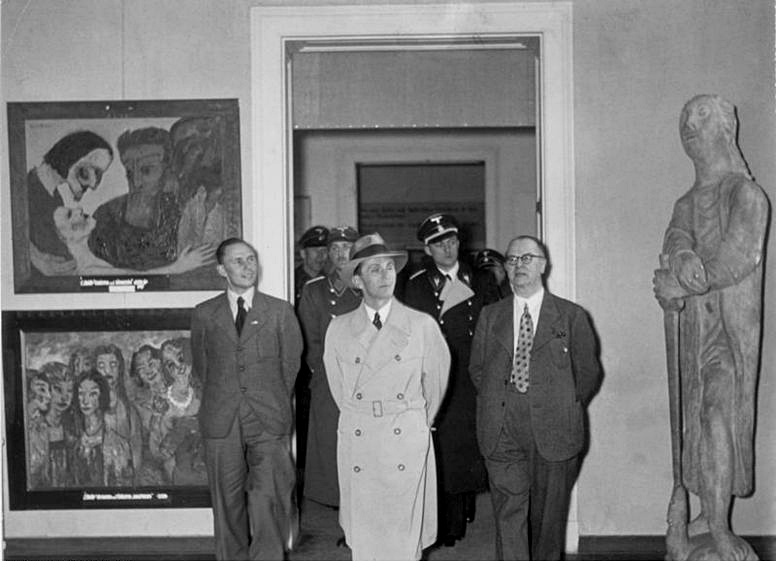
Under the policy of Gleichschaltung (Coordination)—the process by which Nazis aimed to establish totalitarian control of every aspect of society including art—music composed under their regime had to fit their standards for "good" German music. The only composers who fit those standards were the three that the German people revered: Beethoven, Wagner—for whom Hitler had an almost fanatical devotion—and Bruckner, all of whom lived prior to the 20th century. Together with music by progressive composers, and that of all Jewish composers, Webern’s work was classified as too radical, even ‘degenerate,’ and its performance and publication was banned. Listening to banned composers in Nazi Germany was considered a subversive act that had potentially dreadful consequences.
Nonetheless, Webern didn’t stop composing. Important works of this period include the Concerto for Nine Instruments, Op. 24 (1934), Variations for Piano, Op. 27 (1935), String Quartet, Op. 28 (1938), and the Variations for Orchestra, Op. 30 (1940), which became especially influential because of its intervallic treatment and originality of texture and tone color.
Composer: Anton Webern
-
"Variations, Op. 30"
In 1945, during the final months of World War II, Webern learned that his son Peter had been killed on the Eastern Front. As the Red Army army advanced towards Austria, he took his family to the resort town of Mittersill, a village in western Austria near Salzburg, seeking refuge at the home of his daughter, Christine Mattel. Not long thereafter, the United States Army arrived in the area and a detachment was assigned to stop black-market activities between the locals and the soldiers.
Webern’s death is shrouded in mystery and controversy. According to Hans Moldenhauer’s 1961 book The Death of Anton Webern, on the night of September 15, 1945, Webern apparently stepped outside his daughter’s house to smoke a contraband cigar provided by his son-in-law, Bruno Mattel—a former SS-member and black market operative—while two American soldiers were conducting an operation to arrest him for illicit trafficking in food. It isn’t clear if Webern didn’t understand the “hands-up” order by one of them, U.S. Army cook Raymond Norwood Bell of North Carolina, or Norwood bumped into Webern and felt he was being attacked as he later claimed. The fact is that Norwood tragically shot Webern three times in the chest and abdomen. A Gregorian Requiem Mass was held in Mittersill’s small church, and five persons followed Webern’s coffin to the cemetery.
Legacy
Webern created an extremely personal musical style based on his fascination with economy, symmetry, and his deep knowledge of Renaissance composers. His complete published works, which include arrangements of his own and other composer's works, comprise 31 pieces composed between 1908 and 1944. All of these, except for Op. 17, 24, and 28, were originally published by Universal Edition, Vienna.
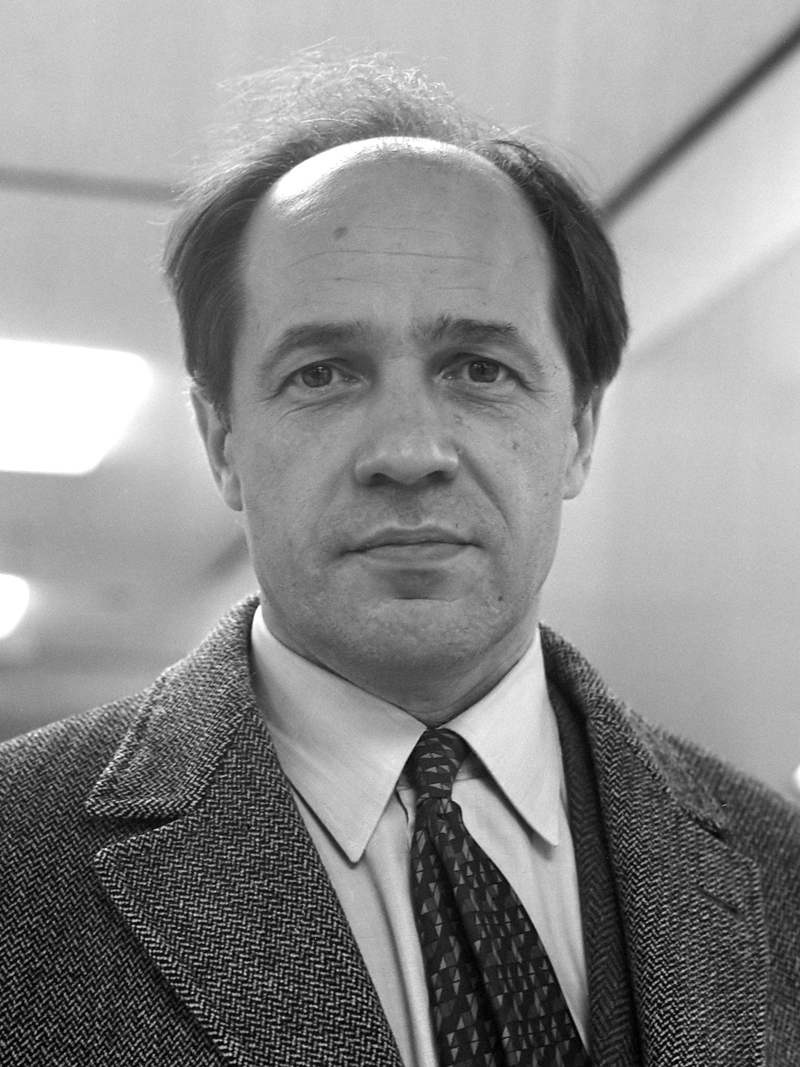
It was Webern rather than his mentor, Arnold Schoenberg, who exerted the greatest influence on the generation of post-WWII avant-garde and electronic music composers on both sides of the Atlantic. Young musicians, specially those associated with the Darmstadt International Summer Courses for New Music in Germany during the 1950s, such as Bruno Maderna, Karlheinz Stockhausen, Luciano Berio, John Cage, György Ligeti, and Luigi Nono, but chief among them Pierre Boulez, were strongly influenced by Webern's atonal and serial composition techniques. The label “post-Webern serialism” is still applied to some of their music. Boulez (1925-2016), who as composer took Webern’s serialism to its ultimate consequences, and as conductor recorded his complete works, once hailed him as the "The Last Threshold" to the future of music.
In America, Webern’s influence was further extended by his students Ren é Leibowitz (1913-1972)—who also promoted Schoenberg's music in France, and is the author of one of the earliest theoretical treatises on twelve-tone technique—and Jacques-Louis Monod (b. 1927), who also championed Schoenberg and Berg in during the late 40s and much of the 1950s. It wasn’t just young composers who were attracted to Webern, however. Well-established figures such as Igor Stravinsky and Aaron Copland, and jazz musicians working in the US also used serial composition techniques in the 1950s. Nonetheless, most of Webern’s music, like Schoenberg’s, continues to challenge mainstream audiences.
References: Ross, Alex (2007-10-16). The Rest Is Noise: Listening to the Twentieth Century (p. 74). Farrar, Straus and Giroux. Kindle Edition.