
Learning Objectives
- Outline the social, cultural, and political impact of WWI and WWII.
- Discuss the growth of the United States as a world power.
- Describe the impact of technological advancements on the development of music in the twentieth century.
- Describe, compare and contrast the main stylistic differences of Contemporary music styles including impressionism, post-Romanticism, serialism, and expressionism.
- Summarize the changing nature and application of the concept of tonality throughout the century.
- Discuss the impact of Claude Debussy's "Prelude to the Afternoon of a Faun" in light of the Symbolist movement in literature.
- Illustrate how the Russian composer Igor Stravinsky experimented with rhythm, new instrumental combinations, and the percussive use of dissonance, and discuss the impactof these techniques on contemporary music.
- Describe the impact of Arnold Schoenberg and the Second Viennese School on 20th-century music.
- Distinguish the main stylistic differences of nineteenth- and twentieth-century composers and styles.
- Describe the musical and political impact of “national schools” of composition that developed across Europe during the 20th century.
- Explain the impact of composer Aaron Copland on American contemporary music.
- Describe the impact of Latin American composers on the larger "art music" scene and repertoire.
- Define and analyze the main differences between jazz, ragtime, and blues.
Music of the 20th and 21st Centuries (1900-Present)
The Breakdown of Tonality and Early Modernism
Igor Stravinsky
At the beginning of the 19th century, Beethoven almost single-handedly ushered in a new musical era. One hundred years later, Arnold Schoenberg and Igor Stravinsky found themselves in a similar position. The two composers had, however, very different views regarding the direction music should take. Schoenberg came from the German post-Romantic tradition, while Stravinsky's roots were in Russian nationalism and the French Impressionism of Debussy.
Stravinsky may not have invented an entirely new compositional technique, as Schoenberg did with his twelve-tone system, but the startling originality of Stravinsky's works, coupled with a fresh emphasis on an irregular but powerful rhythmic drive, made his music far more widely accepted by the public and arguably more influential to other musicians.
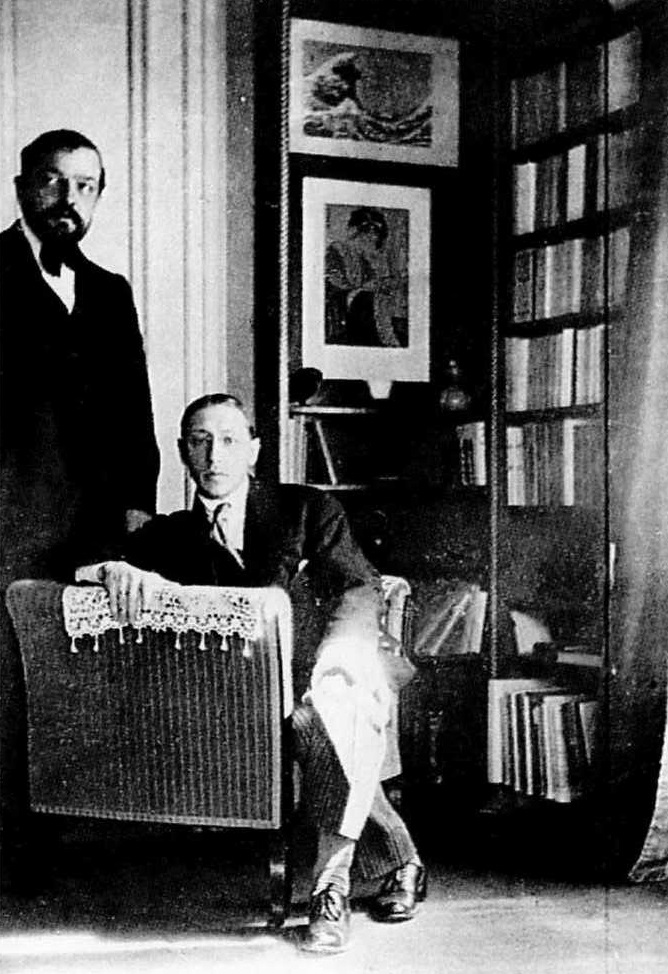
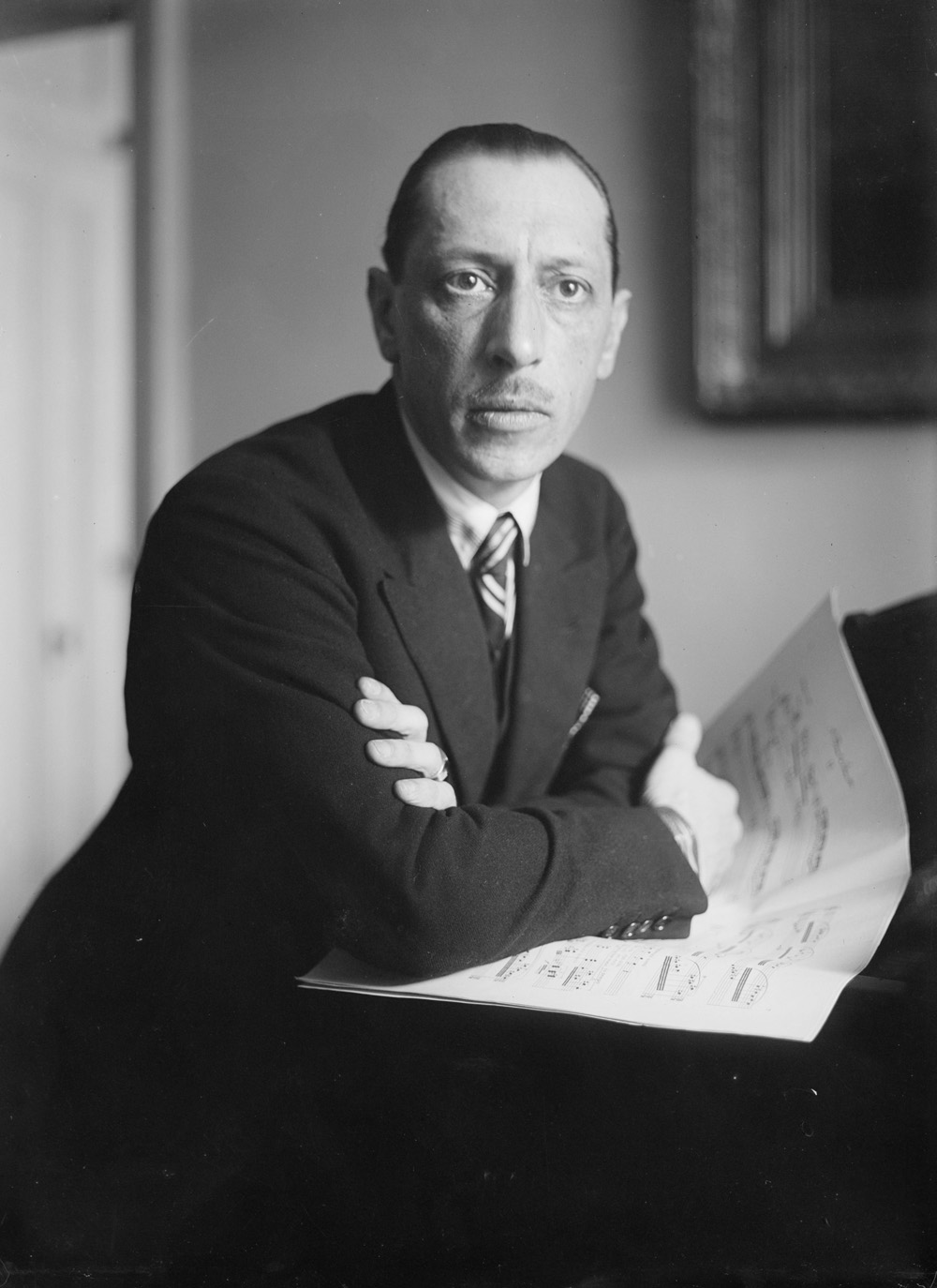
Stravinsky was born near St. Petersburg, Russia, but spent most of his creative life in Paris and the United States. His father was Fyodor Stravinsky, a famous bassist with the Russian Imperial Opera, and Igor's first musical experiences were in the opera house. He deeply admired Tchaikovsky, who died when Stravinsky was eleven. He recalled in a memoir that one of his deepest musical impressions was a performance of Tchaikovsky's final symphony, the Symphony No. 6 in B Minor (Pathétique), at the end of the older composer's life.
Composer: Pyotr Ilyich Tchaikovsky
-
"Symphony No. 6 in B Minor, Op. 74, TH 30 "
Fyodor wanted his son to be a lawyer and sent him to St. Petersburg University. Stravinsky complied with his legal studies but spent his free time studying music. After his father's death in 1902, Igor began taking lessons in orchestration from Rimsky-Korsakov, who became something of a father figure to him. It is extraordinary that aside from these lessons and his own study of counterpoint, Stravinsky never received any formal musical training or completed a music degree.
Avant-Garde Period
In 1909, two of Stravinsky's works, Feu d'artifice (Fireworks) and the Scherzo Fantastique, were presented in a concert in St. Petersburg. As fate would have it, sitting in the audience was the ballet impresario Sergei Diaghilev, founder of the Paris–based Ballets Russes (Russian Ballet) and one of the greatest talent-spotters in music history. Impressed by what he had heard, he decided to commission his first modern ballet from Stravinsky.
Firebird (1910), Petrushka (1911), and Le Sacre du Printemps (The Rite of Spring) (1913), three ballets commissioned by Diaghilev for the Ballets Russes, established Stravinsky as one of the most recognized composers in the world and leader of the 20th-century music avant-garde.
Composer: Igor Stravinsky
-
"The Firebird Suite: Finale"
Composer: Igor Stravinsky
-
"Petrushka: First Tableau: The Shrovetide Fair"
Composer: Igor Stravinsky
-
"Le Sacre Du Printemps (The Rite Of Spring): Part I: The Adoration of the Earth"
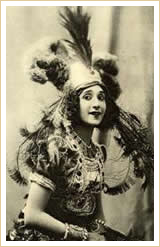
The Firebird, presented at the Paris Opera in 1910 with choreography by Michel Fokine and costumes and set by the artist Marc Chagall, was an enormous success. Stravinsky became an international figure overnight. The Firebird also launched the international career of Vaslav Nijinsky, the world-famous Russian dancer of Polish origin who was another of Diaghilev's protégés. The ballet is based on the Russian folk tale of a magical bird that is both a blessing and a curse to its captor, Prince Ivan. Follow the Listening Guide as you listen to the finale of this compelling work, which remains popular in performance today, often as an orchestral suite.
Stravinsky's second ballet, Petrushka, also based on Russian folklore, was produced a year later. Even though The Firebird introduced Stravinsky as an original musical genius in the process of discovering himself, the influence of his teacher, Rimsky-Korsakov, is still quite obvious in the score. In contrast, the musical language of Petrushka was entirely new harmonically, rhythmically, and instrumentally. While both works relied on folk-music melody, The Firebird was a naive, sweet, childlike fairy tale while Petrushka was a drama of great power and originality.
Petrushka further cemented Stravinsky's reputation as a modern master. The story, laid out in four tableaux (scenes) and based on traditional Russian puppet theater, depicts a typical Russian fairground in St. Petersburg during Carnival week in the 1830s. Petrushka, one of three puppets that have magically been endowed with human feelings and emotions, suffers from his master's cruelty and the neglect of the ballerina puppet he has fallen in love with. In the end, Petrushka is killed by the third puppet—a Moor—but comes back as a ghost to mock his tormentors.
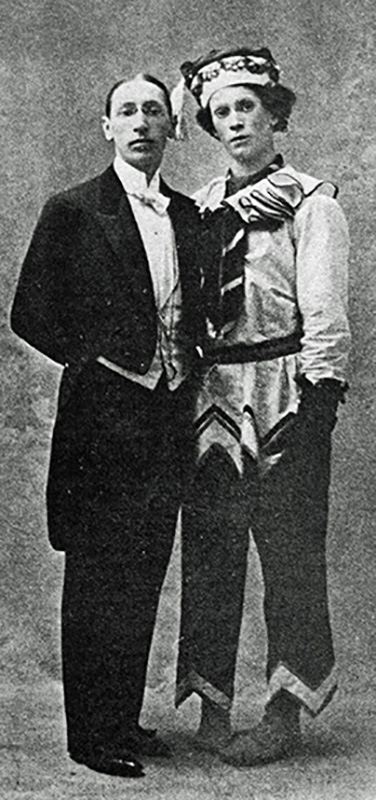
The first scene is titled "The Shrovetide Fair." In the Christian tradition, "shrove" is the festival day before the beginning of Lent. In this scene, Stravinsky uses polyrhythms, polytonality , pentatonic and whole tone scales, and juxtaposed timbres to portray the voices and noise in the busy fairgrounds. The influence of folk music is also evident in the use of the "Song of the Volochebniki (singing beggars)" taken directly from a Russian Orthodox Easter carol.
Composer: Igor Stravinsky
-
"Petrushka: First Tableau: The Shrovetide Fair" [ 03:11-03:39 ]00:28
Composer: Igor Stravinsky
-
"Petrushka: First Tableau: The Shrovetide Fair" [ 00:48-01:15 ]00:27