
Learning Objectives
- Outline the social, cultural, and political impact of WWI and WWII.
- Discuss the growth of the United States as a world power.
- Describe the impact of technological advancements on the development of music in the twentieth century.
- Describe, compare and contrast the main stylistic differences of Contemporary music styles including impressionism, post-Romanticism, serialism, and expressionism.
- Summarize the changing nature and application of the concept of tonality throughout the century.
- Discuss the impact of Claude Debussy's "Prelude to the Afternoon of a Faun" in light of the Symbolist movement in literature.
- Illustrate how the Russian composer Igor Stravinsky experimented with rhythm, new instrumental combinations, and the percussive use of dissonance, and discuss the impactof these techniques on contemporary music.
- Describe the impact of Arnold Schoenberg and the Second Viennese School on 20th-century music.
- Distinguish the main stylistic differences of nineteenth- and twentieth-century composers and styles.
- Describe the musical and political impact of “national schools” of composition that developed across Europe during the 20th century.
- Explain the impact of composer Aaron Copland on American contemporary music.
- Describe the impact of Latin American composers on the larger "art music" scene and repertoire.
- Define and analyze the main differences between jazz, ragtime, and blues.
Music of the 20th and 21st Centuries (1900-Present)
Music of Modern Europe: England
During the Romantic period, Edward Elgar ushered in a great renaissance in English music. Gustav Holst, Ralph Vaughan Williams and Benjamin Britten continued this trend well into the 20th century.
Gustav Holst
Gustav Holst (1874-1934) was an English composer whose music lay between Romanticism and Impressionism. From the orchestral suite The Planets, the movement entitled "Jupiter" is at times reminiscent of Elgar’s work in its nobility, yet the size of the orchestra owes more to the influence of Mahler.
Composer: Gustav Holst
-
"The Planets, Op. 32: Jupiter from The Planets"
Ralph Vaughan Williams
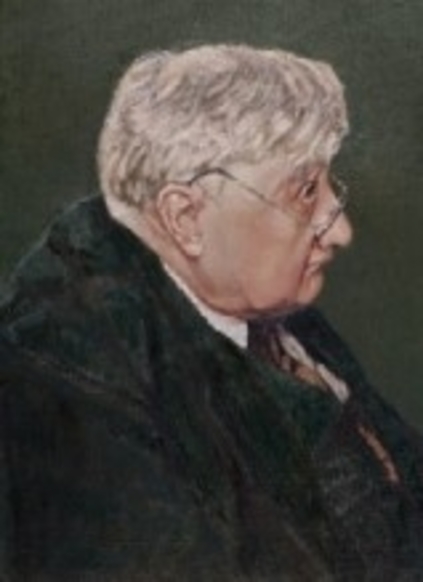
Born in Wales, Vaughan Williams invested a substantial amount of effort compiling and collecting British folk songs. As a result, his hymnal arrangements of English songs such as "Come Down, O Love Divine" exhibited a great understanding of English song tradition. Large-scale works such as the Symphony No. 3 mix post-Romantic harmonies and modal sensibilities within a 20th-century Neoclassical rhythmic and timbral framework.
Composer: Ralph Vaughan Williams
-
"Come Down, O Love Divine"
Benjamin Britten
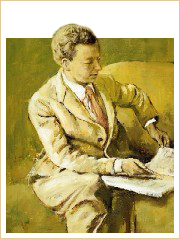
Generally accepted as the most outstanding English composer working in the mid-20th century, Britten gained a significant international reputation while remaining thoroughly English in inspiration, a feat his immediate predecessors had been unable to achieve. By layering melodies, as he did in "This Little Babe" from A Ceremony of Carols (for harp and boy’s chorus), he achieved a texture that echoed Bartók and Stravinsky but stayed thoroughly original. Peter Grimes (1945) and the Turn of the Screw (1954) are considered two of the 20th century’s opera masterpieces.
Composer: Benjamin Britten
-
"A Ceremony of Carols, Op.28: This Little Babe"