
Overview
First called “hillbilly music” by record labels, early country and western music was recorded in southern areas of the United States by ambitious record producers who were looking for a new, commercially-appealing sound. With the advent of radio, this type of music became incredibly popular, spawning a number of subgenres, such as bluegrass, honky-tonk, and country crooning. The film popularity of singers such as Gene Autry also cemented the image of the singing cowboy in the minds of many Americans. As we will see, early country and western music had many themes and images that continue to permeate country music to this day.
Objectives
- Examine how country music was first discovered by record executives such as Ralph Peer and what made it so commercially appealing
- Identify early recording artists who increased the commercial appeal of hillbilly music
- Recognize the several subgenres of country music developed during and after World War II
- Identify instruments played in a bluegrass ensemble
- Recall the BMI and the ASCAP strike in the early 1940s and how it helped the development and distribution of early country music
The Rise of Country and Western Music
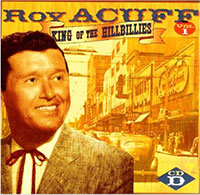
During the 1930s and 1940s, the Great Depression, the Dust Bowl, and the resulting economic conditions led millions of white Southerners to migrate north in search of stable employment and better lives. The abrupt urban concentrations of Southerners in cities such as Nashville, Atlanta, and Detroit increased the demand for the new genre of country and western music. Singers such as Roy Acuff sang songs on themes of sentimentality, patriotism, and morality. Acuff’s "Great Speckled Bird ♫," for example, conveys a religious message while combining a straightforward singing style with bottleneck guitar techniques that he borrowed from the African American blues tradition.
Another icon of the country and western music of the 1930s and 1940s was the singing cowboyan image cultivated by country singers such as Gene Autry and Roy Rogers in film, radio, and television beginning in the 1930s. The most popular singing cowboy—Gene Autry— was created not by recording and radio, however, but by the movies. Autry made several recordings in New York, and then he took a steady job in Chicago on the WLS Barn Dance as "Oklahoma’s Singing Cowboy." The Sears organization took notice of his growing popularity, and promoted his records on the Silvertone (Sears) label, along with a Gene Autry "Round Up" Guitar and assorted songbooks and guitar instruction books, in the Sears-Roebuck catalogue. In 1934, Autry went to Hollywood for a screen test, and he eventually ended up performing in nearly a hundred different films. In films such as the twelve-part serial The Phantom Empire, Autry cultivated the image of the singing cowboy.
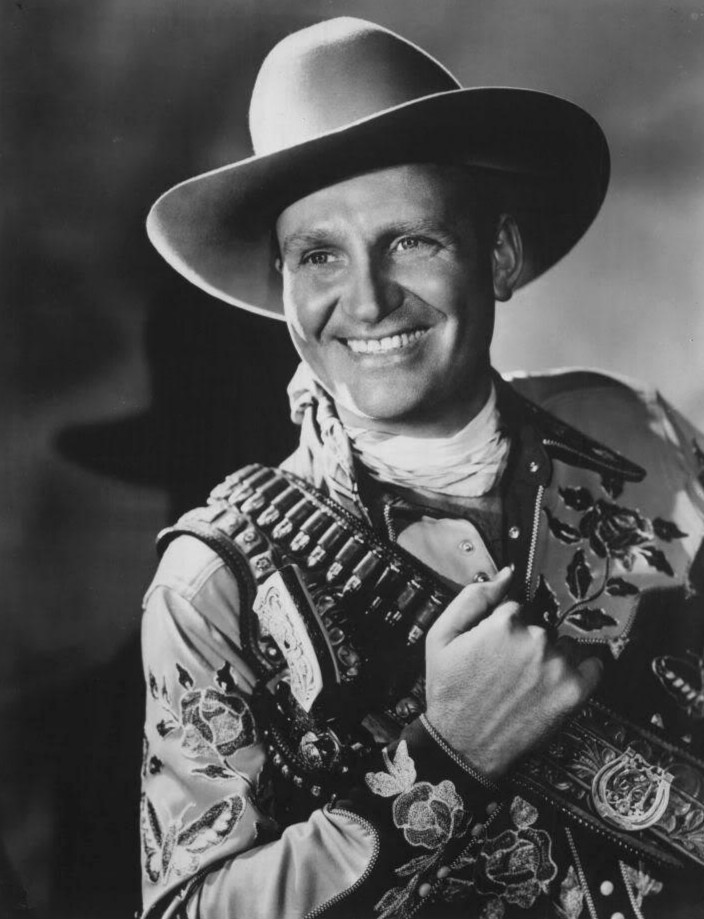
The presence of the singing cowboy also emphasized the "western" part of country and western music. Between 1940 and 1956, Autry also hosted a weekly show on CBS Radio called Gene Autry’s Melody Ranch, in which he promoted the "Ten Cowboy Commandments," a series of guidelines that encouraged his listeners to live ethical and patriotic lives. (His horse, Champion, also had his own radio program.) Autry also began starring in his own CBS television show in 1950. Autry’s music in combination with his appearances on radio, television, and film helped move country and western music into the popular mainstream. He also inspired a number of commercial rivals, such as Roy Rogers.
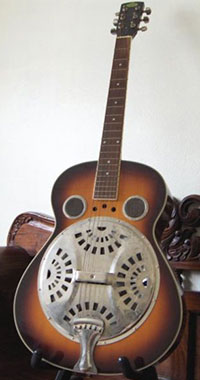
After World War II, country and western music became increasingly popular. By 1949, over 650 radio stations were regularly broadcasting live performances by country and western musicians. This expansion in country and western music also led to the development of several important subgenres and star artists. First, the country croonercountry singers who sang sentimental songs in an intimate, pop-oriented style often sang in a pop-oriented style intended to appeal to a broad range of audiences. Exemplified by artists such as Eddy Arnold, the country crooners sang sentimental songs in a style that suggested physical proximity and friendly intimacy. Next, bluegrassstyle of music that focused on performing and reviving traditional southern music musicians typically performed traditional southern music, focusing on reviving or preserving what they considered to be the roots of the music of the American South. Bill Monroe is considered the inventor of bluegrass, and we will consider his music in greater detail during a later lesson. Finally, honky-tonka louder, rougher form of country music involving electric instruments, vocal cracks, influences of African American music, and a heavy beat; meant to convey the spirit of a juke joint or roadside bar music was rougher around the edges and intended to convey the spirit of a juke joint or roadside bar. Honky-tonk ensembles usually included a fiddle, steel guitar, lead guitar, bass, and piano. Honky-tonk vocal styles often featured cracks in the singers’ voices, and they borrowed elements of African American music, such as blue notes and melismas. Hank Snow, Kitty Wells, and George Jones are among the many honky-tonk artists who were popular during the 1950s.



