
Overview
Country music took many different roads during the 1960s and 1970s, and in this lesson, we will examine a few of the major trends from this period. Television increased the visibility of and market for country music and country artists. Country musicians also continued to embrace the honky-tonk style of music. Further, artists became stars (or at least increased their star power) when they promoted themselves as “outlaws,” musicians who refused to conform to the rules of the Nashville establishment.
Objectives
- Examine the role that television played in country music during the 1960s
- Recall the growth and progression of honky-tonk music after the death of Hank Williams
- Identify the roles of female country singers during the 1960s and 1970s
- Recall the significance of the outlaw image and how it helped the careers of musicians such as Merle Haggard and Waylon Jennings
The Outlaws of Country Music continued
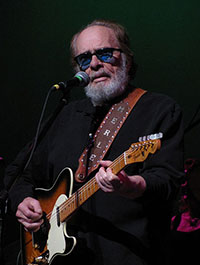
Jennings's albums from the late 1960s and early 1970s were moderately successful, but his real breakthrough came with 1972's Ladies Love Outlaws. This was Jennings's first recording in the so-called outlaw country style. Jennings was constantly struggling for creative control over his own recordings. He felt that the Nashville establishment was too restrictive. In 1973, Jennings renegotiated his contract with RCA, which gave him a generous advance and artistic control over his new recordings. Albums such as 1973's Lonesome, On'ry, and Mean and 1974's The Ramblin' Man were produced entirely under Jennings's creative control.
Ladies Love Outlaws also sparked the association of Jennings with the outlawa term used to describe country musicians who seemed at odds with the Nashville establishment and who wanted to promote their own voices instead of those of a record label image. Although Jennings's lifestyle was no more or less "outlaw" than that of other country music artists of the time, he was frequently touted by the media and critics as an outlaw. RCA was happy to promote Jennings as an outlaw, and his beard, black clothing, and a black hat helped cement his visual image. In 1976, Jennings, Willie Nelson, Tompall Glaser, and Jessie Colter recorded the album Wanted! The Outlaws, which was the first country music album ever to be certified platinum (selling over one million copies). Soon, "outlaw" became a term used to describe country musicians who seemed at odds with the Nashville establishment and who wanted to promote their own voices instead of those of a record label.



