
Overview
In the late 1970s and early 1980s, several British and American bands brought increasing diversity to heavy metal. This new approach to heavy metal still had the weight and riff-based sound of earlier heavy metal, but it was infused with the speed and anger of punk rock. In this lesson, we will trace several major developments in heavy metal, beginning with the second generation of British heavy metal musicians and then observing a number of subgenres of American heavy metal.
Objectives
- Recall the new developments in heavy metal music that occurred in the mid-1970s in the music of bands such as Motörhead
- Identify several significant American and British heavy metal bands from the early 1980s
- Recall the major subgenres of heavy metal, including hair metal and thrash metal, and discuss the stylistic characteristics of each
Thrash Metal
The genre of thrash metala genre of metal that emerged in the 1980s that combined heaviness of metal with the speed and agility of punk rock combined the heaviness of metal with the speed and agility of punk rock. Most thrash metal songs feature a virtuosic guitar solo played at high speed, and most thrash metal musicians credit Motörhead with the invention of the genre and the initial fusion of punk and metal. Many thrash metal musicians saw themselves as more intellectual, political, and virtuosic than their hair metal and pop-oriented metal counterparts such as Van Halen and Poison.

Metallica, Megadeth, Slayer, and Anthrax were metal bands from the 1980s who were known informally as the "big four." Together, these four bands represented the speed, power, and agility of this new genre.
The band Metallica originally formed in Los Angeles, but they did not remain in the same scene as Van Halen, Mötley Crüe, and Guns N' Roses for long. They moved to the San Francisco area, where they thought metal fans would appreciate their style more compared to Los Angeles audiences. Drawing on the influences of Black Sabbath, Led Zeppelin, and Motörhead, Metallica often avoided typical popular song forms such as verse-chorus or simple-verse, and they played instrumental solos at breakneck speeds and used special techniques to be able to play as quickly as possible. The group's lineup in the 1980s consisted of vocalist and rhythm guitarist James Hetfield, lead guitarist Kirk Hammett, bassist Cliff Burton, and drummer Lars Ulrich.
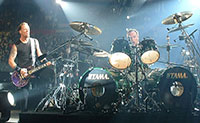
Metallica's 1986 album Master of Puppets was the first thrash metal album to sell over a million copies. The album blended weighty drumming, guitar riffs, virtuosic guitar solos, blistering speed, and angry, often politically-oriented lyrics. Many of the songs address power or the abuse of power. Additionally, Metallica was one of the first bands to write songs that openly addressed the negative aspects of cocaine addiction. For example, the title track "Master of Puppets ♫" speaks to the inversion of power that occurs when a person is addicted to drugs—drugs are the person's master.
The song's lengthy instrumental section and frequent use of palm mutinga guitar technique where the performer lays the side of their picking hand lightly against the strings while they play, creating a “chugging,” percussive sound; palm muting is frequently used in Metallica’s “Master of Puppets” are also typical of Metallica's music from this period. In palm muting, the guitarist lays the side of the picking hand lightly against the strings, which creates a "chugging," percussive sound. Palm muting allows the performer to play notes quickly and clearly, even when there is a heavy amount of distortion.
In 1986, Metallica's bassist Burton was killed in a bus crash while the band was touring, and he was replaced by Jason Newsted. The group's next two albums, …And Justice for All (1988) and Metallica (1991; also called "the black album"), both sold millions of copies and firmly cemented Metallica's place as one of the most successful heavy metal bands of all time.

“People can talk about punk all they want, but after new wave put that down, metal is the voice of the disenfranchised and that need to become unhinged.”


