
Overview
As bop continued to evolve, so, too, did the styles and tastes of musicians. While some musicians looked back to more traditional styles of jazz, others continued to explore the new possibilities of modern jazz. This section covers the birth of a new style labeled cool jazz, whose practitioners cultivated a variety of approaches and sounds, even though they all leaned toward an aesthetic of emotional restraint and understatement. We will learn how Miles Davis, Chet Baker, Bob Brookmeyer, Stan Kenton, Lennie Tristano, Stan Getz, and Gerry Mulligan contributed to the beginnings of Cool Jazz.
Objectives
Upon completion of this lesson, you will be able to do the following:
- Identify notable musicians who contributed to cool jazz
- Understand how cool jazz evolved
- Recognize the related style of West Coast jazz
- Appreciate the Modern Jazz Quartet’s role in pioneering third-stream jazz
Cool Jazz
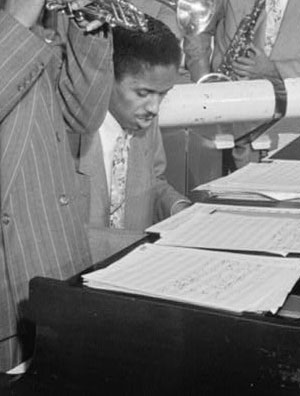
It was inevitable that bebopThe first style of modern jazz, characterized by faster tempos and more complex melodies and harmonies would provoke opposition, giving rise to competing currents in the era of modern jazz. For one, the late 1940s witnessed the first significant revival of "traditional" jazz. Such notables as Louis Armstrong abandoned the big band setting to return to his roots in the New Orleans style. Sidney Bechet and others also enjoyed renewed popularity playing in the older styles that predated the big band era.
By and large, though, the opposition to bebop would not be mounted by those reveling in nostalgia, but by those committed to modern jazz in search of a new musical aesthetic. Its practitioners would have to be well-versed in the bop idiom — if only for the sake of their credibility in the jazz world.
More to the point, bop could not be ignored, and elements of its language would necessarily be part of any new modern jazz style. Such was the case with the emergence of cool jazzA style of modern jazz characterized by an aesthetic of emotional restraint and understatement. . Cool jazz — along with the related development of West Coast jazzA style of cool jazz that originated, in part, among musicians who played in Los Angeles in the 1950s. — was not so much a repudiation of bop as it was an effort to couch its language in more polite terms, to infuse it with greater lyricism, to smooth its rough edges and soften its harsher elements.
Not surprisingly, some of the proponents of cool jazz had begun their careers as sidemen in bop combos and big bands. Notably, Miles Davis had gotten his start briefly sharing sideman duties with Dizzy Gillespie and Charlie Parker in Billy Eckstine's band and then playing in Charlie Parker's combos from 1945-1948.
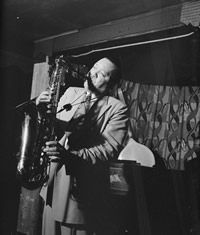



Miles Davis made his television acting debut when he appeared in an episode of Miami Vice where he played a pimp named Ivory Jones.
