
Overview
The history and evolution of jazz—and the world inhabited by its innovators and practitioners—continues to provide a remarkable lens through which to view the larger American cultural landscape. The early 1950s United States was still a racially segregated society, especially in the South. And while the "color line" in jazz had been crossed more than a decade earlier, the terms of such interactions continued to be dictated by the dominant white culture.
In this section we will see how hard bop represents the maturation of bebop—its evolution, and how Charlie Bird and Dizzy Gillespie threw the doors open (or "blown" them open), ushering in not just a new style, but a new era—the modern jazz era.
Racial dynamics were also at play at the advent of hard bop. It's worth noting that many of the innovators of cool jazz were white, with the notable exception of Miles Davis and John Lewis. We will explore how emerging hard bop styles were motivated in part by black jazz musicians' desire to reclaim jazz as their own music.
Objectives
Upon completion of this lesson, you will be able to do the following:
- Identify musicians who created jazz that came to be known as hard bop
- Identify similarities and differences between bop and hard bop
A Return to Cool
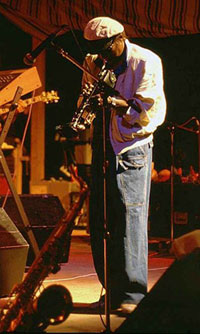
While the Davis quintet albums from '56 are highly regarded by jazz musicians, critics generally acknowledge that the later collaborations of these musicians (which we will soon hear) are even more noteworthy. Part of the restless energy heard in Coltrane's playing—and a source of discord between trumpeter and saxophonist—was Coltrane's heroin addiction.
Coltrane left Davis' group to join Thelonious Monk's quartet at the Five Spot Café during the summer of 1957. (Recall Monk's Trinkle Tinkle ♫ and Ruby, My Dear ♫ recorded live there.) Some time between then and the end of the year, Coltrane experienced a dramatic personal revelation, leading him to break his heroin addiction and to eschew tobacco and alcohol, as well as drugs.
After Coltrane's departure, Miles Davis again joined forces with Gil Evans to produce the album Miles Ahead ♫. Like their earlier collaboration Birth of the Cool ♫, this one also featured Evans' lush but subdued orchestrations (with 19 instruments this time) pitted against the intimate, minimalist improvisations of Davis, now on flugelhorn. (Davis and Evans would reunite several more times to collaborate on similar projects, notably Sketches of Spain ♫, recorded in late 1959 and early 1960.)
The title track of the album, "Miles Ahead," was composed by Gil Evans and Miles Davis. It's interesting to note that recently developed recording technology allowed Davis to overdub his part some three months after the orchestra had been recorded under the direction of Gil Evans. Let's listen now to Miles Ahead ♫ and hear another high point in the Gil Evans-Miles Davis "cool" style.
If anything, this renewed collaboration between Davis and Evans has produced a sound that is even more luxuriant than their earlier Birth of the Cool sessions. This is arguably the richest yet most understated style of cool jazz of the era. Even the form itself is subtle and malleable. There is an initial 16-bar chorus presented by Miles and the orchestra (0:03-0:34), but each successive chorus involves an elaboration of one sort or another. For example, in the second chorus (0:35-1:22), we hear a repeat of the first 12 bars of the tune before the orchestra quiets to highlight Miles' instrument, including an 8-bar extension. Each of the three remaining choruses (starting 1:22, 2:10, and 2:45) is subject to similar sorts of development and extension.



"Jimmy Smith's father was a musician and entertainer, and young Jimmy joined his song-and-dance act when he was six years old."
