
Overview
Amidst a politically tumultuous world, a new style of jazz broke away from the constraints of mainstream modern jazz. Known as free jazz, this new style formed the core of the avant-garde movement in jazz. In this section, we will examine some influential avant-garde and free jazz musicians, and the artistic and cultural significance of their music. In addition, we'll consider the music of Miles Davis' mid-60s quintet, along with the significant individual contributions of the quintet’s pianist, Herbie Hancock.
Objectives
Upon completion of this lesson, you will be able to do the following:
- Identify musicians who contributed to avant-garde and free jazz styles
- Appreciate Ornette Coleman’s unique use of pitch bending
- Appreciate the Miles Davis mid-60s quintet as another innovative jazz group led by Davis
- Recognize the accomplishments of Herbie Hancock during that time
- Identify musicians who collaborated with Herbie Hancock
One Finger Snap
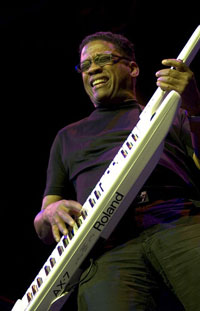
Another Hancock composition, One Finger Snap ♫, showcases a more straight-ahead sound from the same rhythm section (alongside Freddie Hubbard). The tune is a catchy 28-bar ABA chorus (8 + 12 + 8) that is modern in its construction without sounding abnormal. We hear solos from Hubbard and Hancock as well as from drummer Tony Williams.
Since the 1960s, Herbie Hancock has had one of the longest and most storied careers among jazz musicians. We will return to Herbie Hancock in the next lesson when we examine jazz-rock fusion.
Listen now to Herbie Hancock's One Finger Snap ♫.



