
Overview
Objectives
Upon completion of this lesson, you will be able to do the following:
- Recognize some of the key American and Cuban jazz artists and their contributions to Latin jazz
- Recognize some of the international figures in jazz who contribute to the globalization of jazz
- Recognize some of the recent jazz artists, both mainstream and progressive, whose art continues to fuel the debate about the future of jazz—and what jazz is
Tito Puente
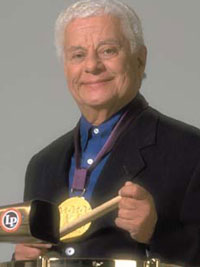
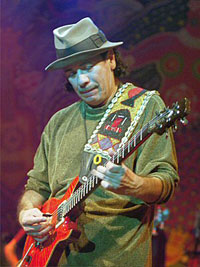
Tito Puente (1923-2000) was an American jazz percussionist, bandleader, composer, and arranger. The son of Puerto Rican immigrants, Tito grew up in New York's East Harlem, a child prodigy who became one of the greatest percussionists in the Afro-Cuban tradition. He is especially noted for his performance on the timbales, a pair of shallow-headed drums in steel casings played with sticks. Tito was also a prolific composer, perhaps best known for his 1963 song Oye Como Va ♫, made famous in 1970 by the rock guitarist Carlos Santana.
With a career that spanned more than half-a-century, Tito Puente earned the accolade "The King of the Timbales" ("El Rey de los Timbales"). In the 1950s Tito helped popularize the mambo (an Afro-Cuban dance) while enjoying some of his greatest success. His brilliant artistry was rewarded by a steadily growing recognition and appreciation of Latin jazz A catch-all term for jazz with Latin American, but also African, rhythms. over his lifetime.
Latin jazz today is recognized as one of the essential jazz styles, and Tito Puente contributed greatly to this "mainstreaming" of Latin jazz. Tito Puente, along with Afro-Cuban percussionist and bandleader Mongo Santamaria (1922-2003), is considered among the most influential contributors to Latin jazz over the latter half of the twentieth century.
In the 1990s, Tito Puente was still going strong, and some of his best music comes from this period. His 1993 album, Royal "T" ♫, is a case in point. The title track is an original composition by Tito, harking back to mambo's heyday, arranged by the composer to get a big sound from six horns on the front line. We hear fine solos from the two trombonists (1:30-2:30), followed by an inspired competition, as the two trumpeters trade eights (2:30-3:30).
The propulsive rhythm section, though, is the band's signature. Tito utilizes multiple percussionists in lieu of the customary drum set player, giving the band its distinctive sound. The inclusion of the clave rhythm A rhythmic pattern to organize time in Afro-Cuban music. is another distinguishing characteristic. Let's listen Royal "T" ♫.



"I Heard it Through the Grapevine" has been recorded by several different artists, including Gladys Knight and the Pips, Marvin Gaye, and Roger Troutman, who all had #1 R&B hits with their versions, making this the only song to hit #1 on R&B charts for 3 different artists.
