
Learning Objectives
- Examine African musical culture and history by considering music in the community as an integral part of social and religious activities (i.e. the belief system of the Shona people of Zimbabwe and the initiation rites of the Mende people of Sierra Leone).
- Analyze how and why music plays an important role in sustaining social values and maintaining the continuous relevance of traditional African institutions.
- Distinguish the regional similarities and differences between African musical instruments not only in terms of construction and performance, but also in terms of the symbols they represent (i.e. African drum languages and the Mbira).
- Analyze the role the human voice plays in displaying variety in form, such as call and response, as well social organization in African music.
- Identify the variety of African drum languages and their function to imitate the speech contours of words from various African cultures.
- Analyze the functions of modern popular African music, a relatively new musical idiom that developed in the early part of the last century.
Colonial Africa
By the early 1960s, many countries in Africa had gained their independence from European colonialist countries. In sub-Saharan Africa, Ghana led the pack, obtaining its independence from the British in 1957. Other British countries would follow suit, including Nigeria (1960), Sierra Leone (1961), Kenya (1963), and Uganda (1962).
French colonies that gained independence around this time included Togo and Cameroon, both in 1960. But while their West African counterparts regained their freedom, countries within the southern region struggled much longer to achieve independence. Angola, for example, gained its independence from Portugal in 1975, some eighteen years after Ghana had done so, while Zimbabwe became independent only as recently as 1980. South Africa was finally free from a racist apartheid regime in 1994, with Nelson Mandela as the first democratically elected president.
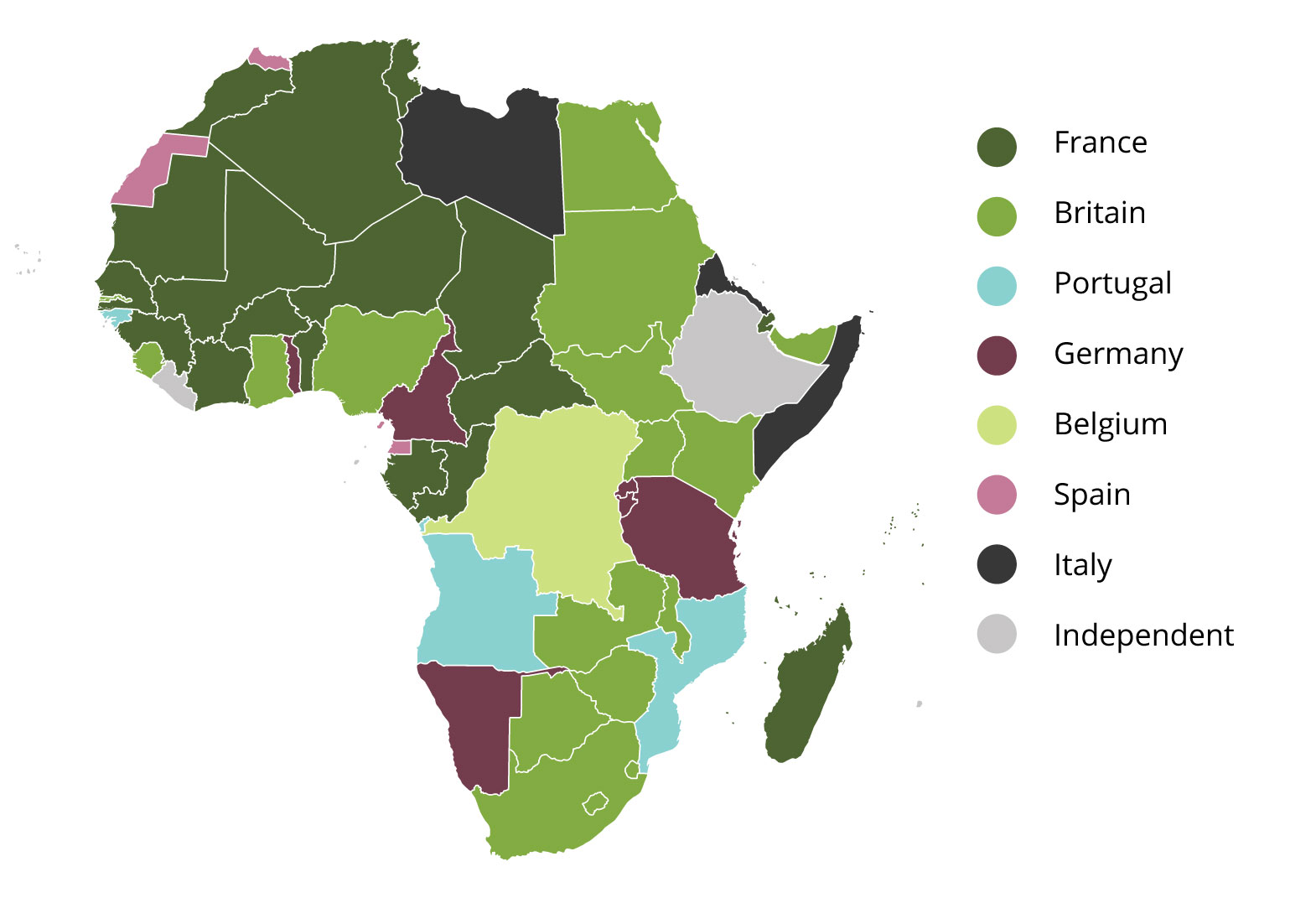
Christian-affiliated Western musical practices were introduced to the continent by colonialist countries. For example, Western musical instruments, such as the piano, organ, and trumpet, now popular amongst African musicians, were introduced by Europeans. The impact of Islam on the musical traditions of the continent is as important as that of Christianity. As Nketia (1974: 9) has observed, the advent of Islam in Africa dates as far back as 741 AD. Islam would consequently become widely embraced in many parts of the continent, beginning in the north and moving to the coastal region of the east and the savannah belt of the west.
The massive increase in urbanization and the growth of industrialization, both of which followed Western colonization of the continent, facilitated an unprecedented movement of people from rural areas to major cities like Dar es Salam (in Tanzania), Nairobi (in Kenya), Lagos (in Nigeria), and Cairo (in Egypt). The growth of these modern cities has led to significant changes in the musical landscape of the continent. In spite of the emergence of national musical styles following European colonization, music traditions are still largely delineated along ethnic boundaries. Our discussion of African music will focus mainly on such indigenous traditions.



The Vai have professional musicians--both men (manja) and women (kengai)--who receive training in the secret societies and provide music for social activities and events.
