
Learning Objectives
- Interpret the diversity that characterizes jazz, a genre of music that blends elements of African, Caribbean, and western European culture where the individual expression of its creator is a treasured attribute.
- Examine the use of the oral tradition, the use of improvisation and syncopation, and differentiate the African and European styles and instruments to create the unique genre of jazz.
- Recognize and relate prominent jazz musicians to their particular style and era.
- Analyze jazz music as it relates to American history and culture.
- Recognize the uniqueness of jazz in world music culture.
Hipsters and Lindy-hoppers
In addition to its music, swing contributed two important traditions into American culture: hipsters and lindy-hoppers. Jazz culture always had its insider's lingo.
CAB CALLOWAY'S HIPSTER'S DICTIONARY (1946)[A] copacetic compendium of hep cat hype and swing-era slang.
The language of jazz became the language of the swing generation, and it laid the foundation for the language of the beatnik generation in the following decade.
Of all things associated with swing one can't deny the importance of the dance known as the jitterbug or lindy-hop. Called "America's National Folk Dance" by Life Magazine in 1941, the lindy-hop is an African-American dance style that is aerobic, fast and often involves throwing your dance partner in the air (called "aerials"). The Savoy Ballroom in New York's Harlem was the premiere lindy-hop establishment with contests and shows weekly and was one of the few places where white and black couples could dance on the same floor.
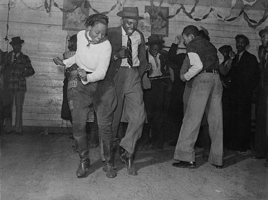
The Savoy's premiere lindy-hoppers were Whitey's Lindy-Hoppers, named after Herbert "Whitey" White. Choreographed by the legendary Frankie Manning, Whitey's Lindy-Hoppers appeared in the 1941 film Hellzapoppin in what is likely the greatest lindy-hopping dance sequence ever filmed.
Bebop
Beneath the joyous music and dancing of the swing years another jazz style was brewing in New York City. This new jazz would rebel against the simple riffs found in swing music as well as its function as background music for social dancing. It reacted against the swing bands need to play from "charts" that helped them recreate create their sound night after night. Most importantly, is was not intended to become a part of the commercial trappings of the business of jazz, this was jazz for a new aficionado and it called itself bebop, borrowing from some nonsense syllables often heard in scat singing.
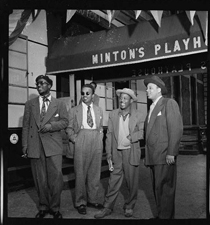
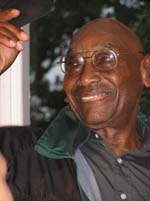
They would gather at after-hours clubs in Harlem and Minton's Playhouse on West 118th Street in New York City would be their favorite choice. It was here where these musicians could try out their new ideas of harmonic and melodic complexity and charge the music with very fast tempos. These newcomers—Thelonius Monk, Miles Davis, John "Dizzy" Gillespie, and Charlie "Bird" Parker—would challenge each other (friendly or not) to raise their musical prowess.
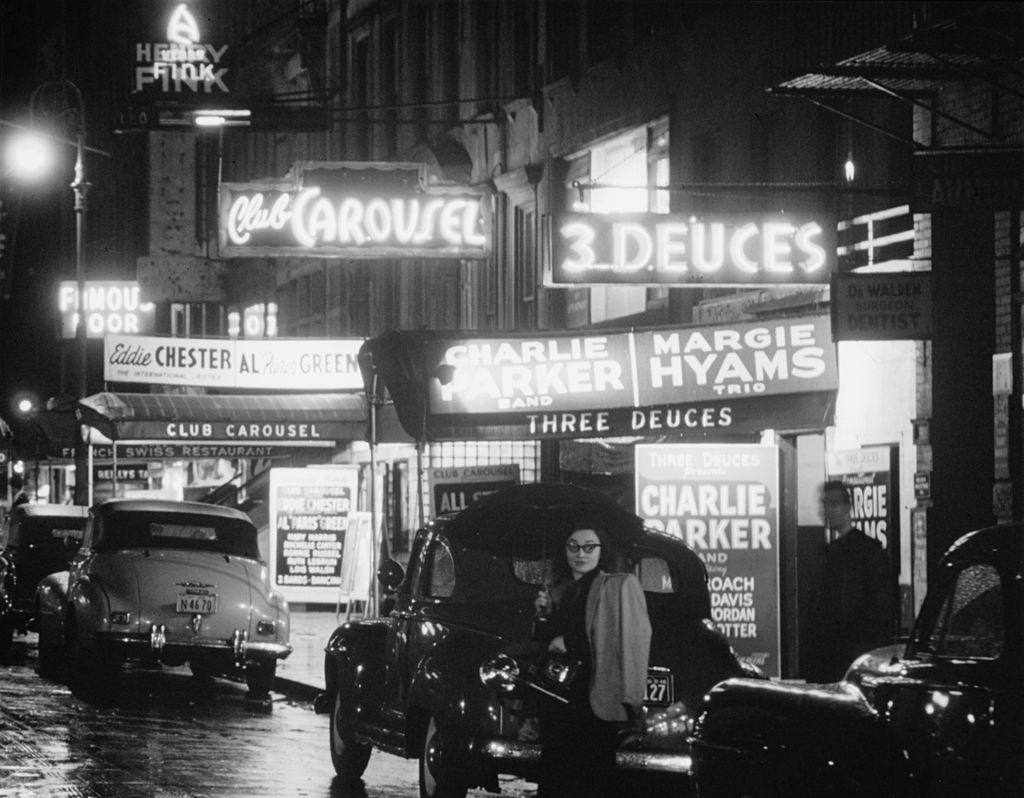
Bebop's characteristics include angular and irregularly accented melodies, extending the harmonic palette to include more chromatic notes, an intense and often blues' inflected expressivity, and bravura virtuosity. Performers actively explored the extreme ranges of their instruments and extremely fast tempos are the norm rather than the exception.
Bebop often borrowed chord progressions from classic American songs from a repertoire known as the Great American Songbook (you may recall this term from the previous page).
These songs, composed by Irving Berlin, George Gershwin, Harold Arlen and Cole Porter, amongst many others were familiar to the musicians who played them in paid gigs. New bebop compositions would retain the chord progressions of these songs while inserting new melodies, so that the borrowed song would be somewhat obscured. Listeners who were able to identify the borrowed song had a richer listening experience as they could now relate the new music to the borrowed one.
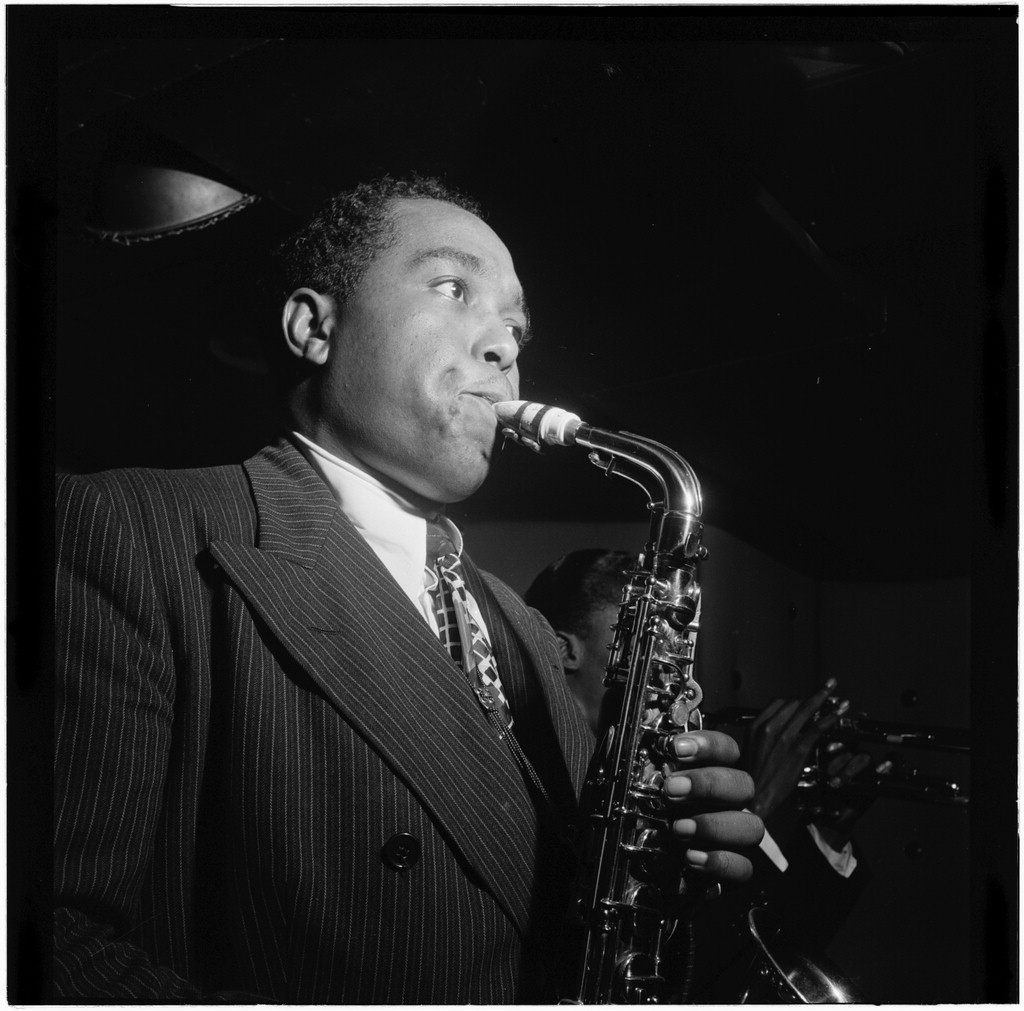
Charlie Parker's "KoKo" is a good example of the classic bebop sound. For this tune, that also features trumpeter Dizzy Gillespie, Parker borrows the chord progression from a Ray Noble tune called "Cherokee." "Cherokee" would be used as a basis for several new bebop compositions.




"Blues developed in the southern United States after the American Civil War (1861–65) and was largely played by Southern black men, most of whom came from the milieu of agricultural workers."
