
Learning Objectives
- Classify and analyze country music as something that extends past typical definitions of white, southern music, to something that blends African-American as well as Euro-American and Hispanic-American, rural and urban, the Appalachian Mountains, and the American West.
- Examine the multiple definitions of country music, from a traditional “twangy” mountain repertoire of old world to American folk songs, ballads, and gospel music, event songs, the blues, fiddle tunes, and popular vaudeville and ragtime songs and music.
- Examine the origins of country music, from the 19th century use of fiddles, guitars, banjos, and mandolins in the music of Euro-American (often Irish) and African-American performers to its popularity in the 1920s and 30s, when radio and the first audio recordings developed and Jimmie Rodgers and the Carter Family were discovered by the embryonic music industry.
- Analyze the impact of country music in hillbilly southern culture, as well as its use in western films, honky tonk bars (jazz and western swing), mid-century blue grass, and Nashville.
- Analyze what to listen for in country music, including rhythm, form, harmony, timbre, and texture.
- Examine country counter-culture, through analyses of pop singers like Ann Murray, John Denver, and Olivia Newton-John, rockers such as Gram Parsons, Bob Dylan, Neil Young, Emmylou Harris, and Linda Ronstadt, the Byrds, The Band, Willie Nelson, Waylon Jennings, Merle Haggard, and Buck Owens.
- Examine the rise of country in the 1990s when it became America´s most popular music, according to a National Endowment for the Arts survey.
Bluegrass
In the 1940s, legendary mandolin player and hardcore, twang, mountain-music singer Bill Monroe elevated the string band performances of Appalachian music into a virtuosic instrumental style called bluegrass. In this mountain-music, however, were elements of the common southern musical culture. Bluegrass takes its name in part from African-American blues music. Monroe and his white "hillbillies" traveled across the country playing the blues, traditional tunes, and composed songs at breakneck speeds, singing "high, lonesome harmonies" (twangy harmony notes sung above the melody), improvising solos, and swinging like jazz bands, making bluegrass popular across the country.
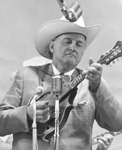
The theme song to The Beverly Hillbillies by Lester Flat and Earl Scruggs, who started their careers in Monroe´s band, is America´s most famous bluegrass song, but it was Monroe who brought the genre to popularity in the 1940s.
The Nashville sound

America changed significantly after World War II. The post-war modern era of the 1950s and 60s created new kinds of jobs and brought millions of rural people to urban areas and newly built suburbs and they brought their country music with them. In order to represent these far-reaching changes in American culture, however, country music had to change its ways. Many rural folks now living in the cities longed for the "good old days," and found satisfaction in the post-war hardcore twang of country´s greatest musician, the legendary Hank Williams. In songs like "Lonesome Whippoorwill," Hank expressed the longing these new urban dwellers felt towards their old rural lifestyle.
Many others, however, embraced their new urban lives in the music of the new Nashville sound developed in the 1950s by jazzy guitarist Chet Atkins and others who embraced smoother, more popular musical styles that engaged larger audiences and, of course, made more money.
This so-called "Nashville sound" preferred crooning singers like Jim Reeves and Patsy Cline, orchestral string ensembles, jazzy vocal backgrounds, and the lead guitar-influenced piano styles to the fiddles, banjos, and mandolins of traditional country or the raucous sounds of the new rock and rockabilly artists. This "countrypolitan" style became the mainstream Nashville sound through the 60s, 70s, and beyond, through such popular singers as Marty Robbins, Tennessee Ernie Ford, Skeeter Davis, Ray Price, Dolly Parton, and many others. In just a few years this softer Nashville sound became the new country music center. With its widespread popularity breaking down rural and urban cultural barriers, the Nashville sound brought country music into the mainstream of America´s musical life.

♫  I Fall To Pieces
Patsy Cline



Kitty Wells became the first female to hit No.1 on the Billboard chart opening doors for future female artists.
