
Overview
Objectives
- Examine two critical types of African American religious music: spirituals and gospel music
- Identify the various historically black colleges and universities
- Identify the musical characteristics of secular popular musics that carried over into early rock and roll, such as the harmonic structure, the topics of the lyrics, the rhythmic character, and the instrumentation.
- Define folk spirituals
- Identify the key figures in gospel music
- Identify the key figures in early rhythm and blues
Spirituals
Spirituals have been an important aspect of African American religious music since the days of slavery. During the nineteenth century, these were called "negro spirituals," although today they are known as folk spirituals unaccompanied slave songs on religious themes that were sung in a heterogeneous, call-and-response style. Folk spirituals were unaccompanied because slaves were not allowed to have instruments, but people compensated by using handy objects (washboards, brooms) or their bodies (by stomping, patting, or clapping) to create instruments.
Folk spirituals included call and response, and they were sung in a style called heterophony; that is, not everyone sang perfectly in unison, in time, or in harmony with each other. Imagine, for example, a room full of singers who sing the same basic melody but each person embellishes the melody in his or her own way, placing blue notes where he or she feels it is appropriate. The result is a multilayered rendition of the same song. Many slaves were Christian, having been converted during the Second Great Awakening, and they incorporated their knowledge of the Bible and Christianity into their music. Although slaves did encode messages in the texts of the spirituals in order to communicate undetected around whites, they also sang them for the sole purpose of praise and worship. Soon after the Civil War ended, folklorists attempted to collect and preserve folk spirituals, afraid that the newly-freed slaves would assimilate into white culture and forget the spirituals. Collections such as Slave Songs of the United States (1867) contained musical transcriptions of spirituals that the folklorists heard.
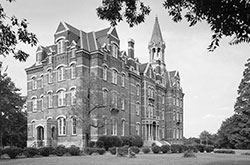
During the 1870s and 1880s, all-black universities were founded to educate young African American men and women. These historically black colleges and universities all-black universities founded after the Civil War to educate young African American men and women(or HBCUs) included a number of institutions that still exist today, such as Fisk University, Tuskegee University, Florida A&M University, and Lincoln University. The Fisk Jubilee Singers, the university choral group, had many members who were former slaves. Although their director, a white man named George White, originally trained the ensemble to sing classical European music, the singers eventually began performing spirituals in their concerts, as well.

Audiences were fascinated by these arranged spirituals spirituals that retained the melodies and texts of their folk predecessors, but sung in the European tradition and formal performance style, and soon, the Fisk Jubilee Singers’ concerts included just as many spirituals as classical pieces.Unlike the folk spirituals, arranged spirituals were sung in the tradition of European concert music; that is, standing still, singing every note perfectly together, and with immaculate diction and pronunciation. Although arranged spirituals retained the melodies and texts of their folk predecessors, they were sung in a much more subdued, classically-oriented performance style.
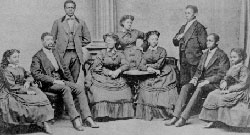
The arranged spiritual repertory included choral numbers and solo art songs, and this music was performed either a cappella or with a piano accompaniment. Universities other than Fisk quickly began their own concert tours. For African American classical singers in the first part of the twentieth century, arranged spirituals were an essential part of their performance repertory.
Singers such as Paul Robeson, Marian Anderson, and Roland Hayes all built performance careers in part on classical European repertory and in part on spirituals. Composers such as John W. Work III, Harry T. Burleigh, and Hall Johnson all wrote arrangements of spirituals. Even today, arranged spirituals are an essential part of the American choral and solo song tradition.



A style of Gospel known as "sacred steel" emerged after Hawaii became a US territory in 1898 and used the sound of a slide guitar.
