
Overview
Objectives
- Identify two important figures in early American folk music, Pete Seeger and Woody Guthrie
- Recall why Pete Seeger and Woody Guthrie were inspirational figures in the folk revival of the 1960s
- Examine the music and career of Bob Dylan
- Recall why Bob Dylan's electric performance at the 1965 Newport Folk Festival was so upsetting to folk music purists
- Recall the many stylistic and generic reactions to Dylan "plugging in," namely, the rise of the genre of folk rock
Introduction
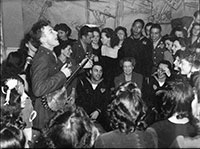
The 1950s saw a revival of folk music that had been popular in earlier decades. Following the model of earlier folk musicians such as Woody Guthrie and Pete Seeger, many folk musicians in the 1960s used their music to promote left-wing social causes. The Civil Rights Movement, Vietnam War protests, and protests for women’s rights were all places where folk music and protest songs flourished. Although folk music’s message was appropriate to the 1960s protest aesthetic, its acoustic musical language left much to be desired.
Bob Dylan shattered the folk music aesthetic in 1965 when he played an electric set at the Newport Folk Festival. After this performance, the lines between folk music and rock were blurred. Dylan’s influence paved the way for many different folk and folk rock artists during the 1960s, including the Byrds, the Mamas and the Papas, and Simon and Garfunkel. As we will see, Dylan influenced many musicians, not just those in the folk music scene.



Woody Guthrie became part of the mass migration of dust bowl refugees known as "Okies." Without food or money, Woody hitchhiked, rode freight trains, and even walked to California, developing a love for traveling on the open road -- a practice he would repeat often.
