
Overview
Objectives
- Identify the aesthetics of glam rock
- Identify several important figures in the early glam rock movement
- Examine how the artists in this lesson exhibited glam rock aesthetics in their performances
Elton John
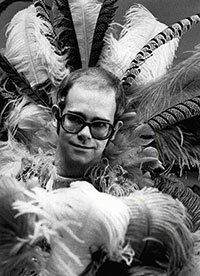
British singer-songwriter Elton John (born Reginald Dwight) also participated in the glam rock aesthetic. Pianist John wrote most of his songs in collaboration with lyricist Bernie Taupin, and together, they created dozens of hits songs for John in the 1970s. His first hit single in the United States was "Your Song ♫" (1970), which appeared on the album Elton John. John followed this eponymous album with six more that went to number one on both the American and British pop charts, including Honky Chateau (1972) and Goodbye Yellow Brick Road (1973).
John’s early songs were solo ventures, he began employing a backup band during the early 1970s. John and his piano were always at the center of his sound.
Following in the wake of nostalgic songs such as Don McLean’s "American Pie ♫" (1971), John’s "Crocodile Rock ♫" is a nostalgic song about the early days of rock and roll. In the song, John describes the days "when rock was young" and describes a fictional rock and roll dance craze called the Crocodile. "Rocket Man (I Think It’s Going to Be a Long, Long Time) ♫" (1972) addresses feelings of loneliness and isolation experienced by an astronaut, which was a common theme in the music of glam rockers.
John and Taupin have collaborated on over 30 albums during their careers. It is impossible to pin Elton John’s music into a single stylistic category. His music and live performances during the 1970s were very much influenced by the glam aesthetic. For example, he would often sport sequin-encrusted glasses, enormous feathered costumes, and shiny, brightly-colored suits. He has performed in cat costumes, Minnie Mouse costumes, and, during a performance at Dodger Stadium, a Los Angeles Dodgers uniform made entirely of sequins.

John’s spectacular performances and costumes from this era are unsurpassed in their visual impact. John’s sexual orientation was the subject of much speculation during the 1970s and 1980s, particularly since his performances were so flamboyant and his costumes so lavish. Although he claimed to be straight and even married a woman in the early 1980s, by 1988, he came out as gay. He has been with his partner, David Furnish, since 1993.



