
Overview
Objectives
- Recall the Jamaican influences on hip-hop
- Recall the role of the DJ and the MC in early hip-hop
- Recall some of the earliest commercial hip-hop and hip-hop-influenced recordings
- Examine the role rock music played in the success of groups such as Run-DMC and the Beastie Boys
Early Commercial Hip-Hop
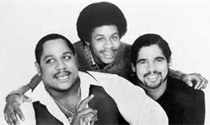
Sylvia Robinson assembled the Sugar Hill Gang and arranged for the recording session. "Rapper's Delight ♫" features a four-measure segment of Chic’s "Good Times ♫" (1979) that is repeated endlessly throughout the song. Unlike most early hip-hop of the time, however, the instrumental sounds from "Good Times ♫" were replayed by a live band, not created by looping the sound segment on two records. The album version of "Rapper's Delight ♫" is over fourteen minutes long and was recorded in a single take, with each of the three rappers in the Sugar Hill Gang taking turns delivering lengthy, storied tales. The opening line of "Rapper's Delight ♫" is iconic as it names the genre of music: "I said-a hip, hop, the hippy to the hip, hip, hop, and you don’t stop." The rappers’ flow the style of lyric delivery by the rapper that features balanced phrases, couplet rhymes, and an articulation that is almost sing-song in nature, or style of lyric delivery, features balanced phrases, couplet rhymes, and an articulation that is almost sing-song in nature. "Rapper's Delight ♫" went to number 36 on the American singles charts, and it was the first major commercial breakthrough for a hip-hop record.
Other early commercial recordings of hip-hop were varied. In 1981, New Wave band Blondie, fronted by Deborah Harry, recorded "Rapture ♫," which featured an extended passage in which Harry tried her hand at rapping. Although greeted with skepticism by many in the hip-hop community, "Rapture ♫" offered many white listeners their first exposure to the sounds of rapping. Afrika Bambaataa released "Planet Rock ♫" in 1982, which included synthesizers and a musical phrase that Bambaataa borrowed from the Krautrock band Kraftwerk’s "Trans-Europe Express ♫" (1977). Bambaataa so admired the music of Kraftwerk that he purchased the same synthesizers they used in order to replicate their sounds as closely as possible. Jazz fusion keyboardist and composer Herbie Hancock recorded "Rockit ♫" in 1982, which featured record scratching performed by a DJ named Grandmixer DST. "Rockit ♫" was not a hip-hop song because it did not feature rapping. The music video for "Rockit ♫" was produced by Kevin Godley and Lol Crème, the same team that produced Duran Duran’s videos. "Rockit ♫" was one of the first videos by an African American musician to be played consistently on MTV, which helped popularize both the song and the sounds of record scratching featured in it. When Hancock and Grandmixer DST performed "Rockit ♫" live on the Grammy Awards in 1983, they offered additional mainstream exposure for the emerging sounds of hip-hop.
During the 1980s, many of hip-hop’s sounds were produced with a combination of turntables, live instruments, drum machines, synthesizers, and samplers. Drum machines have pads or keys that the performer presses in order to play a prerecorded percussive sound, such as a snare drum, a hi-hat, a bass drum kick, or, in some cases, sound effects such as gunshots or glass breaking. Some of the famous brands of drum machines include the Roland TR-808 and the Linn LM-1. Musicians who sample borrow sounds from existing recorded music, and, using samplers such as the E-mu SP-1200 or the Akai MPC60, they cut, paste, and rearrange those recorded sounds to create new music. Compared to using turntables, sampling was a more efficient means of arranging existing sounds into a new recording. Sampling was one of the most prevalent practices in hip-hop until the early 1990s, when issues of copyright infringement put a stop to many artists who sampled sounds for their recordings.

“Hip hop music is important precisely because it sheds light on contemporary politics, history, and race. At its best, hip hop gives voice to marginal black youth we are not used to hearing from on such topics.”

“For anybody to say well this is not Hip Hop and that's not Hip Hop, that is not the way the formula was laid down. It was for the people who were going to continue take anything musically and string it along.”

"[The Beastie Boys] have never allowed their music to be used in commercials, and are unlikely to ever do so, as Yauch stated in his will that he would like all future requests to be denied."
