
Overview
Objectives
- Explain the roles that women play in different kinds of rock bands in the 21st century
- Consider the broad definition and stylistic characteristics of “indie rock”
- Define “lo-fi” in the context of specific bands and music
- Describe how folk rock revival bands relate to music of the past
Lo-fi
Garage rock revival bands is a subset of indie rock that was prevalent in the 2000s. These artists are identifiable by their lo-fi (short for low fidelity) sound that features relatively simple instrumentation, minimal post-production editing, and inexpensive (or inexpensive-sounding) recording equipment. Unlike the amateur musicianship and sound that characterized music of the garage rock bands of the 1960s (see lesson 14), these 21st-century garage rock revival bands incorporate some of the harder edges of punk rock into their sound, such as fast tempos, aggressive guitar playing, and explicit lyrics.
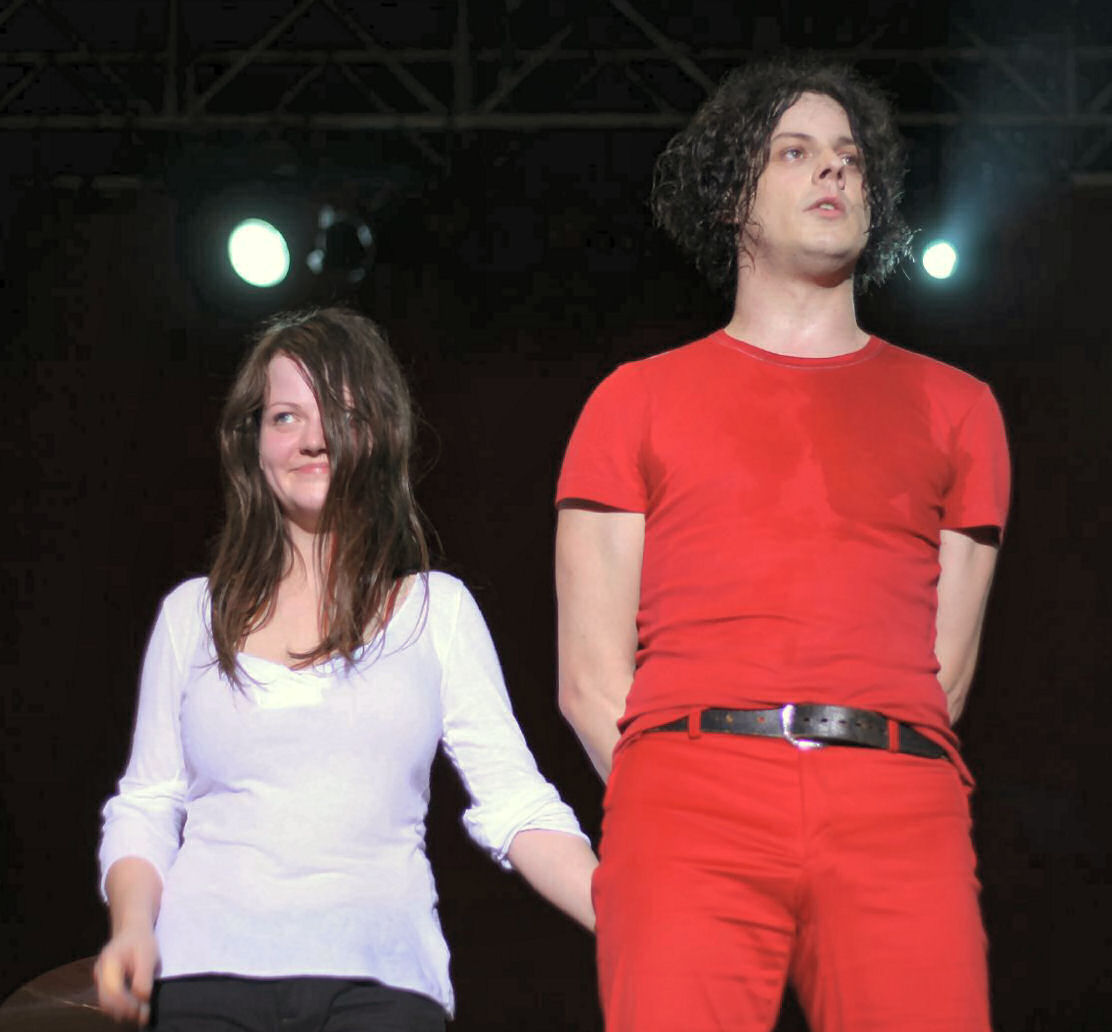
The Detroit-based band The White Stripes had only two members: Jack White and Meg White. The two were married when they started the band in 1997, but they presented themselves publicly as brother and sister instead of as spouses. They divorced in 2000, but continued performing together (and claiming to be siblings) until 2011. Jack White played guitar, piano, and mandolin, while Meg White played drums; both provided vocals. Because they only had two members, they did not use a bass player. The music of the White Stripes is representative of the garage rock revival sound and aesthetic in many ways: They rarely have more than two instruments playing at a time, Meg White was entirely self-taught as a drummer, and they played instruments—and used recording equipment—that was almost without exception made in the 1960s. In a 2008 documentary, Jack White cobbled together a guitar with several found objects, including a glass bottle and two nails, quipping that one did not even need to buy a guitar to be able to play the guitar. Like many indie bands, the White Stripes have achieved a remarkable amount of commercial and critical success. Before they dissolved in 2011, the White Stripes had won three Grammy Awards for Best Album (2004, 2006, and 2008), and their single “Seven Nation Army” reached number one on the Modern Rock Tracks and won a Grammy Award for Best Rock Song in 2004.
“Seven Nation Army” is one of the White Stripes’ most commercially and critically successful singles. Released as the lead single from their 2003 album Elephant, “Seven Nation Army” is also representative of the band’s musical approach. The song’s opening riff repeats throughout the song. Although the riff sounds like it is being played on a bass guitar, Jack White produced the sound by running an acoustic guitar through a pitch-shifting pedal to lower the pitch into the bass range. Meg White’s drumming is sparse, complementing Jack White’s singing and guitar playing. The song’s lyrics are defiant, promising to fight a battle against a foe that is never explicitly named.
“Seven Nation Army” has found success in many and perhaps unexpected places. Several sports teams in the United States and Europe have adopted it to play at key moments during games. Supporters of Jeremy Corbyn, a 2017 Labour Party candidate in the British general election, chanted his name to the main riff in the song, and in 2011, protestors in Egypt used the song as their unofficial anthem.
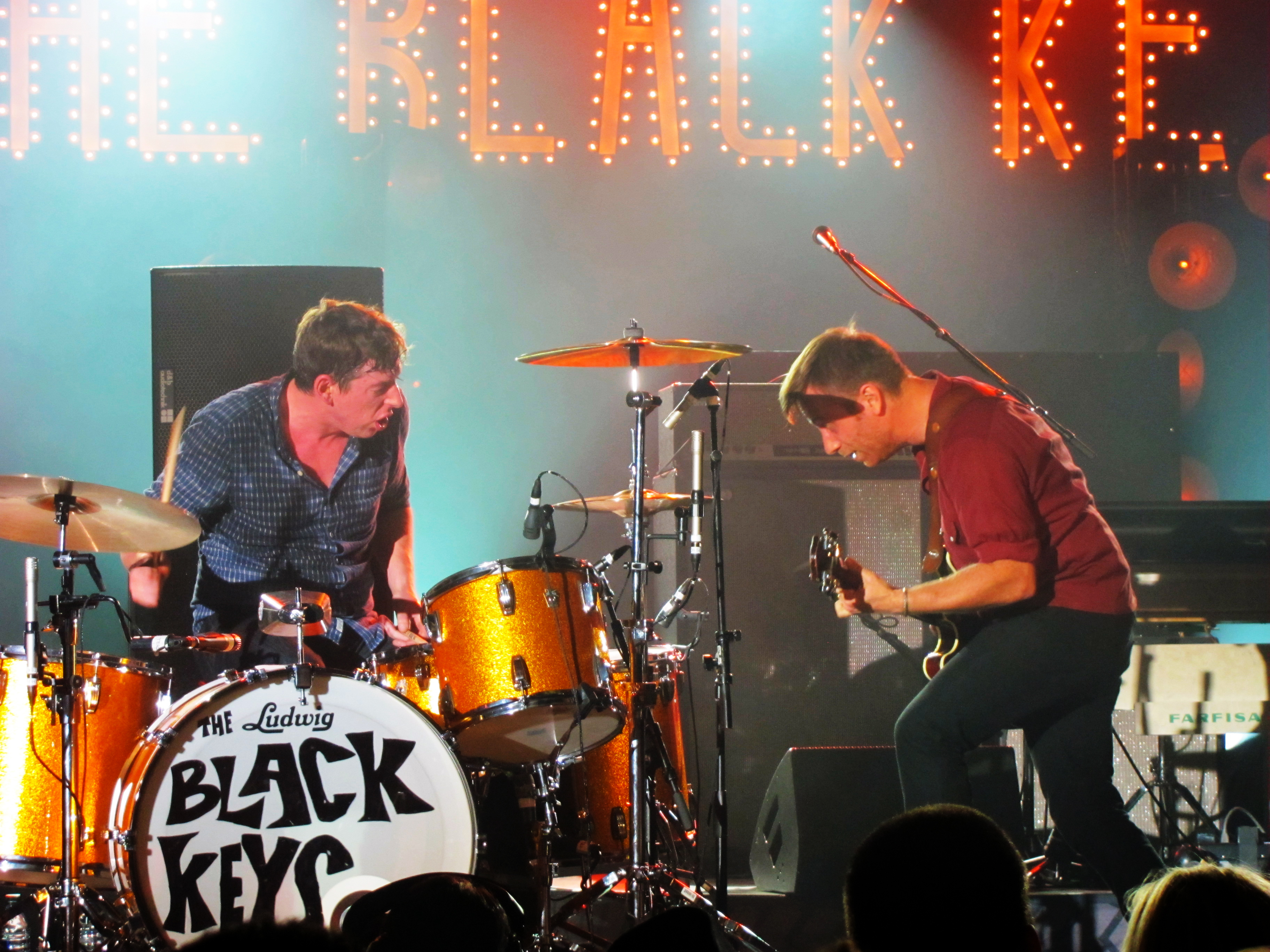
The Akron, Ohio-based band The Black Keys, formed in 2001, is another example of a garage rock revival band with a lo-fi aesthetic. Like the White Stripes, the Black Keys have only two members: guitarist and vocalist Dan Auerbach and drummer Patrick Carney. Their early recordings were made in a studio in the basement of Carney’s home using an eight-track analogue recorder. The Black Keys’ early music included many blues covers, such as "Have Love, Will Travel ♫," a song written and recorded in 1959 by Richard Berry and covered by the Black Keys in 2003.
They had some modest commercial success, signing with Nonesuch Records and licensing several of their songs for commercials. To maintain the purity of their sound, The Black Keys continued recording in the basement studio, and even after they began using professional recording studios, they worked to preserve their earlier lo-fi sound and began writing their own material—most of their albums are now almost entirely original songs instead of blues covers. The single "Lonely Boy ♫," the lead single on the 2011 album El Camino, is one example. Even though the entire album was recorded in a professional studio using digital equipment and was produced by the acclaimed producer Danger Mouse, the Black Keys stayed faithful to the sound of their earlier analogue recordings.

"Listen up ladies in bands, I’m so proud to be one of you and I don’t care if we all look exactly alike or if we are all carbon copies of each other. We have things to say and it’s up to us to get people to not just look but to LISTEN!"

"A lot of the time writers are just sponges... for what's around them, and so books are helpful for focusing your mind and literally putting it into words."

"In 2003,[Hayley] Williams was signed to Atlantic Records as a solo artist. Atlantic originally planned to record and market Williams as a pop singer, but Williams resisted, insisting on playing alternative rock music, backed by a band."
