
Overview:
The skills needed to be an effective teacher involve more than expertise in music but include a variety of personal and professional characteristics. Effective teachers have several qualities in common regardless of the style or ways in which they teach. As music educators, we are role models for the students in our classes and it is important to remember that an effective teacher is one of the most important factors that contributes to student achievement and a successful classroom.
Objectives:
Students will be able to:
- Identify and describe the professional qualities of an effective music educator,
- Identify and describe the academic background needed to become a music educator,
- Identify and describe the personal qualities and characteristics of an effective educator,
- Examine the essential music skills needed for teaching music, and
- Examine the indicators identified by the National Association of Schools of Music for becoming an effective music educator.
What are the Essential Musical Skills an Effective Teacher Needs?
In order to be an effective music educator, the student must first be a first-rate musician and performer on his or her own instrument. The old axiom, "If you can't play, teach," has never really been true. In earlier decades, many persons entered music education as a fallback or insurance policy. Well-meaning parents or mentors would counsel students to complete a teacher certification program to have a source of income should the performance opportunities become lean. While this, in itself, is not a bad strategy, it short-changes the music education profession.
Music educators need to be some of the strongest, most experienced performers. This is because modeling is an effective teaching technique and can help students emulate tone production, posture, hand position, and breathing.
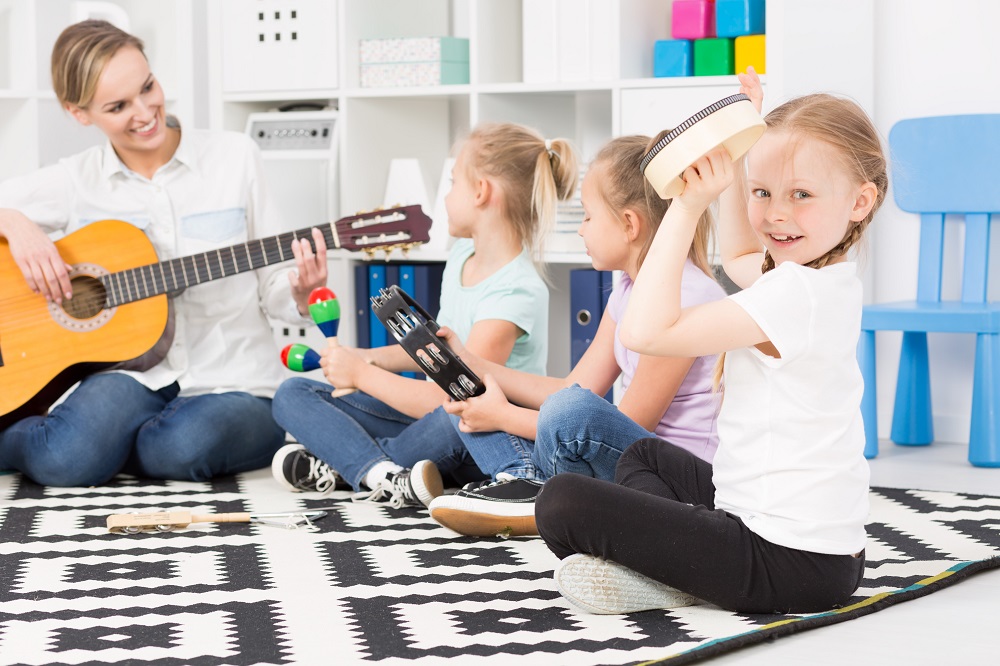
While a music educator may not make a career from performance, the skills learned in applied music instruction are crucial to becoming a successful music educator. As an undergraduate student, applied lessons help students acquire the knowledge and understanding of how music "works." The interpretation of melodies and phrases and the application of articulations, techniques, and musicality only come through the study of etude, solo, and orchestra literature.
The ability to lead an ensemble or a general music class is an extension of the lessons learned in applied study. For a school group to present a finished product, the music educator must be aware of the musical refinements needed and the process necessary to acquire an appropriate interpretation.
Included with performance skills is the ability to listen. In applied lessons, students learn to listen reflectively, assessing their own development and growth to make corrections in their technique and interpretative skills. In music theory and ear training classes, students begin to refine their musical memory by sharpening their perception of pitch, interval, cadence, and phrase. In music history and literature courses, students learn to listen more deeply into compositional structure, key relationships, and the social context for the developments and changes in these musical properties.