
Overview:
Music education, like all academic subjects, has a teaching philosophy founded on a set of principles designed present the discipline with a unified body of pedagogy. The music methods or teaching approaches of Carl Orff, Jaques-Émile Dalcroze, Zoltán Kodály and Edwin Gordon have been researched and practiced for music educators for many decades. Each encourages active participate by the students and are systematic in design.
Objectives:
Students will be able to:
- Describe four of the most widely recognized music education approaches,
- Delineate the rationale underlying each approach,
- Identify and describe principles of each methodology,
- Identify methods or steps for implementing each of the approaches, and
- Identify teaching elements that are unique to each approach.
How Does a Teacher Use the Dalcroze Approach?
The three main teaching tools of the Dalcroze approach to music education are the use of:
- Eurhythmics (rhythmic movement)
- Solfège (ear training and singing with syllables)
- Improvisation (based on creative responses to musical problem solving)
These teaching tools are combined in the approach to help produce a more musically interpretative person.
Eurhythmics is the core of the Dalcroze approach—the foundation for musical sensitivity and development. The process includes a repertory of complex kinesthetic activities and games that include locomotor movement and nonlocomotor movement. The movement is in response to music played on the piano, on percussion instruments, and, occasionally, on recordings or vocal performances. Participants follow the tempo, rhythm, and meter with their bodies.
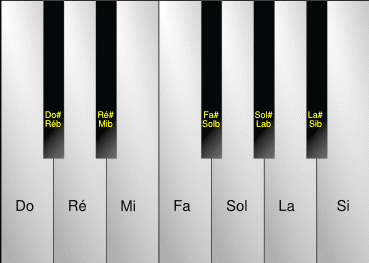
The second component of the Dalcroze approach is ear training, including solfège and solfège-rhythmique. Dalcroze teachers use the fixed do system, in which C is the starting note of the scale regardless of the tonic or tonal center. For example, when the fixed do system is used, C is always do and a G scale would begin on sol. An F# would be sharp fa (fi). Dalcroze believed that through the use of the fixed do system, students might develop absolute or perfect pitch with C always being do. In addition, students would develop a better understanding of the interrelationship of the scales.
The third Dalcroze component, improvisation, promotes a freedom of expression through movement, in rhythmic speech, with instruments, or at the keyboard.