
Overview
As we saw in earlier lessons, solo singers became increasingly important during the 1930s. Singers such as Ella Fitzgerald and Bing Crosby built long, successful careers with their interpretations of jazz and Broadway standards. More and more singers followed in this mold in the 1940s and early 1950s, including Frank Sinatra, Perry Como, Patti Page, and Doris Day. Singing groups were common as well, such as the Ink Spots and the Boswell Sisters. Although many singers began in the Broadway or big band mold, many branched out into covers of all types of tunes from a variety of genres.
Objectives
- Examine a number of popular singers and singing groups from the 1940s and 1950s
- Examine how each singer or group offered a unique perspective for the interpretation of standard tunes
- Recognize the different interpretations of the same standard
- Examine how each artist was able to create an identity while performing much of the same repertory
Doris Day
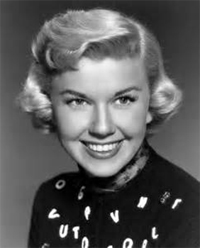
Doris Day wanted to be a dancer, but she broke her leg in an auto accident at age fourteen. While recovering, she took voice lessons, and her first singing job was with bandleader Barney Rapp. By age sixteen, she was working in New York with Bob Crosby, then she moved to the Les Brown band for six years of success and great recordings, among them "My Dreams Are Getting Better All the Time ♫" and "Sentimental Journey ♫." She broke into the movies in 1948, singing "It's Magic ♫" in Romance on the High Seas. She eventually made 39 movies. Her version of "Que Sera, Sera (Whatever Will Be, Will Be) ♫," was featured in the 1956 Alfred Hitchcock film The Man Who Knew Too Much, which starred Day and Jimmy Stewart.



