
Overview
In this lesson, we will see the tremendous influence that British musicians exerted on American popular music during the 1960s. The sudden popularity of British rock bands in the United States is called the British Invasion. After the Beatles appeared on The Ed Sullivan Show in February 1964, the British presence in rock and roll was firmly established.
Objectives
- Recall the development of rock and roll in Britain, focusing specifically on origins and early careers of the Beatles and the Rolling Stones
- Recall the number of stylistic, personnel, and managements changes of the Beatles before settling into the image of the Fab Four in matching suits
The Rolling Stones’ Music
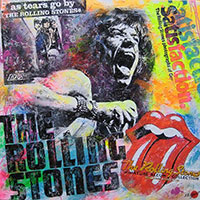
Despite their early devotion to the blues, Richards and Jagger wrote only a single 12-bar blues song, "19th Nervous Breakdown ♫." According to Jagger, the idea of a white British singer trying to write a blues song was ridiculous. Instead, Richards and Jagger drew inspiration for the forms of their songs from artists such as Chuck Berry and Buddy Holly.
"I Can't Get No Satisfaction ♫" is in verse-chorus form. The introduction begins with a single riff that is repeated several times, and each repetition adds an additional instrument.
The guitar riff in the recording is distorted with a Gibson Maestro fuzzboxa guitar pedal that uses a frequency multiplier to add complex overtones to the guitar’s sound, resulting in a distorted sound often described as “fuzzy”. Jagger’s improvisatory playing is heard in the last few seconds of the song, which is a nod to the band’s blues influences. The lyrics of the song concerned boredom with everyday banality and commercialism, although rumors abounded that the song was actually about sexual frustration and masturbation. This song about frustration with the status quo ignited the interest of younger audiences who wanted to hear these bad boy rockers singing about forbidden pleasures and the rejection of the mainstream.
1966’s Aftermath was the first album that included all original material and no covers. Not only did the album feature the songs of Jagger and Richards, but it also showcased the instrumental talents of Brian Jones. He added a marimba to "Under My Thumb ♫" and a dulcimer to "Lady Jane ♫." "Paint It, Black ♫" includes a sitaran Indian lute (or guitar) with twenty strings, moveable frets, and played with a wire pick, which is an Indian instrument with up to 20 strings. Like the Beatles, the Rolling Stones began experimenting with new instruments, recording techniques, forms, and timbres in the later 1960s. Their Satanic Majesties Request from 1967 is an experimental work that reflects elements of the burgeoning genre of psychedelic rock.
Although their popularity has waxed and waned, the group has been performing music more or less consistently since 1962.The Rolling Stones have faced many personal and legal difficulties in their half century of existence. At one point in 1967, three of the five members of the Rolling Stones—Jones, Jagger, and Richards—faced drug charges. In 1969, Jones drowned, although his death was likely the result of a drug overdose. Jones was replaced first by Mick Taylor and then by Ronnie Wood. In 1993, Bill Wyman left the group to pursue solo projects. Today’s Rolling Stones lineup includes three of the original five members: Jagger, Richards, and Charlie Watts. As of this writing, the Rolling Stones continue to write new songs, release albums, and tour. Their longevity and resiliency in rock history is unparalleled.



