
Overview
As British bands absorbed the sounds of American rock and roll and its predecessors, they also forced American rock bands to reconsider their own sounds and approaches to music. Some artists in the mid-1960s held tight to older ideas and formulas, sometimes with great success. For example, songwriting duo Jerry Leiber and Mike Stoller continued to pen hits during the 1960s, such as “Chapel of Love,” recorded by the Dixie Cups, and “Leader of the Pack,” recorded by the Shangri-Las. At the same time, new types of bands gained popularity in the American market, demonstrating that garage bands, folk rock, and blues revival groups could be a formidable presence on the American record charts.
Objectives
- Identify several artists and types of rock that became popular soon after the British Invasion
- Recall why garage bands, TV rock, the American blues revival, and folk music gained commercial viability in the middle of the 1960s
- Examine how rock music began to diversify following the British Invasion
Conclusion
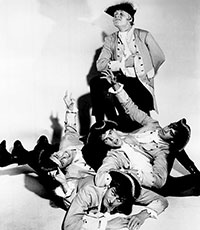
As we have seen in this lesson, the popularity of the Beatles and the Rolling Stones in the 1960s inspired a number of different responses. TV bands and garage bands each represented a different way of emulating the British Invasion groups. TV bands were fictional representations of Beatles-like bands, some of whom came to life, such as the Monkees. Garage bands imitated the music of the Beatles and the Stones in their garages and basements, but if they did happen to chart a hit, they were usually unable to follow it. In the next lesson, we will consider another type of music from the 1960s that had a very different set of interests and concerns compared to the bands discussed in this lesson: folk musicians.



