
Overview
As we saw in the previous lesson, James Brown and his band developed an early version of funk music during the late 1960s, and they inspired many funk bands in the late 1960s and the 1970s. Funk music often featured a drum break during the last third of the song, during which the other instruments would drop out in order to allow the drummer to solo for a measure or two. This riff-and-groove structure and the importance of drum breaks were definitive characteristics of most funk music during the late 1960s and 1970s. In this lesson, we will survey several important funk artists from this era.
Objectives
- Identify some of the defining features and characteristics of funk music
- Recall the significance of Sly and the Family Stone in the development of funk music
- Recall the role George Clinton played in funk music during the 1970s with P-funk genre
- Examine how popular media such as Blaxploitation films and television programs helped promote African American music and musicians
Introduction
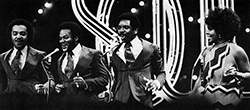
As we saw in the previous lesson, James Brown and his band developed an early version of funk music during the late 1960s. The groove in funk music is created when several different instruments play distinct but interlocking riffs, as we heard in "Cold Sweat ♫." Funk music often featured a drum break during the last third of the song, during which the other instruments would drop out in order to allow the drummer to solo for a measure or two.
This riff-and-groove structure and the importance of drum breaks were definitive characteristics of most funk music during the late 1960s and 1970s.
In this lesson, we will survey several important funk artists from this era. We will examine the unique characteristics of their musical styles in order to understand how they created their own funky musical styles and messages.



