
Overview
Music is an ever changing expression of the time, place, and people who create it. In the border areas of Mexico and the U.S. and in Mexican-American populations around the country, unique musical forms and styles have been developed to entertain, educate and uplift audiences. In this chapter we will discuss the genre of conjunto in its traditional and modern forms in Texas. These musical styles appeal to the working class and function in large part to accompany couple dancing. Forms will include the popular polka dance, the corrido (a type of narrative ballad) and the ranchera, (a popular type of Mexican song). The development of the traditional conjunto ensemble will be traced from the early 1900s through the 1960s. Examples are given of innovative hybrid musical styles formed in combination with mainstream popular music and Latin American music of recent years. Most of the music is sung in Spanish with the exception of some cross-over English songs.
Objectives
- Identify the ensembles and selected genres and forms of Conjunto aurally
- Recall the bajo sexto and accordion and their musical roles and functions
- Identify the following song/dance forms: polka, corrido, ranchera, cumbia
- Recognize the major artists of Conjunto music
- Analyze the cultural context that these ensembles, genres, and forms originate from as part of an ongoing, bi-cultural musical expression
The Accordion continued
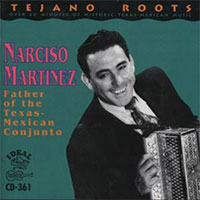
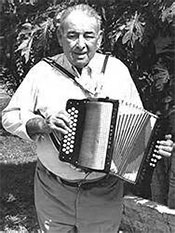
Narciso Martinez (1911-1992), nicknamed the "Father of the Texas Mexican Conjunto," was the most popular accordionist in Texas from the mid-1930s through the mid 1950s. As a young man growing up in Tamaulipas, Mexico, he would go out of his way to listen to the German polka bands play in the outdoor plaza and would recreate the tunes by ear on accordion. The polka is a couple dance in lively 2/4 time. In the late 1940s Narciso became the primary artist for Ideal records and recorded with Beto Villa, a prominent bandleader. To support his music and his family, he worked as a zookeeper and truck driver when needed. He received the National Heritage Fellowship Award in 1983 from the National Endowment for the Arts and was inducted into the Conjunto Hall of Fame after his death in 1992.
Important contributions and interesting facts:
- Pioneered the combination of bajo sexto and accordion
- Innovated the treble, right hand style of melodic playing
- Expanded the polka style from its German roots
- Accompanied vocal duos of his day including Carmen y Laura
- His recordings were sold under his own name in Chicano areas and under stage names like "Louisiana Pete" in Cajun areas, and under the "Polski Kwartet" in Polish areas as part of the race record label industry
- Was one of the first conjunto musicians to tour outside of Texas
Listening Examples

"The short range allows the corrido to be sung at the top of the singer's voice, an essential part of the corrido style."


