
Overview
Music is an ever changing expression of the time, place, and people who create it. In the border areas of Mexico and the U.S. and in Mexican-American populations around the country, unique musical forms and styles have been developed to entertain, educate and uplift audiences. In this chapter we will discuss the genre of conjunto in its traditional and modern forms in Texas. These musical styles appeal to the working class and function in large part to accompany couple dancing. Forms will include the popular polka dance, the corrido (a type of narrative ballad) and the ranchera, (a popular type of Mexican song). The development of the traditional conjunto ensemble will be traced from the early 1900s through the 1960s. Examples are given of innovative hybrid musical styles formed in combination with mainstream popular music and Latin American music of recent years. Most of the music is sung in Spanish with the exception of some cross-over English songs.
Objectives
- Identify the ensembles and selected genres and forms of Conjunto aurally
- Recall the bajo sexto and accordion and their musical roles and functions
- Identify the following song/dance forms: polka, corrido, ranchera, cumbia
- Recognize the major artists of Conjunto music
- Analyze the cultural context that these ensembles, genres, and forms originate from as part of an ongoing, bi-cultural musical expression
El Conjunto Bernal
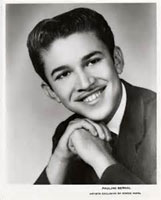
While many fine accordionists added their talents and innovations to the mix through the 1950s, Paulino Bernal was the last to make a major impact on conjunto music of the era. Organized in Kingsville, Texas in 1952, El Conjunto Bernal, anchored by brothers Eloy and Paulino, began to pull away from their competitors in the late 1950s. By 1960 they were established as the most experimental group around, due to an unprecedented level of virtuoso instrumental technique, a high level of artistry in the detailed phrasing, dynamics, articulation and general balance of the group, and innovations such as the three-part vocal harmony. Conjunto Bernal achieved a smoother, more polished sound than previously heard and their hit in this newer style was the title track on an album entitled "Mi Unico Camino ♫" (My only path).
In "Mi Unico Camino ♫," a ranchera in vals tempo, the Bernals incorporated three-part vocal harmony, previously introduced in Mexico. This very popular combination established the group though they continued to play the traditional polka and dueto styles. Accordionist, Paulino, strove to distinguish his playing from others by increasing the keys available to play in, using different voicings and perfecting the "choppy" or staccato technique pioneered by Tony de la Rosa. He accomplished this in part by using four and five row chromatic accordion models. His playing reached a level unsurpassed by any others up to 1960. Eloy Bernal was a great talent on the bajo sexton and was known for his sensitivity to the nuances of style and technically exacting performances. Conjunto Bernal set the standard for conjunto by 1960 and many later groups emulated them.


"Lydia sang in the vernacular, which means in the peoples' way of singing, not the highly trained or theatrical performers,"

