
Overview
In an earlier lesson, we encountered a number of subgenres of country and western music that became popular during the 1940s, such as the country crooner and honky-tonk. In this lesson, we will focus specifically on the genre of bluegrass. Bluegrass music had had devoted followers since its earliest days, but during the 1960s, more and more people came to listen to and appreciate the music. The folk revival movement, coupled with mainstream exposure in Hollywood films, introduced a new generation of listeners to bluegrass.
Objectives
- Identify three key figures of bluegrass: Bill Monroe, Earl Scruggs, and Lester Flatt
- Examine the three musicians and the key characteristics of bluegrass music, such as instrumental techniques, instrumental combinations, and the connections between bluegrass music and earlier types of hillbilly music such as the string band
The Roots of Bluegrass
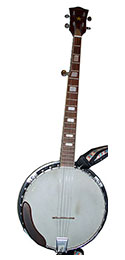
American country music has its roots in the music of the British Isles: England, Ireland, and Scotland. In the eighteenth and early nineteenth centuries, settlers from the British Isles—particularly northern Ireland and the Scottish lowlands—settled in the mountainous regions of the southern United States, bringing their musical traditions with them. This includes music for many different types of dances (such as the waltz, reel, jig, and round dance) as well as a number of narrative ballads and other folk songs. This music was often accompanied by fiddle along with guitar, dulcimer, banjo, harmonica, and sometimes piano. By the 1930s, groups playing Southern mountain music could also include other instruments such as the upright bass, the steel guitar, or the autoharp.
Bluegrass music is descended from mountain folk music ensembles known as string bands. A string band was a group typically composed of a fiddle, guitar, upright bass, and sometimes a mandolin or banjo. String bands provided accompaniment for barn dances during the 1920s, both the live social events that took place in many communities and the radio-program equivalents like Chicago’s WLS National Barn Dance or Nashville’s "Grand Ole Opry" radio show on WSM. These string bands often had colorful names like Dr. Humphrey Bates and the Possum Hunters, Al Hopkins and his Buckle Busters, or Gid Tanner and the Skillet Lickers. The Skillet Lickers in particular were remarkably prolific; they recorded 88 sides for Columbia Records between 1926 and 1931. Recordings such as "Skillet Licker Breakdown ♫" and "Down Yonder ♫" have become classic examples of 1920s string band music. Although bluegrass music is deeply rooted in the string band tradition, singer Bill Monroe is generally credited with the founding of bluegrass as a genre.



