
Overview
The 1960s saw a revival of folk music. Following the model of an earlier generation of folk musicians such as Woody Guthrie and Pete Seeger, many folk musicians in the 1960s used their music to promote left-wing social causes. The Civil Rights Movement, Vietnam War protests, and protests for women’s rights were all places where folk music could flourish. Bob Dylan shattered the folk music aesthetic in 1965 when he played an electric set at the Newport Folk Festival. After this performance, the lines between folk music and rock were blurred. Dylan’s influence paved the way for many different folk and folk rock artists during the 1960s, including the Byrds, the Mamas and the Papas, and Simon and Garfunkel.
Objectives
- Identify two important figures in early American folk music, Pete Seeger and Woody Guthrie
- Recall why Pete Seeger and Woody Guthrie were inspirational figures in the folk revival of the 1960s
- Examine the music and career of Bob Dylan
- Recall why Bob Dylan’s electric performance at the 1965 Newport Folk Festival was so upsetting to folk music purists
- Recall the many stylistic and generic reactions to Dylan “plugging in,” namely, the rise of the genre of folk rock
Authentic vs. Commercial
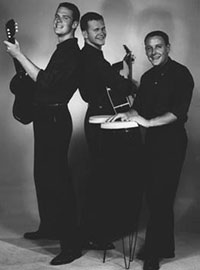
Many folk musicians prided themselves on being "authentic" rather than being "commercial." Although there were no hard-and-fast rules about the distinction between authenticity and commercialism, many folk musicians wanted to keep their musical style and lyrical messages separate from those that were promoted and championed by Top 40 radio stations and, more generally, pop music. This sense of authenticity in folk music typically came from a blatant refusal to be affected by (or even to acknowledge) the latest trends and styles of popular music.
For the most part, folk music was performed on acoustic instruments. The melodies were relatively simple. Often, the choruses are very catchy, and people could learn them quickly and then begin to sing along—this feature was a key element of many protest songs.
Many folk songs were strophic ballads, a form that includes several verses that tell a story over the course of the song. Although each strophe or verse may end with the same line of text, the songs do not have choruses. Many of these strophic balladsa form common in folk music that includes several verses that tell a story over the course of the song and usually contains a catchy chorus that comes back in between the verses tell tales of injustice or wrongdoing. In general, folk musicians were unconcerned about what they perceived as the trivial issues addressed in popular songs, such as romance, love, and dancing. In fact, the liner notes to Peter, Paul, and Mary's first album read, "No dancing, please!"
"The Legend of Tom Dooley ♫," recorded by the Kingston Trio, is an example of the type of folk song that was popular during the 1950s and the early 1960s. Accompanied by acoustic bass, guitar, and banjo, the three male members of the Kingston Trio tell the story of an innocent man who was hanged for allegedly murdering his girlfriend. Another classic example of a folk song is "Blowin' in the Wind ♫." "Blowin' in the Wind ♫" was written and recorded by Bob Dylan in 1962, but a 1963 recording of the song by Peter, Paul, and Mary is the version with which most people are familiar. Peter, Paul, and Mary's recording of the song includes two acoustic guitars and various solo, unison, and harmonic combinations of the singers' voices. The "answer," though, is always delivered by Mary's solo voice.
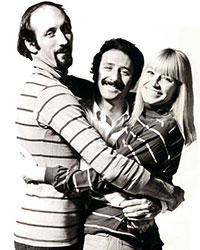
An oft-cited problem with the folk music of the 1960s is that it had difficulty attracting a mainstream audience of listeners. It was not the message that was so problematic, but it was the musical language. The 1960s were a time of political protests about Civil Rights, women's rights, and the Vietnam War. The protests on college campuses, coffeehouses, and in the streets needed music that suited the tastes of its young participants. Listeners who were accustomed to the hard-driving, electric sounds of rock and roll music had a difficult time accepting the acoustic and sometimes understated sounds of many folk music artists. This is not to say, of course, the folk music went completely unnoticed by the protest movements. It did mean, however, that protest music from the folk movement had difficulty reaching a mainstream audience until it began to adopt the sounds that appealed to the mainstream audiences. The person who is credited with bridging the gap between the languages of rock and folk music is Bob Dylan.



