
Overview
This lesson addresses two separate but related genres of rock. Country rock is a hybrid of country music and rock music, while Southern rock incorporates themes from the American South into music that is otherwise relatively standard rock in its sound and instrumentation. There are many different sounds and artists that have been classified as country rock, and many of these sound very different from each other.
Objectives
- Identify the defining stylistic characteristics of country rock
- Identify the defining stylistic characteristics of Southern rock
- Recall the instrumentation, musical influences and backgrounds, and lyric themes of several country rock and Southern rock artists
Southern Rock continued
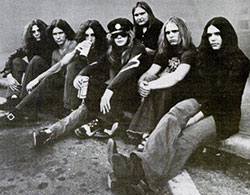
Another prominent band from the Southern rock genre was the Florida-based group Lynyrd Skynyrd. As the title of their first album explains, the name of the band is Pronounced Leh-nerd- Skin-nerd. The group's name was a corruption of the name of a high school teacher who had criticized their long hair. The group developed later than the Allman Brothers Band, and they were able to capitalize on the interest that the Allman Brothers Band had generated for this new genre of Southern rock.
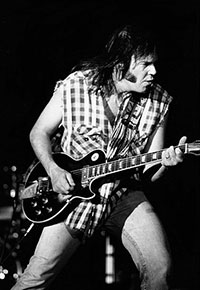
The members of Lynyrd Skynyrd included vocalist Ronnie Van Zant, guitarist Allen Collins, guitarist Gary Rossington, bassist Ed King, pianist Billy Powell (who had begun as a roadie for the band but joined full time after he wrote the introduction to "Free Bird ♫"), and drummer Bob Burns. Like the Allman Brothers Band, Lynyrd Skynyrd included two lead guitars in their lineup. In fact, bassist King would frequently play guitar as well, which then gave Lynyrd Skynyrd three lead guitars. Unlike the Allman Brothers Band, Lynyrd Skynyrd's music was more radio-friendly and explicitly Southern. "Sweet Home Alabama ♫" (1974) is probably the group's most famous song as well as its most outspoken statement of its Southern pride. "Sweet Home Alabama ♫" was Lynyrd Skynyrd's response to two songs recorded by Neil Young, "Southern Man ♫" and "Alabama ♫." In those songs, Young addressed issues of racism in the American South, and the members of Lynyrd Skynyrd felt that the Canadian singer-songwriter had unfairly characterized the South. In their attempt to set the record straight about Alabama, Lynyrd Skynyrd criticized Alabama governor George Wallace, who had tried to prevent two black students from entering the University of Alabama in 1963, and they took a shot at Richard Nixon and the Watergate scandal.
In 1977, the band's plane crashed in Mississippi, killing Van Zant and Gaines and seriously injuring the other members of Lynyrd Skynyrd.
The surviving members disbanded, although they frequently regrouped in various combinations, such as the Rossington-Collins Band and the Allen Collins Band. In 1987, the group reformed with Ronnie Van Zant's younger brother Johnny taking over as the group's lead singer and songwriter.



