
Overview
The 1960s were a period of protest and upheaval in American race relations. The Civil Rights Act had passed in 1964, and it outlawed segregation and prohibited discrimination. The Voting Rights Act of 1965 prohibited discrimination in voting practices. Martin Luther King, Jr. promoted a message of peace and solidarity, encouraging civil disobedience and peaceful protests for African Americans to ensure that they were treated equally in all areas of society. Musicians such as Sam Cooke, Curtis Mayfield, and James Brown sang about black pride and black empowerment. James Brown became one of the most important voices of black pride, earning the nickname “Soul Brother Number One.”
Objectives
- Recall the relationship between music and the American civil rights movement during the 1960s
- Recall how artists such as Curtis Mayfield and Sam Cooke advocated for civil rights in their music
- Examine the role James Brown played in the musical messages of the civil rights movement and the Black Power movement
- Identify characteristics of Brown’s musical style from this period
- Recall several other musicians who conveyed meaningful musical messages to African American audiences during the 1960s and early 1970s, such as Stevie Wonder and Sly and the Family Stone
James Brown's Band
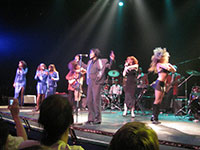
In the music Brown and his band recorded during this period, the musicians would play riffs. Unlike the blues or rock, in which a single riff can form the foundation of the entire song, each instrument or group of instruments would play interlocking riffs. Each riff had independent interest, and when combined, the interlocking riffs created intricate rhythmic patterns. In rehearsals, the musicians would often start with the drummer's line, and then they would keep adding riffs until they locked into the song's groovea term used in funk music that refers to the repeated pattern that is created when all of the separate riffs played by the various instruments coalesce with the drummer’s rhythm and are repeated. In funk music, the groove refers to the repeated pattern that is created when all of the separate riffs coalesce and are repeated. The riffs were short, exciting, and more rhythmic than melodic in character. Once the band established the groove, Brown would add the lyrics, and the band would work out the breaks and stops accordingly.
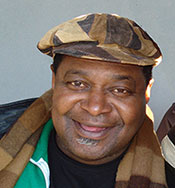
This form based on interlocking riffs was critical in the development of the genre of funk. In general, funk music has a greater emphasis on rhythm than it does on melody. According to Brown, "I was hearing everything, even the guitars, like they were drums." During the 1960s, James Brown and his band recorded some of the earliest examples of funk songs. "Cold Sweat ♫" (1967), co-written by Brown and Pee Wee Ellis, is typically regarded by critics as the first funk song ever recorded.
"Cold Sweat ♫" also is one of Brown's first recordings that contains a drum breaka section in a song where the rest of the musicians drop out and the drummer (or the rhythm section) plays for one or two measures. In a drum break, the rest of the musicians drop out and the drummer (or the rhythm section) plays for one or two measures. In "Cold Sweat ♫," the drum break, played by drummer Clyde Stubblefield, can be heard at 4:30 in the song. The drum break allowed the drummer to shine, or, as Brown would say just before the drum break, "Give the drummer some." Stubblefield was the drummer for the majority of Brown's songs during this period, and his drum breaks began to take on a life of their own during the 1970s, as we will see in a subsequent lesson. The most famous drum break in all of funk music can be heard at 5:22 in Brown's "Funky Drummer ♫," when all of the musicians stop playing except for Stubblefield. As we will see in later lessons, the drum break in funk songs was a critical aspect in the development of hip-hop.



