
Overview
The genre of alternative rock emerged during the 1980s in the wake of punk rock, new wave, and music released on independent labels. In this lesson, we will consider the origins of alternative rock and two of the most successful early alternative rock bands. We will then survey several major subsets of the alternative rock movement that were popular in the early 1990s, including grunge rock, the riotgrrrl movement, and jam bands. The music of alternative rock is bound not by a specific sound or musical style but rather by a rejection of corporate or commercial values.
Objectives
- Recall the primary values and ideas of alternative rock
- Identify the main stylistic and aesthetic elements of grunge rock
- Identify the main stylistic and aesthetic elements of the riotgrrrl movement
- Identify the main stylistic and aesthetic elements of jam bands
Jam Bands
Another important strain of alternative rock to emerge in the 1980s was the jam banda genre of alternative rock inspired by groups like the Grateful Dead that combined many different musical styles and genres and focused on lengthy and improvisational forms . Inspired by 1960s groups such as the Grateful Dead, jam bands combined many different musical styles and genres and focused on lengthy and improvisational forms. The band Phish blended dozens of musical genres in their music, including (but not limited to) blues, country, folk rock, classical music, bluegrass, funk, and classical music. In a way, the eclecticism and free forms of Phish's music reflect a sense of optimism and inclusion that is absent in the music of other alternative rock groups of the time.
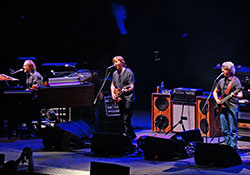
Formed in 1985 by Vermont college students Trey Anastasio (guitar), Page McConnell (keyboards), Mike Gordon (bass), and Jon Fishman (drums), the group also worked closely with a luthier named Paul Languedoc. Languedoc has designed and built instruments specifically for the members of Phish, and he also works as their sound engineer. Phish has been enormously successful as a live act, but they have never released an album that has sold a million copies. Their live shows consistently sell out, and they encourage audience members to record during their live shows and trade these bootleg recordings with other fans.
The recording "Stash ♫" from the 1995 concert album Phish: A Live One demonstrates the group's approach. The music is a collective improvisation in which each member of the band explores different sounds, rhythms, and styles on his own instrument. At times, individual musicians stand out, and at others, the group plays together, reacting to each other's lines as they are played and developed. At just over twelve minutes long, "Stash ♫" is a relatively short recording compared to the rest of Phish's repertoire. Fans and critics agree that the music of Phish is best enjoyed live, and studio or even live recordings do little justice to the sounds and effects created when the band jams onstage for a live audience.
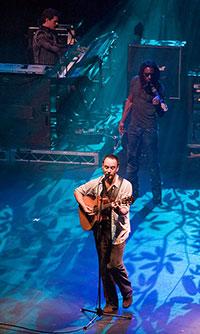
During the 1990s, other bands such as Blues Traveler and the Dave Matthews Band took the jam band aesthetic and combined it with popular song forms. New York-based Blues Traveler was heavily influenced by southern rock bands such as the Allman Brothers, and their music often featured lengthy improvised harmonica solos by singer, guitarist, and songwriter John Popper. The group first achieved commercial success with their 1994 single "Runaround ♫." The Dave Matthews Band includes an unusual collection of instruments, such as acoustic guitar, bass, saxophone, and violin, and their style melds jazz, bluegrass, and funk. Their catchy style of improvisation led them to commercial success with 1994's Under the Table and Dreaming. The Dave Matthews Band toured with Phish in 1994, and John Popper of Blues Traveler has performed guest harmonica solos in songs such as "What Would You Say ♫" (1994).

“The nineties as a pop cultural sphere was a really fertile time for feminism that was grounded and located in popular culture. I'm talking about before the Spice Girls - Sassy Magazine, riot grrrl, the Beastie Boys, Nirvana. You had this alternative culture that was very much speaking up on behalf of women and in favor of women.”


