
Overview
In the late 1980s and early 1990s, many rock musicians wrote and recorded music that was closely aligned with rock genres and styles of the past. Britpop bands echoed the music of the British Invasion. Industrial rock artists took the darkness of heavy metal and combined it with the abstraction of the Velvet Underground. Pop punk bands recorded and released music that was the most commercially successful music by any punk rock artist in history. At the same time that these and other bands were absorbing and redefining rock traditions, listeners were engaging with new forms of listening technology in the forms of CDs and MP3s.
Objectives
- Recall the changes that occurred in commercial recording technology during the 1980s and 1990s
- Recall the important people and stylistic features of Britpop, industrial rock, and pop punk
- Examine how Britpop, industrial rock, and pop punk music related to earlier styles and genres of rock music
Conclusion
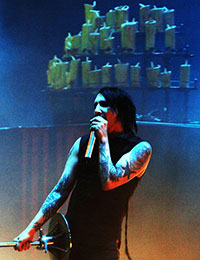
Throughout the 1980s and 1990s, a number of groups maintained rock's traditions but updated and reimagined these traditions in order to speak to the current generation of listeners. Oasis and, for a time, Blur were the top Britpop bands, and they embraced the traditions of the Beatles and the Rolling Stones. Bands such as Throbbing Gristle embraced the abstract sounds of the Velvet Underground and the anarchic message of punk rock to create the genre of industrial rock, and American artists such as Marilyn Manson and Nine Inch Nails embraced the genre of industrial as well. Finally, the band Green Day became the best-selling punk band of all time with their popular style of punk rock. The artists in this lesson represent those who embraced tradition and existing genres of music. In the final lesson, we turn to artists who hybridized existing genres, ignored generic distinctions, or otherwise created music that is impossible to categorize.


“In the '90s, the radio was still alive with all different kinds of points of view, and I think that's why people are longing for that time. It was the first time that alternative music broke through to the mainstream.”

