
Learning Objectives
- Relate how Romantic poets and artists abandoned traditional subjects, turning instead to the passionate and the fanciful.
- Relate how the Industrial Revolution impacted the technological development and affordability of musical instruments.
- Analyze how the orchestra grew in size and sound as new instruments were introduced and composers demanded greater levels of expression.
- Illustrate how Romantic composers explored nationalistic folklore and exotic subjects.
- Identify the form of romantic period songs, including strophic, through-composed, and the modified strophic forms.
- Examine the German art song (or Lied) as a favored romantic period genre.
- Discuss how the music of Franz Schubert impacted romantic period music.
- Discuss how the music of Frédéric Chopin impacted romantic period music.
- Trace the ascendance of program music in relation to absolute music.
- Summarize how political unrest throughout Europe stimulated the formation of schools of musical nationalism in Russia, Scandinavia, Spain, England, and Bohemia among other countries.
- Differentiate between the distinct national styles of romantic opera in France, Germany, and Italy.
- Discuss how the Italian nationalist composer Giuseppe Verdi impacted romantic period music.
- Trace how choral music became a popular artistic outlet for the middle classes.
- Discuss how the Russian composer Pyotr Ilyich Tchaikovsky impacted romantic period music.
Romantic Period (1820–1910)
General Characteristics of Romantic Music
Harmony in Romantic Music
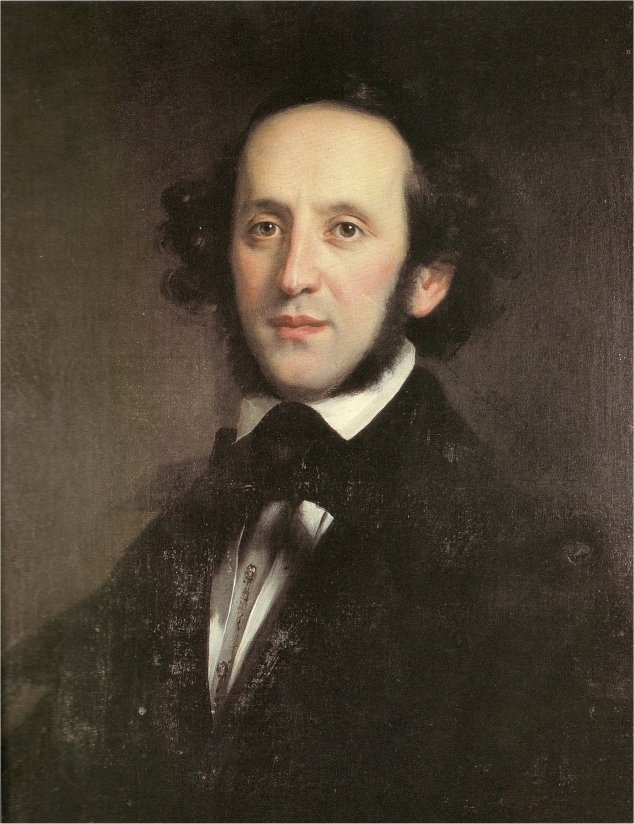
In their quest for new, more expressive sonorities, Romantic composers did not feel restricted by the harmonic limitations established in earlier times. The result was more dissonant sounds and frequent departures from tonal centers. This was accomplished by inserting unexpected tones in chords and melodies or by sudden shifts in tonal center.
The following excerpt from Hear My Prayer by Felix Mendelssohn uses chromatically altered tones in a melody; i.e., tones that are not part of the scale on which the piece is built. This blurs the tonal center and establishes some unusual harmonic relationships. The excerpt—part of a much larger work that includes a full choir—is sung by a boy soprano. The melody at the beginning clearly establishes a tonality, but as the piece progresses there are more and more chromatic alterations—those notes that don't belong in the scale. After a few chromatic passages, the original melody returns to re-establish tonality when the choir enters.
Composer: Felix Mendelssohn
-
"Hear My Prayer"
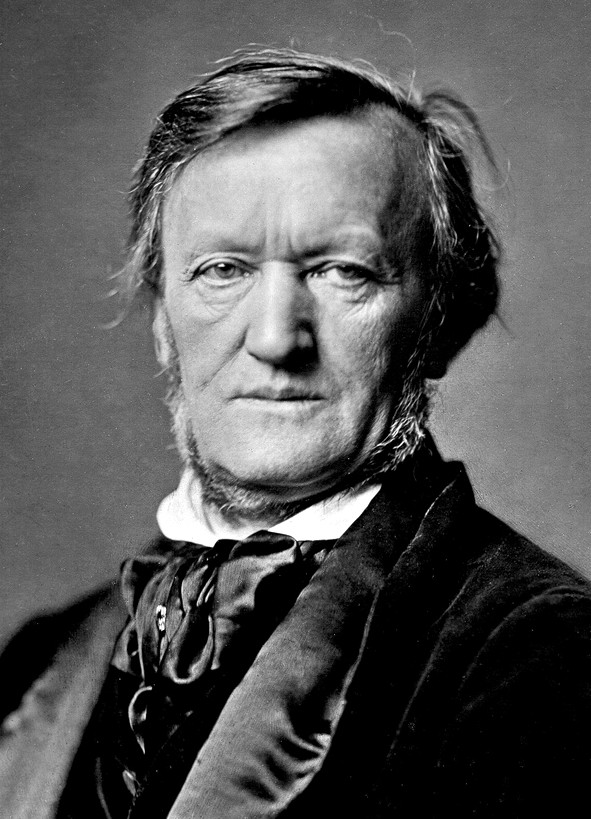
Combinations of tones that create altered chords and dissonance may be heard in this excerpt from Richard Wagner's "The Ride of the Valkyries." Wagner's music pushed the limits of the traditional Western European harmonic language to its breaking point and opened the door for future developments in chromaticism and atonal music (music without a tonal center).
Composer: Richard Wagner
-
"Die Walküre: Ride of the Valkyries"
"March to the Scaffold" from Berlioz’s Symphony Fantastique provides another example of the rich harmonies and massive orchestral effects that emerged during the Romantic period.
Composer: Hector Berlioz
-
"Symphonie Fantastique, Op. 14: IV. March To The Scaffold"
Dynamics in Romantic Music
Dynamics is a crucial element of musical expression, and Romantic composers explored the extremes of the dynamic range—extremely soft or extremely loud sounds—in their markings. These changes in dynamic level could be gradual or extremely sudden.
This excerpt from the beginning of Bruckner’s Symphony No. 4 in E-Flat Major begins very softly, but soon increases to fortissimo, the Italian term meaning "very loud."
Composer: Anton Bruckner
-
"Symphony No. 4 in E Flat Major, Romantic: I. Bewegt, nich su schnell"
Texture in Romantic Music
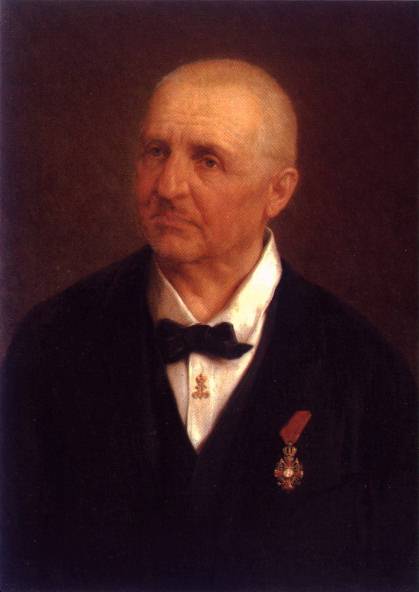
A significant portion of Romantic music features rich texture. Romantic composers continued to use polyphony to create multiple, independent layers of sound, but this texture was typically combined with more homophonic sections within the same piece. Given the larger orchestras and technically improved instruments at their disposal, Romantic composers were able to employ a much larger palette of sounds, both homophonically and polyphonically, and to produce thicker sounds than was ever possible in earlier periods.
Composer: Anton Bruckner
-
"Symphony No. 4 in E Flat Major, Romantic: I. Bewegt, nich su schnell"
Thicker textures may be achieved in orchestral music by adding more and more instruments, as in the above example.
The Piano
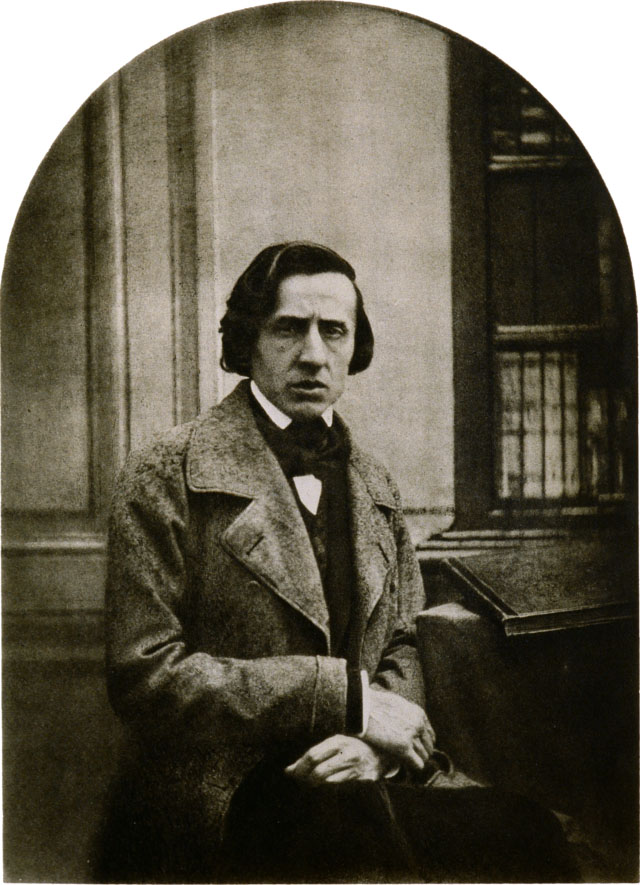
The examples thus far provide a good illustration of the wide array of sounds and effects used by Romantic composers. However, up until this point they've all involved large ensembles. The following excerpt from Chopin’s Polonaise in A-flat illustrates how Romantic composers sought to achieve the same effects on the piano—the quintessential Romantic instrument. In the closing moments of this polonaise, Chopin was able to produce the illusion of sustained tones, which create thick, full, rich-sounding chordal textures that convey powerful patriotic feelings.
Composer: Frédéric Chopin
-
"Polonaise in A-flat major, Op. 53, Heroic" [ 06:03-07:14 ]01:11
Form in Romantic Music
Many Romantic composers worked within the previously established structures but pushed the limits in new and innovative ways to meet their needs for expressiveness. For example, music from the Baroque and Classical periods typically consisted of phrases that had clear beginnings and endings. Romantic composers, on the other hand, frequently extended phrases, overlapping beginnings and endings, as in this example from Wagner’s overture to the opera Tristan and Isolde.
Composer: Richard Wagner
-
"Tristan and Isolde: Overture" [ 01:19-15:55 ]14:36
The sonata-allegro form continued to provide a very useful basic structure for major works such as symphonies, concertos, and sonatas. Composers in the Romantic period, however, saw the development section, as well as the transitions between sections, as opportunities for creative expression. They proceeded to expand those sections. Sometimes the transitions became longer than the thematic statements themselves. Romantic composers also frequently added introductions and codas to traditional forms. In some instances, codas formed a second development section. This resulted in longer and longer works. For example, a typical Mahler symphony may run well over an hour, while some of Mozart's early symphonies lasted all of 12 minutes.
Freer forms also emerged during this period, especially in the many pieces for piano and art songs. Tone poems were free-form works for orchestra. Romantic composers, nonetheless, still found ways to follow the basic artistic principle of unity and variety.