
What is the history of public speaking?
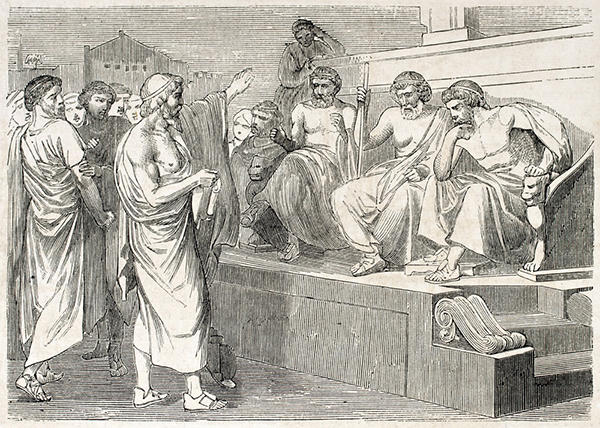
The study of public speaking began over 2,500 years ago. The study of rhetoric, persuasive public speaking, and direct verbal communication with audiences is generally considered to have originated in Syracuse in the early fifth century BCE with two men, Corax and his pupil Tisias. From 461 to 429 BCE, Pericles, a well-known orator and Athens statesman, ruled Athens. The Athenian period of democratization in Greece under Pericles created the need for rhetorical skills and public speaking, since the democratic courts held many legal hearings, and rhetoric became necessary to win court cases. Gorgias of Leontini is credited with bringing rhetoric to Athens in 427 BCE.
The term “rhetoric” is frequently found in the study of the history of public speaking. Rhetoric can be defined broadly as "the art of persuasion" (Lanham 131). Although the term "rhetoric" is often associated with deceit or inaccuracy, in ancient Greece, rhetoric was an essential component of decision-making, problem-solving, conflict mediation, and public discussions of major issues. The theories of public speaking and rhetoric in ancient Greece began with traveling lecturers who were known as sophists. Sophists made speeches themselves and also taught lawyers and politicians how to speak logically and in a manner that was appropriate for the courts and deliberative councils of the society.
Because rhetoric was so important for participation in the democratic society, public speaking became part of the formal education in ancient Greece. At the age of fourteen, boys received instruction in public speaking and were exposed to sophistic instruction where they pretended to address a courtroom.
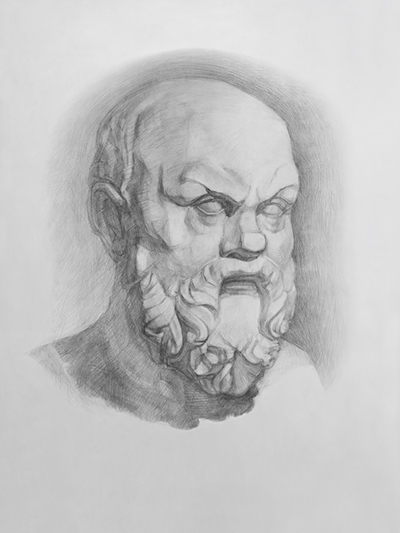
Philosophers also became deeply involved with the study of public speaking. Socrates, Plato, Aristotle, and their students developed rhetorical theory and handbooks for the study of rhetoric, and these philosophers became known as rhetoricians. Rhetoricians are scholars who study ways to identify with people and to persuade them of a particular point of view. Even today, students in public speaking courses study these philosophers’ speeches and treatises on rhetoric; the study of these ancient sources is known as "classical rhetoric."
Aristotle's works are some of the most important sources on the study of rhetoric and public speaking in ancient Greece. Aristotle first studied with Plato. In 335 BCE, Aristotle opened a school known as the Lyceum, where he offered a public course on rhetoric called the Peripatetic School. Aristotle's students studied proper delivery and style in speeches; his most notable student was Theophrastus, who succeeded him as head of the school. Aristotle divided the subject of rhetoric into five parts, or canons:
- Invention
- Arrangement
- Style
- Memory
- Delivery
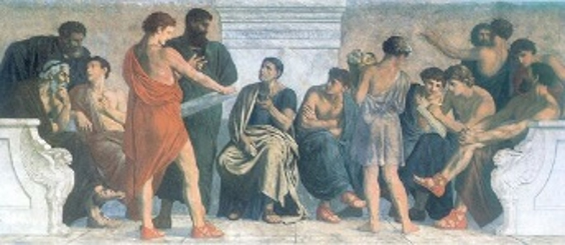
These five canons are still a part of public speaking in education today. Aristotle's treatises on public speaking were passed through oral tradition for many years, and eventually they were written down and published.