
Learning Objectives
- Learn how parallel major and minor keys are related and how they differ.
- Explore the fifteen parallel major and minor keys.
- Build parallel minor scales and create minor key signatures.
- Review solfege syllables in minor.
Minor Scales VI: Parallel Keys
Parallel Keys
In this lesson we will explore another important relationship between major and minor keys. Look at the two scales below (C major and C minor). What is the same about these two scales? What is different about them?
C major and C minor
| C major and C minor |
Two keys that share the same tonic are called parallel keys. C major and C minor are parallel because both scales start and end on C. We can also say that C minor is the parallel minor of C major and that C major is the parallel major of C minor. Parallel keys always use the same pitch for their name: D major and D minor, E-flat major and E-flat minor, F-sharp major and F-sharp minor, and so on.
| Remember |
|
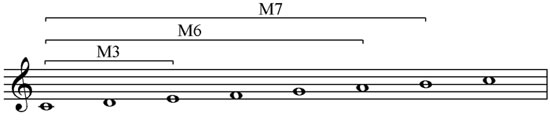
Parallel keys also share the same dominant, subdominant, and supertonic. In fact, there are only three pitches that differ between parallel major and minor keys: scale degrees 3, 6, and 7. As we learned in our intervals unit, these three scale degrees all form major intervals above the tonic in a major scale (resulting in a major third, a major sixth, and a major seventh, as illustrated in the example below). By contrast, in a minor key, these scale degrees all form minor intervals above the tonic (a minor third, a minor sixth, and a minor seventh).
| Remember |
|
Solfège in Minor
Since scale degrees 3, 6, and 7 are lower in minor keys than in the corresponding parallel major keys, the solfège syllables that are used for these scale degrees are also different. Instead of singing mi, la, and ti, the syllables me, le, and te are used (with the darker vowel indicating that these scale degrees have been lowered). For example, here are the solfège syllables that would be used for a C minor scale:

The different qualities that are created when these three scale degrees are lowered in minor is what makes minor sound expressively quite different than major. Composers will sometimes change the mood of a composition by switching from major to the parallel minor (or vice versa) simply by altering these three scale degrees. This is called a mode change, since you are switching between one mode and another (major and minor) without changing the tonic.
Building Parallel Major and Minor Scales
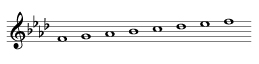
Since we know how major and minor scales differ from each other, it is not hard to change one into the other. To change a major scale into a natural minor scale, you would just need to lower scale degrees 3, 6, and 7 by a semitone. The example below illustrates this with F major. To change F major into F natural minor, you would lower the A (scale degree 3) to A♭, the D (scale degree 6) to D♭, and the E (scale degree 7) to E♭.
F major and F minor
| F major and F minor |
Remember that "lowering scale degrees" does not always mean that you should use flats. For example, if you wanted to change E major into E natural minor, you would lower scale degree 3 (G#) to G-natural, scale degree 6 (C#) to C-natural, and scale degree 7 (D#) to D-natural, as illustrated below.
E Major and E Minor
| E major and E minor |
This procedure also works in the reverse direction. If you had the key of D minor and wanted to change it to the parallel major, you would raise scale degree 3 (F) to F#, scale degree 6 (B♭) to B-natural, and scale degree 7 (C) to C#, as illustrated below.
D major and D minor
| D major and D minor |
| Remember |
|
Parallel Keys and Key Signatures
Unlike relative keys, parallel keys do not have the same key signature, but the relationship between their key signatures is consistent. Since minor keys have three pitches that are lowered from their parallel major, it follows that minor keys will have three more flats (or three less sharps) than the parallel major key.
| Remember |
|
We can examine this by looking at the chart below, which provides all of the parallel major and minor scales. Note that the key signatures always differ by three accidentals. For example, C minor has three more flats than C major and A minor has three less flats than A major. But what about G minor? Since G major only has one sharp, G minor has one less sharp and then adds two more flats (since there are no more sharps to take away).
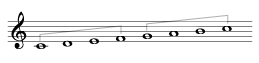
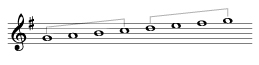
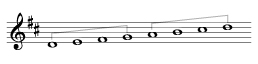
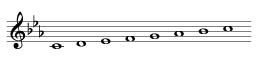
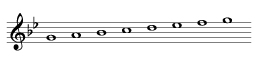
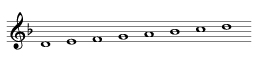
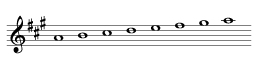
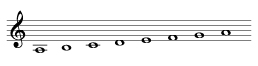
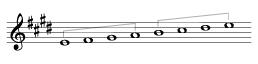
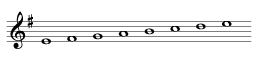
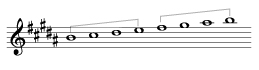
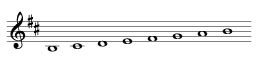
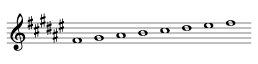
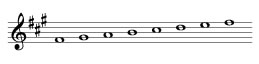
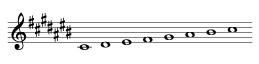
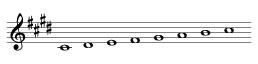
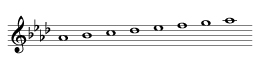
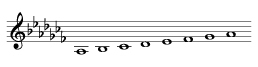
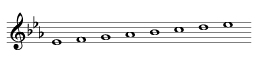
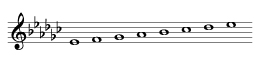
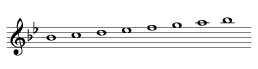
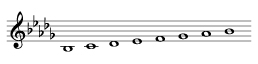
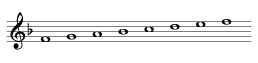
You can use the virtual keyboard below to practice playing all of the major and natural minor scales. First, play the major scale, then repeat the scale with scale degrees 3, 6, and 7 lowered to play the minor scale.
Click this small keyboard icon below.

Keyboard x
Listen carefully to the difference between parallel major and minor. In particular, you should notice:
- The difference between the sound of the lowered scale degree 3 in minor (forming a m3 above the tonic) and the non-lowered scale degree 3 in major (forming a M3 above the tonic). Is is this mediant, more than any other scale degree, that tells us whether a scale is major or minor.
- The difference between the sound of the whole step from subtonic to the tonic (scale degrees 7 to 1) in the natural minor scale and the half step from the leading tone to the tonic (7 to 1) in the major scale. Ths is a crucial difference, as we will see in our next lesson.
Determining Minor Key Signatures
In our previous lesson, we learned how to identify minor key signatures by associating them with their relative majors, but we did not discuss how to determine minor key signatures. You can use your understanding of parallel keys to help you determine and write down minor key signatures, as follows:
To determine the key signature of a minor key:
- Think of the key signature of the parallel major
- Add three flats or subtract three sharps from that key signature
The following example illustrates with the key signatures for E minor and F minor. Click on "Drop three sharps" or "Add three flats" to start the animation.
Determining minor key signatures
| Determining minor key signatures |
If the relative major key has less than three sharps, subtract the number of sharps from three, and then add that number of flats. For example, to figure out the key signature for G minor:
- Think of the key signature of G major (one sharp)
- Subtract one from three (3-1 = 2)
- Add that number of flats (two flats)
Therefore, the key signature of G minor has two flats. Follow the order of flats to add the right ones: B♭ and E♭.