





Classical Period (1750-1825)
Beethoven's Works
One of the most important facts to know about Beethoven is that he is considered both a Classical and Romantic composer. His early works were influenced by Haydn and stayed within the Classical tradition of balance and clearly defined forms. His later works, however, were unlike anything heard before. Beethoven took traditional forms and expanded and explored them in unprecedented ways. Many people of his day found his later work almost incomprehensible.
Vocal Music
In common with other composers, Beethoven wrote a number of songs. Of these, the best known are the settings of poems by Goethe (who did not acknowledge their existence). Beethoven also wrote a cycle of six songs known as An die ferne Geliebte (To the Distant Beloved).
Beethoven's most impressive choral work is the Missa Solemnis in D major, Op.123, written for the enthronement ceremony of his pupil Archduke Rudolph as Archbishop of Olmutz. Unfortunately, the work was only finished following the occasion.
Opera
Beethoven wrote only one opera, Fidelio, which is considered an escape opera. The heroine, Leonora, under the pseudonym Fidelio, disguises herself as a boy and takes a job at the prison in which her husband Florestan has been wrongly imprisoned. Leonora proves her love and constancy as a wife. Leonora ends with the defeat of the evil prison governor and the rescue of Florestan. Beethoven had considered composing other operas, but only wrote the one, first staged in 1805 and again in a revised performance in 1814. Fidelio was not well received by the public and is rarely performed today.
Composer: Ludwig van Beethoven
-
"Fidelio, Op. 72: Act I No. 4: Hat man nicht auch Gold beineben"
Orchestral Music: Symphonies
Beethoven completed nine symphonies, works that influenced the entire future of music through his development of the traditional Classical form. The best known are the third (Eroica), originally intended to celebrate the achievements of Napoleon; the fifth; and the ninth, called Choral Symphony because of the use of chorus in its last movement.
Composer: Ludwig van Beethoven
-
"Symphony No. 3 in E-Flat Major, Op. 55 "
Composer: Ludwig van Beethoven
-
"Symphony No. 5 in C Minor, Op. 67: I. Allegro con brio"
Composer: Ludwig van Beethoven
-
"Symphony No. 9 in D Minor, Op. 125, Choral: IV. Finale: Presto - Allegro assai"
Overtures
For the theater and various other occasions, Beethoven wrote a number of overtures, including four for his only opera, Fidelio. Other overtures include those for Egmont, Coriolan, Prometheus, Consecration of the House, and The Ruins of Athens.
Concertos
Beethoven completed one violin concerto, five piano concertos written for his own use in concert performance, as well as a triple concerto for violin, cello, and piano. This genre also includes the Choral Fantasia for solo piano, chorus, and orchestra.
Composer: Ludwig van Beethoven
-
"Violin Concerto in D Major, Op. 61: II. Larghetto"
Composer: Ludwig van Beethoven
-
"Piano Concerto No. 5 in E Flat Major, Op. 73, Emperor: III. Rondo: Molto allegro"
Chamber Music
Beethoven wrote 10 sonatas for violin and piano. Even with his first set of quartets, he expanded the musical possibilities of the string quartet. The striking late string quartets offer great challenges to both players and audience, and include the remarkable Grosse Fugue (Great Fugue), a gigantic work. It was originally intended as the final movement of a string quartet, but it was published separately. Other chamber music includes a number of trios for violin, cello, and piano. The cello sonatas and sets of variations for cello and piano are a valuable part of any cellist's repertoire. One set is based on Handel's "See Here the Conquering Hero Comes" and others on operatic themes from Mozart. Beethoven also wrote chamber music for wind instruments and piano.
Composer: Ludwig van Beethoven
-
"Violin Sonata No. 9 in A major, Op. 47, Kreutzer: I. Adagio sostenuto - Presto"
Composer: Ludwig van Beethoven
-
"String Quartet No. 1 in F Major, Op. 18, No. 1: III. Scherzo: Allegro molto"
Composer: Ludwig van Beethoven
-
"Cello Sonata No. 4 in C major, Op. 102, No.1: I. Andante"
Solo Piano Music
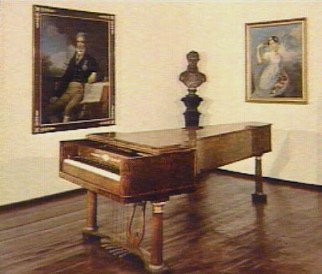
Beethoven's 32 numbered piano sonatas make full use of the developing piano, with its wider range and possibilities of dynamic contrast. The best known of the sonatas are those that have nicknames, such as the Pathétique, Op. 13 with its third movement in rondo form, and Moonlight, Op. 27 No. 2.
Composer: Ludwig van Beethoven
-
"Piano Sonata No. 14 in C-Sharp Minor, Op. 27 No. 2 "
Composer: Ludwig van Beethoven
-
"Piano Sonata No. 8 in C Minor, Op. 13 "
Among Beethoven's other important keyboard works are several sets of variations, of which the most significant are the Eroica Variations, Op.35 (1802), the 32 Variations in C minor (1806), and the 33 Variations on a Waltz by Diabelli, Op.120 (1823), commonly known as the Diabelli Variations. There are also other interesting sets of variations, including a set based on "God Save the King" and another on "Rule, Britannia." Less substantial piano pieces include the extremely popular Für Elise (1810), and the Bagatelles, Op.33 (1802).