




Chords
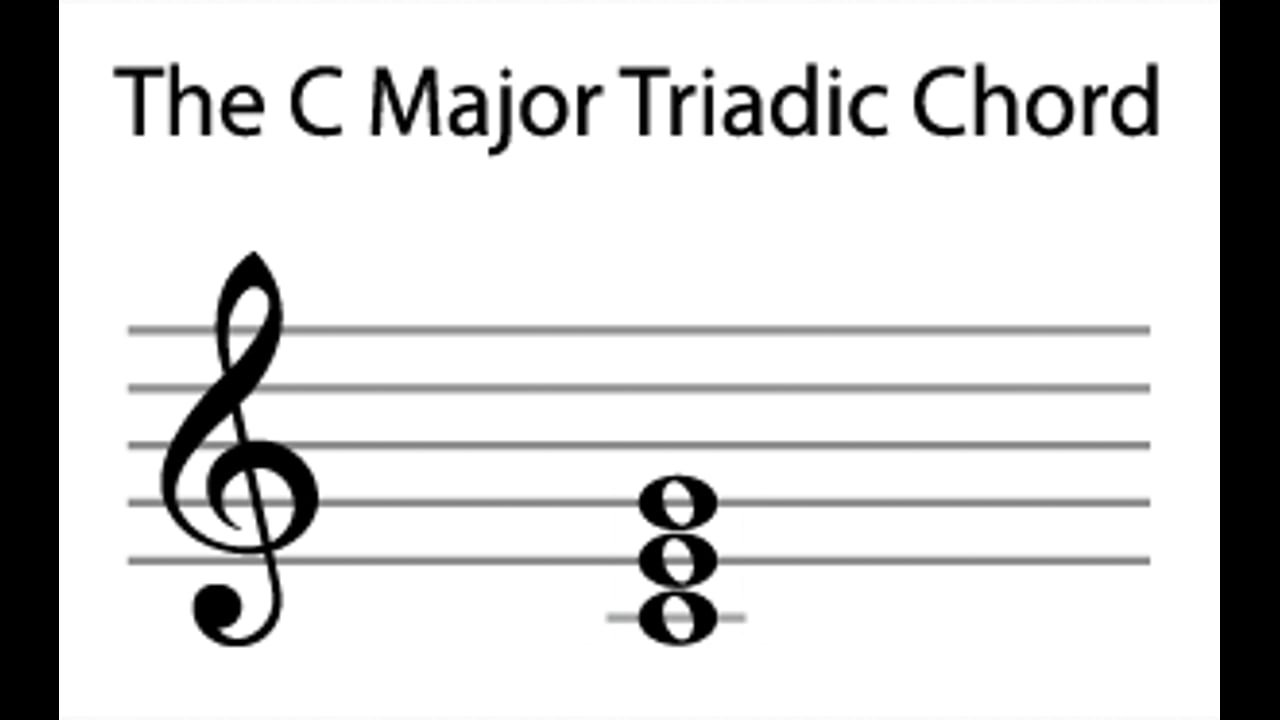
Three or more notes sounding together create a chordThree or more notes sounded together.. For example, the C major chord consists of three notes: C-E-G. It is the result of stacking thirds on top of the note C (note that both C-E and E-G are intervals of a third). Because the chord is built on C, we call C the root of the chord. E is the third of the chord because it is separated from the root by a third. Similarly, we call G the fifth of the chord because we count five notes from C to G.
The C major chord is a classic example of a triadA chord in which each note is separated from the next by a third.: a chord in which each note is separated from the next by an interval of a third. The triadic chord is one of the fundamental building blocks of Western music harmony. Let's listen to the C major triadic chord played simultaneously, and then consecutively.
OMJ Blues Chords 1
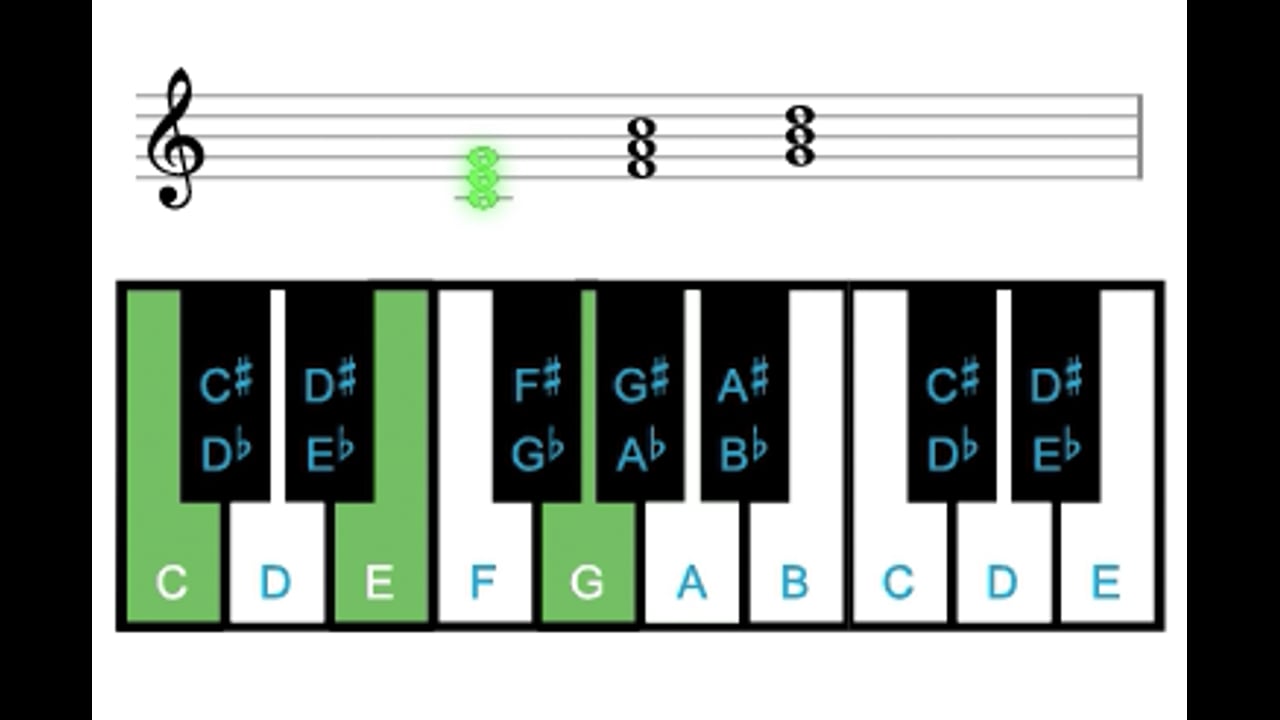
Just as we can build a chord on the note C, we can build chords on each of the other notes of the scale. In Western harmony, the three most important harmonic scale degrees are the 1st, 4th and 5th notes of the scale. We use Roman numerals to designate these chords: I, IV, and V.
| Chord | Root | Notes |
|---|---|---|
| I | C | C-E-G |
| IV | F | F-A-C |
| V | G | G-B-D |
Listen to what these three chords sound like in relation to one another.
OMJ Blues Chords 2



