
Overview
Objectives
- Recall the British blues revival tradition, which began as British musicians studied and emulated the music of Chicago blues musicians such as Howlin' Wolf and Muddy Waters
- Recall the early days of the Rolling Stones and consider how their style changed as they moved from recording mostly covers of blues music to writing their own material
- Identify the many ways in which the Rolling Stones were the opposite of the Beatles, apart from being a British rock band that was popular beginning in the middle of the 1960s
Breaking into the United States
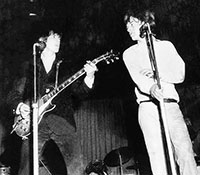
The Rolling Stones’ first visit to the United States did not go anything like the Beatles’ first American trip. The Stones began an American tour in June of 1964, but unlike the Beatles, they had no songs on the American charts and therefore had no hits to promote to audiences. Audiences were mostly indifferent to their music, if they even attended a concert in the first place. When they made an appearance on Dean Martin’s The Hollywood Palace, Martin made fun of their hair as well as their music. They drew only 600 people in Omaha, Nebraska, in an auditorium with 15,000 seats.
The tour was not a total loss, though, because the Rolling Stones were able to make a pilgrimage to Chicago and meet some of their major influences, including Muddy Waters. In fact, their cover version of "It’s All Over Now ♫" was recorded at Chess Studios in Chicago.
The Stones’ image as scruffy troublemakers may have contributed to their slow start in the United States. At first, audiences were uninterested in these surly, skinny British musicians. By late 1964, though, the group was beginning to achieve some success with American audiences. They started another American tour late in 1964, and the tour was studded with plenty of stories about the group members’ scandalous behavior. With "I Can’t Get No Satisfaction ♫," the Rolling Stones had their first genuine hit. The song went to number 1 on both the British and American pop charts in the summer of 1965. Other songs such as "Ruby Tuesday ♫," "Get Off of My Cloud ♫," and "Let’s Spend the Night Together ♫" helped cement the Stones’ image as the rebellious anti-Beatles.
In fact, the more scandalous their off-stage activities were, the more records they sold, and the more violent and destructive their fans became. Their shows frequently broke out in riots and required police intervention. After the Stones appeared on The Ed Sullivan Show in 1965, Sullivan swore they would never be allowed to return. (He changed his mind by 1967.)



"Piano player Ian Stewart, considered the "6th Stone," was not an official member of the group because manager Andrew Loog Oldham felt he didn't fit the Stones image. "
