





Volume
Number of Instruments
Dynamic level is affected by the number of musicians taking part in a performance as well as the musicians' ability, under the conductor's direction, to control personal volume level. Generally, orchestras have a higher dynamic level than do solo instruments, and a group of singers (choir) sounds louder than a soloist.
The music of Maurice Ravel's Daphnis and Chloé demonstrates the range of dynamics that may be achieved by using different numbers and combinations of instruments.
Composer: Maurice Ravel
-
"Daphnis Et Chloe, Suite No. 2"
Composer: Maurice Ravel
-
"Daphnis Et Chloe, Suite No. 2" [ 12:45-13:26 ]00:41
Composer: Maurice Ravel
-
"Daphnis Et Chloe, Suite No. 2" [ 03:14-03:38 ]00:24
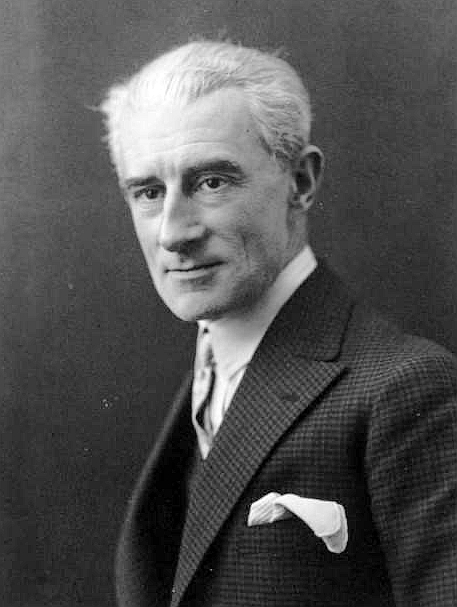
Ravel wrote his ballet Daphnis and Chloé in 1912. The work is based on an ancient Greek pastoral romance set on the island of Lesbos. The plot involves the love, forced parting, and eventual happiness of the shepherd Daphnis and the shepherdess Chloé. Chloé, abducted by pirates, is rescued with the help of the god Pan and reunited with Daphnis. Their reunion is a subject of general rejoicing.
Daphnis and Chloé has sections that may appear to be similar in notation, but in fact, they differ in their dynamic level. Two examples help to illustrate this point. Compare an instrumental section, in which most instruments of the orchestra participate, to a similarly notated section written instead for the full orchestra and chorus. Note that the second selection achieves a higher dynamic level due to the greater number of performers.
As you listen, notice that higher levels of volume add tension, while lower levels create a sense of relaxation that eases the tension.
Distance
In the case of sounds that are not amplified via mechanical or electronic means, our perception of the loudness or softness of the sound depends on the distance from the sound source. The speed of sound is 1,120 feet per second. After a certain distance, sound loses much of its energy. The farther the listener is from the sound source, the softer the overall sound will be.
Imagine hearing a faint siren in the distance. As the siren approaches, the volume level increases. Put another way, as the volume level increases, we interpret it as the siren approaching. Likewise, composers may use varying dynamic levels to shape the listener's sense of distance. In the following excerpts, the music gives the impression of a distant group of pilgrims that approach gradually.
Composer: Richard Wagner
-
"Tannhäuser: Beglückt darf nun dich, " [ 01:55-03:44 ]01:49
Composer: Richard Wagner
-
"Tannhäuser: Beglückt darf nun dich, " [ 00:00-00:54 ]00:54
Composer: Richard Wagner
-
"Tannhäuser: Beglückt darf nun dich, " [ 00:54-01:54 ]01:00
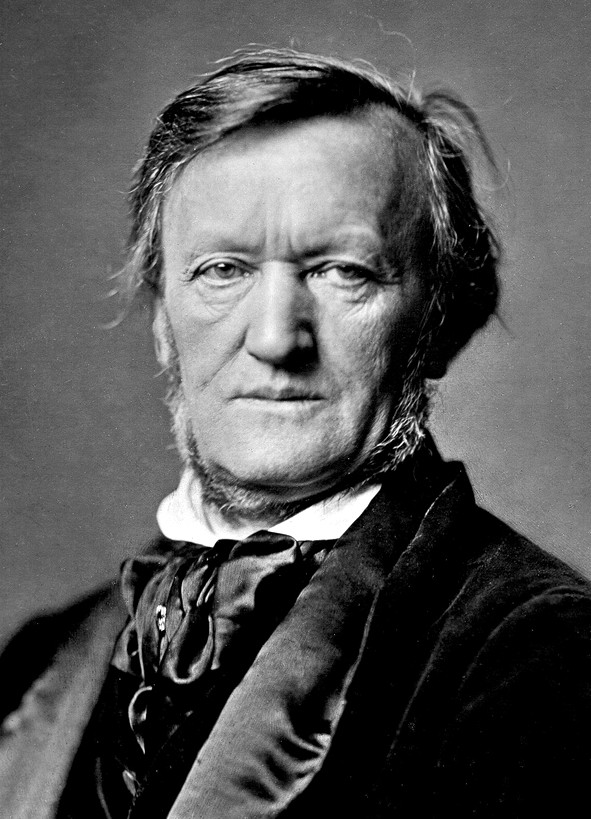
The above excerpts come from Wagner's opera Tannhäuser. First staged in Dresden in 1845, the opera is about a medieval poet-composer named Tannhäuser who sings the praises of Venus, the goddess of love. This commendation is considered sinful, and for this reason, he is sent to Rome to ask the Pope's forgiveness. Elisabeth (the daughter of a wealthy man) hears Tannhäuser's praise of love and falls in love with him. Upon his return from Rome, Tannhäuser finds Elisabeth dead of a broken heart. He, too, joins her in death.
Wagner was a remarkable innovator and a widely controversial figure in music history. He is considered by many to be among the best opera composers of the 19th century. His goal was to produce the Gesamtkunstwerk (unified work of art)—dramatic compositions in which the different art genres were brought together into a single work. Essays, letters, diaries, and the personal written recollections of former students and friends reveal that he was quite a difficult human being. He was anti-Semitic, anti-Catholic, and anti-French. Often in debt and living off the generosity of patrons, he gained the support of King Ludwig II of Bavaria in the latter part of his career. The financial backing of King Ludwig II enabled Wagner to establish his own theatre and festival in the Bavarian town of Bayreuth.
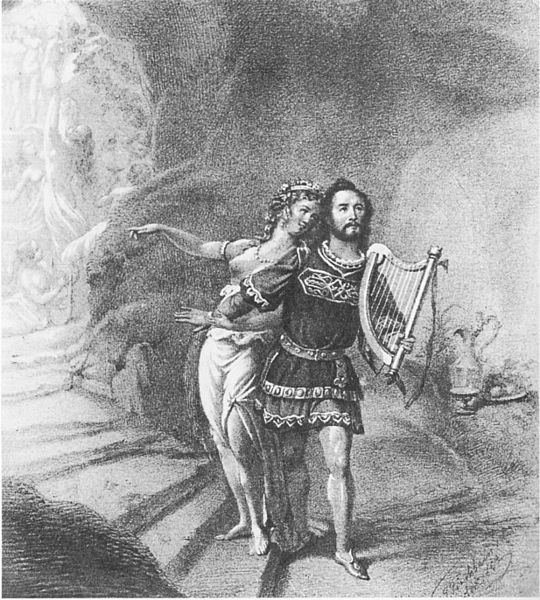
In his operas, Wagner used short, recurring musical ideas called leitmotifs (signature tunes) to portray objects, characters, situations, feelings, and emotions. The structure of his musical dramas depended on the interweaving of melodies or fragments of melody associated with characters, incidents, or ideas in the storyline. The Pilgrim's Chorus features a leitmotif representing repentance.